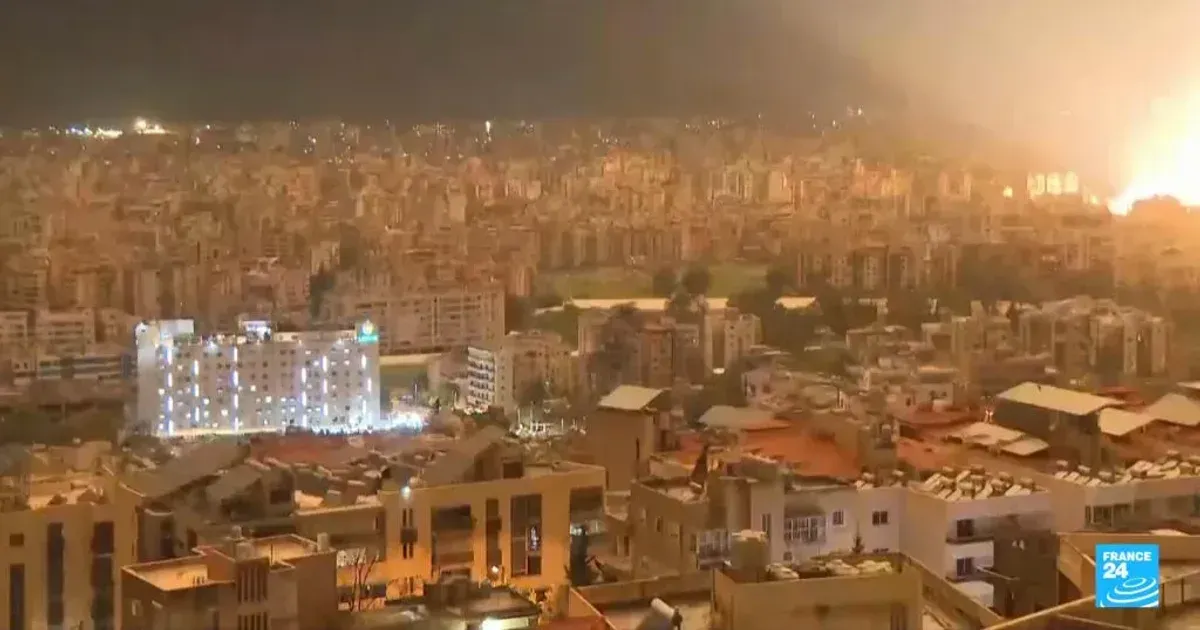
Israeli Troops launched a ground operation into southern Lebanon on March 16 to dismantle Hezbollah infrastructure along the border. Armor units supported by infantry moved across the Blue Line in the early morning hours, marking a new phase in the ongoing conflict. High-ranking officials in Jerusalem described the maneuvers as limited and targeted, focusing on villages that serve as staging grounds for cross-border raids. Smoke rose from the hillsides as artillery batteries provided a rolling barrage for the advancing columns.
Separately, the Israeli Defense Forces confirmed that their primary objective involves securing the northern border to allow displaced citizens to return home. Commandos entered several border towns where Hezbollah had allegedly constructed extensive tunnel networks and storage facilities for anti-tank missiles. These locations have been the source of consistent harassment fire over the previous months, complicating civilian life in the Galilee. Military planners insist that the ground movement is a surgical necessity rather than an open-ended invasion.
Soldiers encountered resistance near the village of Al-Adaysseh where militants used guided munitions to strike at armored vehicles. Al Jazeera reported that the clashes intensified shortly after sunrise, with heavy machine-gun fire echoing through the valley. Lebanese residents fled northward as the sounds of battle moved deeper into the sovereign territory of Lebanon. The Lebanese army remained in a defensive posture, avoiding direct engagement with the advancing forces while monitoring the situation from a distance.
In fact, the scope of the operation appears to be widening as air strikes hit targets beyond the immediate border zone. Israeli warplanes struck logistics hubs and command centers in the Bekaa Valley, aiming to sever the supply lines connecting the border units to their central command. These strikes followed intelligence reports suggesting that fresh shipments of munitions had arrived from eastern routes. Ground commanders reported the seizure of several weapon caches containing modern optics and electronics.
War has returned to the hills of the Galilee.
Hezbollah forces responded by launching a barrage of rockets toward the port city of Haifa and the surrounding suburbs. Most of these projectiles were intercepted by the Iron Dome system, but fragments caused damage to several industrial buildings and private homes. The group issued a statement claiming that their capabilities remain intact and that the ground operation will become a quagmire for the advancing troops. For one, the rugged terrain of the border region offers a natural advantage to the defenders who have spent decades preparing for this specific scenario.
For instance, the use of drones has become a central element of the defensive strategy employed by the militants. Small, explosive-laden quadcopters have been observed hovering over Israeli staging areas, providing real-time data to mortar teams. This tactical shift forces the advancing units to move with extreme caution, often requiring clearing operations house-by-house. Intelligence sources indicate that the defenders are utilizing a vast network of underground bunkers that are hardened against conventional air strikes.
Hezbollah Missile and Drone Capability Degradation
Israeli warplanes have focused heavily on neutralizing the sophisticated arsenal that has been stockpiled in the southern regions. According to Dr. Raz Zimmt, Director of the Iran and Shiite Axis program at the Institute for National Security Studies, the campaign seeks to permanently degrade the military reach of Iran and its regional proxies. This involves not simply destroying individual launchers; it requires the destruction of the technical infrastructure used for maintenance and guidance. The presence of precision-guided munitions represents the most significant threat to the Israeli home front.
Israel’s objectives are based on a more limited but long-term and consequential aim: permanently degrading the military capabilities of Iran and its regional proxies.
At the same time, the Iranian government has warned that it will not remain indifferent to the destruction of its primary strategic asset in the Levant. Officials in Tehran characterized the ground operation as a violation of international law and called for an immediate session of the United Nations Security Council. The rhetorical escalation has coincided with reports of increased activity among other proxy groups in Iraq and Syria. These units have previously utilized long-range drones to harass regional targets, suggesting a coordinated effort to stretch Israeli air defenses.
By contrast, the Western diplomatic response has been characterized by calls for restraint without a direct condemnation of the ground movement. The United States and United Kingdom have emphasized the right of the Israeli Defense Forces to defend their citizens while expressing concern over the humanitarian situation in Lebanon. Aid organizations report that the number of displaced persons in Beirut has increased sharply as families flee the southern combat zones. Many of these individuals are sleeping in public parks and schools, straining the already fragile Lebanese infrastructure.
Regional Risks of the Southern Lebanon Campaign
Military analysts suggest that the success of the mission depends on the speed of the transition from combat to stabilization. If the units remain static for too long, they become vulnerable to the type of guerrilla warfare that defined previous conflicts in this region. Hezbollah excels in small-unit tactics and the use of improvised explosive devices, which are difficult to counter with heavy armor. The memory of the 2006 war lingers in the minds of the senior staff, who are determined to avoid a repeat of that protracted stalemate.
Yet, the political reality in Jerusalem adds a layer of complexity to the military timeline. Prime Minister Benjamin Netanyahu faces intense pressure from right-wing coalition partners who demand a more expansive buffer zone in southern Lebanon. These politicians argue that a limited withdrawal will only allow the militants to regroup and reoccupy their former positions. This internal pressure conflicts with the international desire for a swift conclusion to the hostilities, creating a difficult balancing act for the cabinet.
Still, the logistical reality of maintaining a ground presence is becoming more evident as the rainy season approaches. Muddy conditions in the mountainous border region will hamper the movement of heavy machinery and supply trucks. Commanders are pushing to complete the primary demolition of the tunnel networks before the weather turns, allowing for a possible redeployment of troops to other sectors. The window for high-intensity operations may be shorter than the public pronouncements suggest.
In turn, the Lebanese government in Beirut finds itself in an impossible position between a powerful non-state actor and a foreign military force. Prime Minister Najib Mikati has appealed for a ceasefire based on the implementation of UN Resolution 1701, which calls for the area south of the Litani River to be free of any armed personnel except for the Lebanese army and UN peacekeepers. However, the capacity of the Lebanese Armed Forces to enforce such a mandate remains in doubt, given the current economic crisis. The national military lacks the heavy equipment and political backing to confront the well-armed militants.
Domestic Political Pressure on Israeli Leadership
Defense officials have begun briefing the media on the vast quantities of equipment recovered from the border villages. These captures include night-vision goggles, thermal imaging sights, and thousands of anti-tank rounds manufactured in various countries. The sheer volume of the material suggests a multi-year effort to turn these residential areas into military outposts. Displaying these items serves to justify the ground operation to a skeptical international audience and a domestic public weary of conflict.
The cost of failure in this theater remains absolute.
Security sources in the region are closely watching the Golan Heights for signs of a secondary front. Any significant movement by pro-Iranian militias in Syria would force a redirection of resources and potentially widen the scope of the war. To that end, the air force has maintained a constant presence over the border areas, conducting reconnaissance flights and striking any suspicious movements. The objective remains the containment of the violence to the specified border zones of Lebanon.
The Elite Tribune Perspective
Does the destruction of a concrete bunker in a Lebanese valley truly shift the strategic balance of the Middle East? History suggests that the notion of a limited and targeted ground operation is a comforting fiction sold to democratic publics to mask the reality of perpetual war. Israel enters southern Lebanon with the same justifications it used in 1978, 1982, and 2006, yet the adversary has only grown more sophisticated, better armed, and more deeply integrated into the local social fabric.
The Israeli Defense Forces may successfully clear the border towns, but they cannot kill the ideology or the regional patronage that fuels Hezbollah. By choosing a military solution for a political and theological problem, Jerusalem is merely resetting the clock for the next inevitable eruption. We are watching the repetition of a failed doctrine that prioritizes tactical wins over long-term stability. The campaign will likely result in a temporary lull followed by an even more lethal resurgence once the troops withdraw.
The idea that Iran will simply allow its most expensive proxy to be dismantled without a significant asymmetric response is a dangerous miscalculation that ignores the last four decades of Levantine history. True security is not found in the barrel of a Merkava tank.