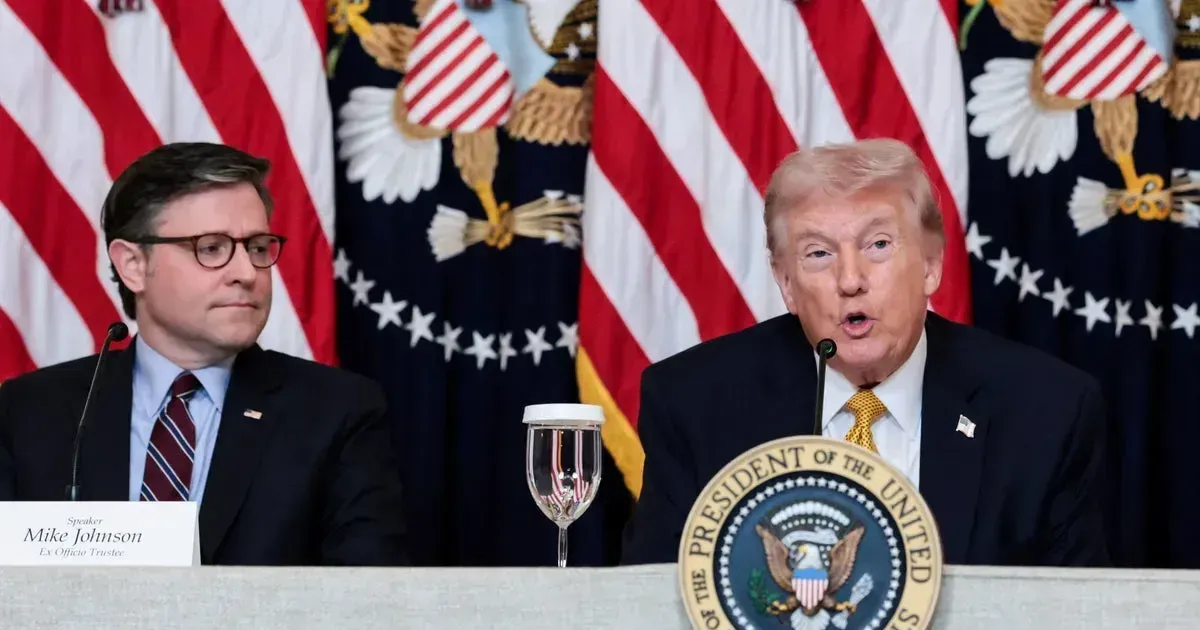
President Donald Trump announced on Monday that American forces effectively neutralized Iran's primary defensive infrastructure during a series of overnight aerial strikes. Speaking from the White House, the commander-in-chief presented a scenario where Iranian capabilities were reduced to what he described as a state of total vulnerability. The operation involved 600 aircraft and precision-guided munitions launched from regional bases and carrier groups stationed in the Indian Ocean. These strikes focused on radar installations, missile batteries, and command nodes situated along the southern coastline. Intelligence assessments shared during the briefing suggest that Iranian air defenses failed to intercept the majority of incoming projectiles. Military commanders noted that the suppression of enemy air defenses lasted less than four hours. Pentagon officials claim the rapid dismantling of these networks allows for unrestricted movement of American assets within Iranian airspace. But the primary objective remains the securing of maritime lanes rather than a full-scale ground invasion at this time. Early reports from Tehran indicate heavy damage to the Khatam al-Anbiya Air Defense Base. Witnesses reported hearing powerful explosions near the coastal city of Bandar Abbas where several anti-ship missile sites were reportedly targeted. Satellite imagery reviewed by independent analysts shows charred remains of what appears to be S-300 and S-400 missile components. Iranian state media has yet to release a detailed casualty count or verify the extent of the structural losses suffered during the barrage.
Trump Claims Iranian Defenses Collapsed
Pentagon officials characterized the mission as a preemptive measure to prevent Iranian interference with commercial shipping. Donald Trump asserted that the Iranian regime now lacks the hardware to mount a coordinated response against Western naval assets. According to France 24, the president emphasized that the defensive shell of the country has been cracked wide open. He used a televised address to project an image of military dominance while dismissing the retaliatory threats issued by Iranian Supreme Leader Ali Khamenei earlier in the week.
The United States military has dismantled the Iranian air defense system, leaving their borders wide open to any further action we choose to take.
Pentagon planners spent months mapping the particular frequencies and locations of the Iranian defensive grid. For instance, the use of electronic warfare suites proved instrumental in blinding radar systems before the kinetic strikes began. Pilots returning from the mission described a chaotic environment where Iranian surface-to-air missiles were launched blindly without radar guidance. The White House has not clarified if these strikes were a one-time operation or the beginning of a larger campaign. Reports from the ground in Iran suggest that civilian infrastructure near military zones suffered collateral damage. Hospitals in Bushehr are reportedly dealing with an influx of patients injured by debris and secondary explosions at nearby naval facilities. At the same time, the Iranian Revolutionary Guard Corps maintains that its subterranean missile cities remain fully operational and untouched by the American bombardment. IRGC commanders promised a response that would set the entire region ablaze if the United States continues its incursions.
Hormuz Security Strains Allies
Secure passage through the Strait of Hormuz remains the central point of contention for the global community. Trump demanded that international partners provide military escorts for oil tankers traveling through the narrow waterway. But traditional allies in Europe have shown a marked reluctance to commit their own naval vessels to the American-led mission. The Independent reports that the United Kingdom and France have resisted direct involvement in the escort program despite intense pressure from Washington.
French President Emmanuel Macron reportedly informed the White House that Paris would prefer a diplomatic solution to the maritime crisis. This resistance has led to a sharp rift within the NATO alliance regarding the limits of collective security in the Middle East. Meanwhile, the Royal Navy has restricted its operations to the Gulf of Oman, avoiding the more unstable waters inside the Strait. The British government fears that participating in the escort mission could trigger retaliatory attacks on UK soil or interests abroad.
Shipping insurance premiums have surged by 400% since the announcement of the strikes. Some maritime firms have ordered their fleets to remain at anchor in the Port of Jebel Ali until the security situation stabilizes. According to France 24, several major tankers carrying crude to East Asian markets have turned off their transponders to avoid detection by regional actors. This digital blackout adds a layer of complexity to an already opaque operational environment for global logistics companies.
Europe Resists Escort Pressure
European leaders argue that the American military intervention has made the shipping lanes more dangerous rather than less. Berlin and Rome joined Paris in criticizing the lack of a clear exit strategy for the current intervention. The European Union has proposed a separate, unarmed monitoring mission that would operate independently of the United States Navy. Even Washington maintains that any presence without serious firepower will be ignored by Iranian naval forces.
Washington officials expressed frustration with what they call a lack of burden-sharing among the nations that benefit most from Persian Gulf oil. Trump specifically called out the UK and France for their hesitation, labeling the refusal to participate as a betrayal of the transatlantic partnership. The British Foreign Office issued a brief statement reiterating its commitment to regional stability but stopped short of pledging naval assets for the escort fleet. The tension between the Western powers is now more visible than at any point since the 2003 invasion of Iraq.
Diplomatic channels between London and Washington are reportedly strained to the breaking point. Senior diplomats suggest that the UK is attempting to balance its relationship with the US against its need to maintain trade ties with other regional powers. Yet the White House has indicated that future trade agreements could be contingent on military cooperation in the Middle East. Security experts warn that this transactional approach to foreign policy is hollowing out the strategic coherence of the Western alliance.
Air Superiority Did Not Solve Hormuz
Reliance on the scorched-earth language of President Trump provides a misleading sense of security in a region that thrives on asymmetrical retaliation. While the White House boasts about dismantling Iranian radar sites, it conveniently ignores the thousands of fast-attack boats and sea mines that require no complex air defense to deploy. The administration is in practice playing a high-pressure game of naval chess where the pieces are billion-dollar tankers and the casualties are the global poor who will suffer under the pressure of $110 oil.
European allies are not being cowardly; they are being realistic about a a destabilized Iran is far more dangerous to their domestic security than a contained one. Trump's transactional demand for a coalition of the willing is a desperate attempt to legitimize a campaign that lacks a coherent endgame. If Washington continues to alienate its most capable partners, it will find itself alone in a desert of its own making. The destruction of Iranian missile batteries is a tactical victory that masks a looming strategic catastrophe.
Security is not found in the rubble of radar stations, but in the stability of the markets and the alliances that sustain the modern world. The intervention is a gamble that assumes the Iranian regime will simply fold under pressure, a historical miscalculation that has haunted every Western power in the Middle East for a century.