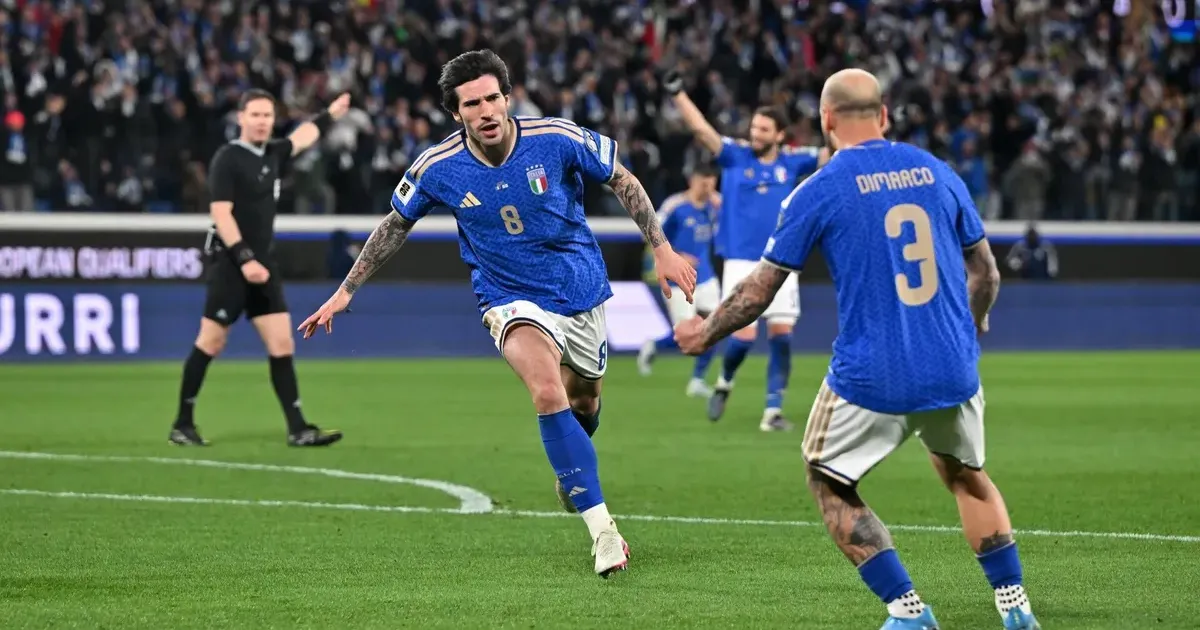
That week, success in the upcoming playoff final would terminate a twelve-year absence from the world stage for the four-time champions. Failure to qualify in 2018 and 2022 is still the darkest period in Italian sporting history, casting a long shadow over the current roster. Fans across the peninsula hold their breath as the final hurdle approaches in Sarajevo. The playoff pressure was clear on March 30, 2026, as Italy prepared for the Bosnia match.
Italy Seeks Redemption After Decade of Qualification Failures
Northern Ireland fell 2-0 to the Azzurri during a tense semifinal last Thursday. Players showed flashes of the clinical precision that won them the European Championship years ago. Head coach Luciano Spalletti has emphasized defensive discipline since taking over the squad. Defensive structures must hold firm against a Bosnian attack that thrives on counter-attacking opportunities. Consistency has eluded this group of players for much of the qualification cycle.
Sarajevo will serve as the host city for the final clash, where local supporters have already sold out the stadium. National expectations in Bosnia and Herzegovina have never been higher for a team that often plays the role of the underdog. Edin Dzeko continues to lead the line with a veteran presence that troubles younger defenders. Supporters believe the atmosphere in the capital will neutralize the technical advantages held by the visitors. Records show that Italy struggles in hostile away environments during playoff scenarios.
The Azzurri managed to win the semifinal of the playoff 2-0 against Northern Ireland on Thursday, but it all comes down to this," according to CBS Sports.
Footballing giants face extinction if they cannot adapt to the modern high-press game. European football fans also look toward another high-stakes showdown in Stockholm. Sweden meets Poland on Tuesday to determine which side secures the final playoff spot from their respective bracket. Both teams enter the match with relatively healthy rosters and high morale. Preparation time has been limited due to the condensed international calendar.
Sweden Confronts Poland in Battle of Continental Heavyweights
Stockholm provides the backdrop for a meeting between two of the most physical teams in the UEFA region. Sweden relies on a structured 4-4-2 system that emphasizes wing play and aerial dominance. Polish defenders must account for the speed of the Swedish transition game. Statistics indicate that Sweden wins 70% of their home matches when scoring the first goal. Neutralizing the early pressure will be the primary objective for the visiting side.
Poland possesses a unique threat in the form of world-class striking talent. Tactical adjustments during the training sessions in Warsaw focused on breaking down a low block. Robert Lewandowski remains the focal point of the Polish attack, requiring constant surveillance from opposition center-backs. Recent form suggests that Poland is vulnerable to set pieces and long-range efforts. Coaches spent the weekend drilling defensive rotations to prevent such lapses. The economic implications of World Cup qualification extend far beyond the pitch for the participating football associations.
Simultaneously, the Swedish coaching staff have analyzed footage of Poland's semifinal victory. Technical reports suggest a weakness in the Polish midfield during transition phases. Exploiting these gaps requires precision passing and rapid movement from the Swedish forwards. Victory for either side is a ticket to the most prestigious event in professional sports. No room for error exists in a single-leg knockout format.
Bosnia Hosts Critical Playoff Final in Sarajevo
Bosnia and Herzegovina entered the playoff bracket through a successful Nation League campaign. This confrontation is perhaps the most important sporting event in the nation's history. Local media reports suggest the squad is physically ready for 120 minutes of football if necessary. Tactical discipline remains the foundation of their strategy against superior technical opponents. Every player knows the individual cost of a single defensive mistake.
Financial analysts estimate that qualification generates upwards of $100 million in revenue for the successful federation. Broadcast rights and sponsorship deals hinge on the presence of these teams in the main draw. FIFA distributes serious prize money even to teams that exit in the group stage. Economic stability for many smaller football associations depends on these four-year cycles. Public interest reaches its zenith during these do-or-die encounters.
Pressure on the Italian federation is immense, given the commercial fallout of previous absences. Italy lost meaningful apparel contracts and television viewership numbers after the 2022 disaster. Sponsors have inserted performance clauses into their agreements for the 2026 cycle. National pride is at stake, but the fiscal reality is equally pressing for the FIGC. Failure is not a viable option for the administrative hierarchy.
Italy Qualification Pressure remains the practical lens for the next stage of this story.
Italy's playoff path is about identity as much as standings. Another failure would extend a national football crisis that has already outlasted a full generation of players. The Bosnia match therefore carries pressure beyond a normal qualifier, because every missed chance now recalls the shock of earlier failures.