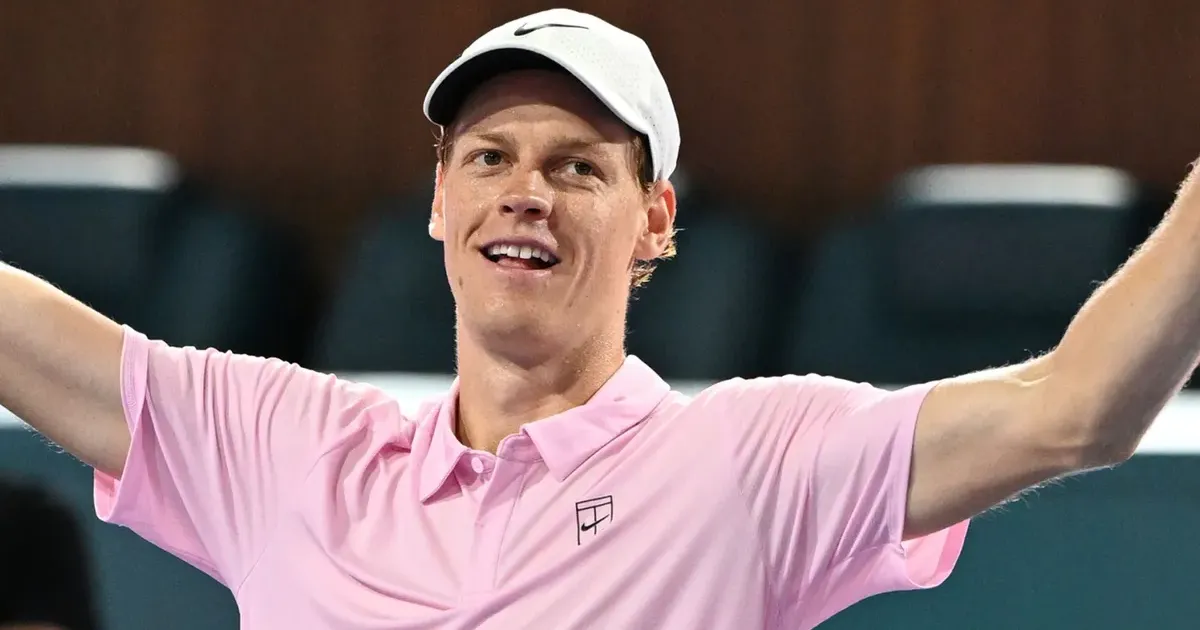
Jannik Sinner beat Alexander Zverev in straight sets to reach the Miami Open final, moving within one win of completing the Sunshine Double. The win kept Sinner on course in a tournament where form and endurance matter together. Beating Zverev also gave the final a clearer hierarchy test. The result strengthened Sinner’s claim to week-to-week reliability. By March 28, 2026, the item had moved into the public record. The win was not theatrical in the old tennis sense; it was built on pressure, court position and the quiet refusal to give Zverev a comfortable pattern. The result extended his command of the North American hard-court swing and underlined why he has become the most reliable pressure player of the current ATP moment.
The scoreline was only part of the story. Zverev has enough serve and backhand quality to make any semifinal uncomfortable, so the lack of sustained tension said more about Sinner's control than about an easy matchup. Sinner controlled court position, attacked second serves and refused to let Zverev turn the match into a long physical struggle. In Miami's humidity, that efficiency matters almost as much as power.
Sunshine Double Chase
Winning Indian Wells and Miami in the same year remains one of tennis's hardest spring achievements. The two tournaments look connected on the calendar, but they ask different questions of the body and the mind. The tournaments demand different physical responses: dry desert conditions in California, then slower, heavier air in South Florida. Many players arrive in Miami with form but not freshness.
Sinner looked prepared for both. His movement stayed sharp through the semifinal, and his serve protected him when Zverev briefly threatened. The possibility of joining the short list of Sunshine Double winners now frames the final.
The historical comparison to Roger Federer's 2017 sweep gives the achievement weight, but Sinner's version belongs to a different era. The current tour is more physical, more attritional and less forgiving of short recovery windows. That is why Sinner's clean progress through Miami carries strategic value: he is not only winning matches, he is limiting the damage usually attached to winning them.
How Sinner Beat Zverev
The tactical key was the return. Against Zverev, who needs cheap points from serve to control rhythm, that pressure changed the emotional shape of service games before the rallies even began. Sinner stepped inside the baseline on second serves and took time away from Zverev's first groundstroke. That turned many service games into immediate pressure situations for the German.
Zverev tried to add height and spin to buy time, but Sinner kept absorbing pace and redirecting into open court. Once the rallies shortened, Zverev had fewer chances to use his reach and backhand stability to settle the match.
Service reliability closed the door. Sinner did not need to chase spectacular winners when his own delivery kept him out of trouble and forced Zverev to press in return games. Sinner faced limited break pressure and answered the dangerous moments with first serves wide or through the body. That gave the match a controlled feel even when the margins tightened.
Zverev's defeat also says something about the top tier below Sinner. The German still has the weapons to beat elite opponents, but Miami showed how quickly a match can tilt when first-serve pressure drops and movement becomes reactive. Against Sinner, small leaks become structural problems.
The final will test Sinner in a different way. Semifinals can reward control; finals add the burden of expectation, history and the knowledge that a rare achievement is within reach. Managing that emotional layer may be as important as managing the baseline exchanges.
Final and Tour Meaning
The ranking implications are significant, but the sporting meaning is broader. Sinner is turning consistency into authority at a time when the men's tour is still reorganizing after the dominance of the previous generation.
The analysis is that Miami shows both his strength and the tour's calendar problem. Sinner is efficient enough to make the burden look manageable, but the achievement is still a stress test disguised as a trophy chase. The sport celebrates durability while asking its best players to spend too much energy before the clay season even starts. A Sunshine Double run is a badge of excellence, but it is also a physical tax before the clay season begins. The ATP markets the feat because it is rare; players feel the cost because the schedule gives little room to absorb it.
Sinner now has a chance to make a historical statement. A title would not merely add another trophy; it would confirm that his game can hold shape across different hard-court conditions, travel demands and the psychological weight of being expected to finish the job. That kind of authority is how a talented player becomes the reference point for the rest of the tour. Zverev was not beaten by a hot streak; he was beaten by a game that kept closing off his usual exits. That is what makes Sinner's Miami run feel transferable rather than surface-specific, and why the final now carries tour-wide meaning this season. The final will test whether his efficiency can survive one more high-pressure match, and whether his spring form becomes a platform for the rest of the season rather than a peak that drains too much too early.