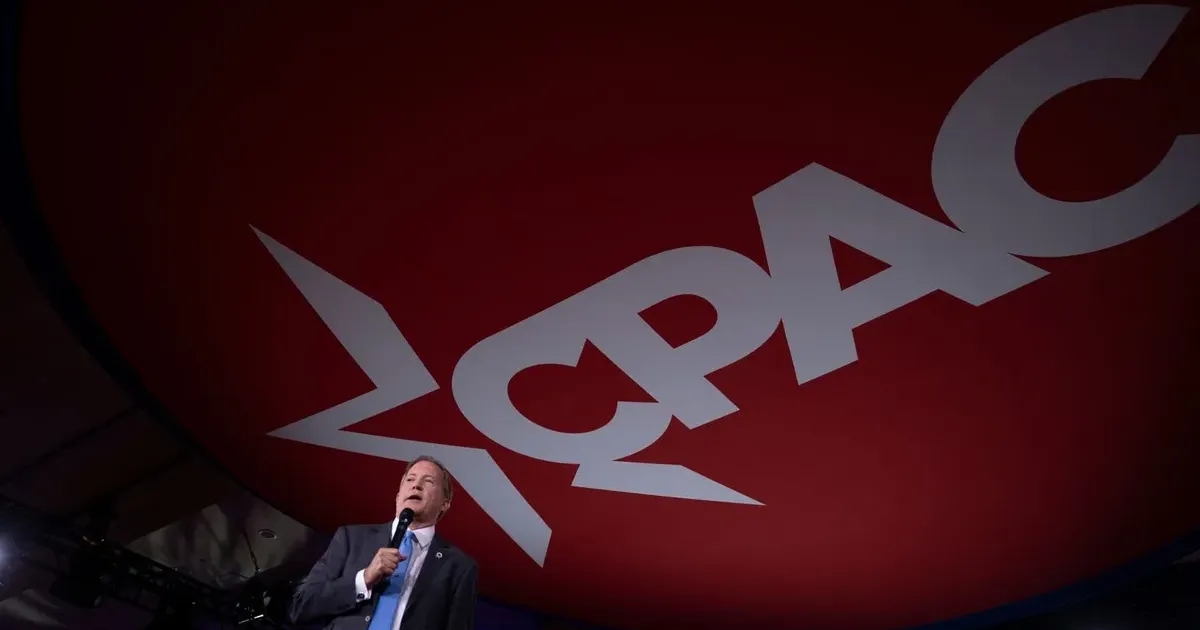
JD Vance's CPAC straw poll victory gave him a clear activist signal, but it should not be mistaken for a national primary result. The 2026 Conservative Political Action Conference in Grapevine, Texas, put Vance at 53 percent among more than 1,600 participants, with Secretary of State Marco Rubio second at 35 percent.
That margin matters because CPAC attendees are not passive observers. They include donors, organizers, local activists and media-facing conservatives who can shape early momentum. The same sample has obvious limits. A straw poll measures a self-selected conference audience, not the broader Republican electorate.
Both points can be true at once: Vance received a strong signal from a high-intensity room, and the result still needs careful interpretation.
Vance Owns the Activist Lane
Vance's appeal at CPAC rests on a version of conservatism that emphasizes borders, trade, domestic manufacturing and skepticism toward open-ended foreign commitments. As vice president, he also has visibility and a claim to continuity with the party's current governing identity.
The 53 percent result suggested that many activists see him as more than a Trump surrogate. They see him as a possible standard-bearer for the next cycle. That is a meaningful advantage in a party where early organizational energy can narrow the field before ordinary voters fully engage.
Activist enthusiasm does not choose a nominee by itself, but it can decide who gets treated as inevitable first.
That is why campaigns care about CPAC even when pollsters warn against overreading it. Activists can deliver volunteer labor, small-dollar bursts and favorable conservative-media coverage.
Rubio's Showing Kept the Debate Open
Rubio's 35 percent total complicated the idea of total consolidation. His support showed that a sizable faction still values conventional foreign-policy experience, alliance management and a more assertive posture toward global adversaries.
The contrast with Vance was clearest on questions of American power abroad. Vance's camp favors restraint and domestic focus. Rubio's supporters argue that U.S. leadership and military readiness remain essential to deterring rivals.
The dispute is ideological, not merely personal. Iran, Israel and the future of U.S. intervention were central tensions inside the conservative movement. CPAC favored Vance's framework, but Rubio's number showed that the older Republican foreign-policy language still has an audience.
Donors and State Operations Come Next
The question after CPAC was whether Vance's support could be converted into durable organization. Straw-poll enthusiasm helps a candidate dominate a news cycle. Campaigns are built through state chairs, donor networks, ballot rules, volunteer lists and disciplined message repetition.
That is where Rubio's second-place showing mattered. It gave his supporters evidence that the contest was not closed, and later donor chatter around figures such as Ken Griffin showed that parts of the Republican money world still preferred Rubio's profile to Vance's populist inheritance.
Vance's advantage is that he owns the simpler message: the base has moved, and rivals are asking it to return to an older consensus. Rubio's counter is that governing a superpower requires more than rejecting past interventions.
The hard read is that the CPAC result was a marker, not a verdict. It identified the current activist preference, framed the foreign-policy argument and set the standard every other contender has to challenge. For now, Vance has leverage with activists and donors who want to follow the room. Rubio's task is to turn second place into a case for breadth rather than a sign that his wing is shrinking.