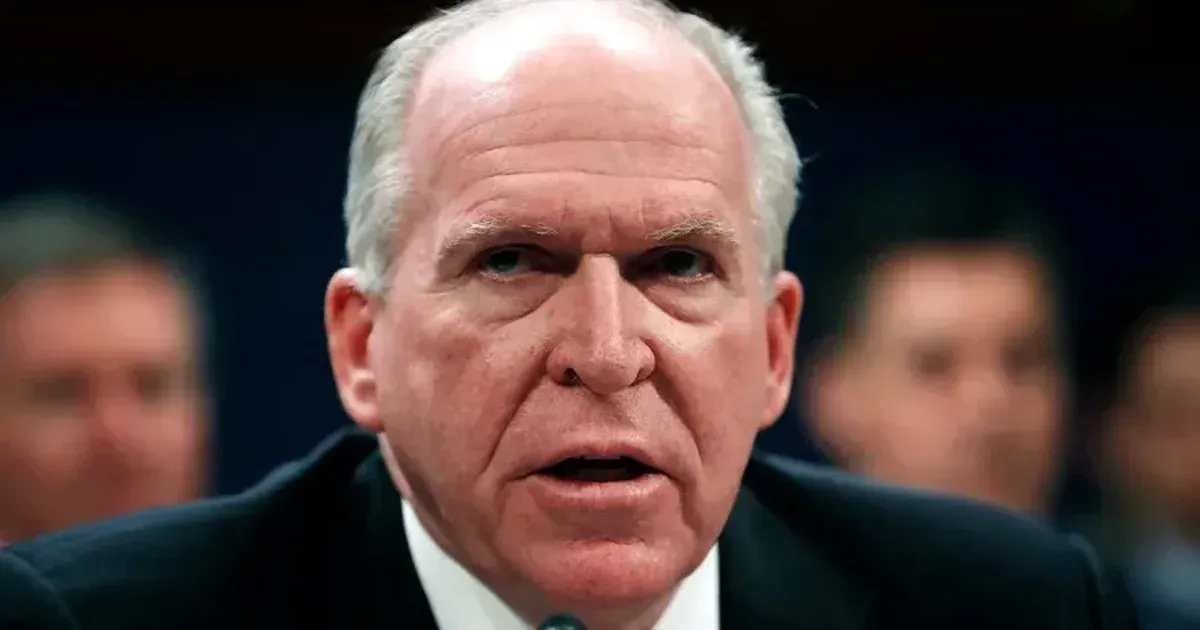
Legislative efforts to invoke this constitutional provision increased recently among congressional Democrats. High-stakes confrontations with Iran fueled these calls for removal. Brennan contended that the specific language governing presidential inability applies directly to the personality and decision-making style of the current Republican frontrunner. By April 14, 2026, he suggested that leaving such an individual in control of the nuclear codes poses an existential risk to the Republic.
Constitutional mechanisms for removal traditionally focus on physical illness or sudden incapacitation. Section 4 allows the Vice President and a majority of the Cabinet to notify Congress that the president can no longer discharge their duties. Brennan argued that the definition of inability must include psychological unfitness and reckless conduct. He pointed to recent threats directed at Tehran as evidence of a temperament that the framers of the amendment sought to address.
“I think the 25th Amendment was written with Donald Trump in mind, because allowing someone like this to continue presents a danger to our national interests and the safety of the American people,” John Brennan said during the televised segment.
Section 4 remains a high bar that the United States has never cleared. Critics of Brennan claim his interpretation distorts the original intent of the 1967 ratification. During the debates of the 1960s, Senator Birch Bayh and other sponsors focused primarily on scenarios involving comas, strokes, or physical trauma. Using the amendment to address personality traits or unpopular policy decisions would deviate from historical precedent.
Constitutional Mechanisms and Section Four Criteria
National security circles have long debated the intersection of mental health and executive authority. Brennan, who led the agency from 2013 to 2017, has been a vocal critic of the Trump administration since its inception. His latest remarks elevate the discussion from political disagreement to a question of constitutional eligibility. Brennan maintains that the risks associated with a second Trump term outweigh the political costs of a forced removal.
Ratified in 1967, the 25th Amendment emerged from the trauma of the Kennedy assassination. Congress recognized that the original Constitution failed to provide clear instructions for a transfer of power if a president survived an attack but lost cognitive function. Section 4 was the most debated portion of the text. It creates a process where the executive branch itself must initiate the removal, rather than the legislative branch through impeachment. This ensures that the decision remains within the president's own political circle.
Inability is the central term that remains within the legal text. Supporters of a broad interpretation argue that inability covers any condition that prevents the president from making rational decisions. Opponents argue that allowing a Cabinet to decide based on behavior creates a shadow government. Brennan insists that the risks are too high to wait for a physical collapse when psychological instability is evident. His comments suggest that the standard for inability should be whether the president can fulfill their oath to protect the country.
Every previous discussion of Section 4 involved clear medical emergencies. President Ronald Reagan underwent surgery in 1985, but his team did not formally invoke Section 4 to avoid looking weak. President George W. Bush transferred power to Dick Cheney under Section 3 for minor procedures. Brennan's push for a Section 4 invocation based on a president's nature is a departure from these physical health applications. It moves the conversation into the area of behavioral science and psychiatric evaluation. Heightened concerns over presidential stability have led congressional Democrats to actively explore formal removal procedures.
John Brennan Evaluates Executive Fitness and National Security
Intelligence officials often witness the direct consequences of erratic executive orders. Brennan emphasized that foreign adversaries like Iran monitor presidential stability to identify weaknesses in American resolve. He argued that threats of total destruction or sudden policy reversals undermine the work of diplomats and military commanders. The former director stated that a president who acts on impulse instead of intelligence data fits the profile that Section 4 intended to address.
Trump has frequently dismissed such criticisms as the work of the deep state. The former president claims that his aggressive posture is a tactical necessity in a dangerous world. Brennan, however, views these actions as a sign of underlying unfitness. He suggested that the structure of the 25th Amendment gives the Cabinet the power to act as a fail-safe against a leader who ignores institutional norms. Brennan believes the founders of the amendment wanted to protect the office from a person who lacks a fundamental grasp of reality.
Public opinion on the matter is split along partisan lines. Surveys indicate that a majority of Democratic voters supports exploring the 25th Amendment as a tool for removal. Republican voters overwhelmingly view the suggestion as an attempted coup. Brennan acknowledged the political difficulty of convincing a Cabinet of loyalists to turn against their leader. He maintains that the legal framework exists precisely for times when loyalty to the Constitution must exceed loyalty to a person.
Congressional Democrats Intensify Removal Discussion
House leadership has discussed forming an independent commission to evaluate presidential fitness. Under the 25th Amendment, Congress can designate a body other than the Cabinet to determine inability. Brennan's remarks gave fresh momentum to these legislative proposals. Lawmakers argue that a commission of medical experts and former statesmen would provide a more objective assessment than political appointees. This path would still require the Vice President's participation to succeed.
Pressure on the current administration continues to mount as election cycles approach. Brennan's involvement highlights a growing rift between the intelligence community and the executive branch. He claimed that the 25th Amendment provides a more surgical solution than impeachment, which often becomes a prolonged media spectacle. Removing a president for inability focuses on the functional capacity of the government. Impeachment focuses on high crimes and misdemeanors, which are harder to prove in a divided Senate.
Records from the Johnson and Nixon eras show that the 25th Amendment was meant to prevent a vacuum of power. Brennan argues that an unfit president creates a different kind of vacuum where authority is ignored or misused. He suggested that the 25th Amendment is a prophylactic measure for the 21st century. His analysis rests on the belief that modern threats require a president who is mentally agile at all times.
Legal scholars point out that the President can contest any removal attempt under Section 4. If the President sends a written declaration that no inability exists, the Vice President and the Cabinet have four days to challenge it. The issue then goes to Congress, which must decide the matter within 21 days. A two-thirds vote in both the House and the Senate is required to keep the President out of power. This threshold is higher than the simple majority required for impeachment in the House.
Brennan understands that the arithmetic for removal is nearly impossible in the current political climate. He argues that the conversation itself is necessary to warn the public about the dangers of a leader with a volatile temperament. His comments emphasize the gravity of the situation regarding Iran and other geopolitical hotspots. He believes that the 25th Amendment is a dormant tool that should be ready for use in a crisis. The former director's advocacy has turned a dry constitutional clause into a central topic of national debate.
Removal Talk and Political Limits
John Brennan has revived one of Washington's most explosive constitutional arguments by tying Donald Trump's conduct to the 25th Amendment. His comments pushed Section 4 back into a debate usually reserved for medical incapacity or sudden crisis. The remarks were drawing political reaction on April 13, 2026, as Democrats and Republicans split over whether the provision belongs in the current fight.