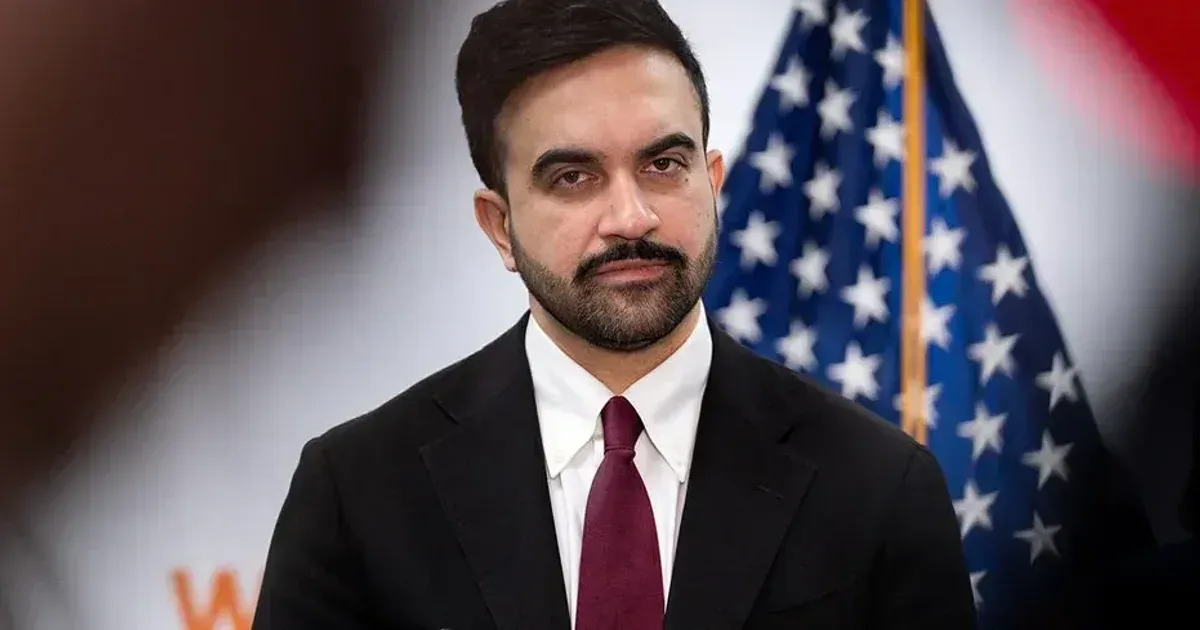
Zohran Mamdani is turning New York's racial wealth gap into the organizing argument for a sweeping municipal budget fight. His plan links police cuts, tax changes and equity offices in a way that has already drawn legal and public-safety objections. The proposal now forces a choice over what the city means by safety. City officials were defending the plan on April 13, 2026, as opponents warned that the fiscal trade-offs could reshape basic services.
Budgetary adjustments proposed by the mayor's office involve stripping funding for approximately 5,000 positions within the NYPD to finance social initiatives. Revenue from these cuts and proposed tax hikes will flow into a newly expanded network of racial equity offices. Critics of the plan have pointed to the creation of numerous six-figure diversity, equity, and inclusion (DEI) positions as a point of contention in the $127 billion fiscal plan. City Hall officials insist these administrative roles are essential for dismantling what they describe as centuries of systemic economic exclusion. The plan currently faces strong pushback from federal authorities and local police unions.
Mamdani Targets Wealth Gap with Fiscal Overhaul
Statistical evidence presented in the Preliminary Racial Equity Plan traces the current economic landscape of the city back to historical factors. Authors of the report specifically name colonization and slavery as the root causes of the wealth disparities observed in the 2026 fiscal year. Mayor Zohran Mamdani asserts that previous policies failed to address these historical grievances, leading to the current $180,000 median wealth divide. The report suggests that the city cannot achieve fiscal stability without first correcting the uneven distribution of assets among its residents. Median wealth for Black households has remained stagnant while White household assets grew steadily over the last decade.
Property owners in the five boroughs may face a 9.5 percent tax increase if state lawmakers in Albany fail to approve alternative revenue measures proposed by the mayor. Mamdani intends to use this revenue to fund a series of ambitious social programs, including city-owned grocery stores and the elimination of fares on the municipal bus system. Wealthy residents and corporations would bear the brunt of these tax increases under the current proposal. Administrative leaders argue that the concentration of wealth in specific neighborhoods requires a more aggressive approach to municipal taxation. Internal projections suggest the higher rates could generate billions in additional annual revenue for equity-focused projects.
NYPD Staffing Reductions Fuel Public Safety Debate
Eliminating 5,000 NYPD positions represents the most controversial element of the Mamdani administration's fiscal plan. The department, which has long been the centerpiece of New York's municipal budget, would see a significant reduction in its total headcount. Police leadership warned that such a reduction would compromise response times and detective capabilities in high-crime sectors. Mamdani, however, maintains that public safety is best achieved by investing in housing and education rather than increasing the number of officers on the street. The budget proposal shifts hundreds of millions of dollars from the police department to neighborhood-based social programs. The proposed tax hikes echo broader debates over New York Democrats’ budget strategies.
“This is not an indictment of any one New Yorker,” Mamdani said during a Tuesday press conference. “It is an indictment, however, of policies and politics that have persisted for far too long.”
Public safety is redefined within the mayor's 375-page document as a condition achieved through economic security. The plan argues that the presence of police officers does not address the underlying causes of crime, which the administration links directly to the racial wealth gap. Revenue saved from the reduction in police staffing will support the creation of a public safety infrastructure focused on mental health response teams and community violence interrupters. Proponents of the shift suggest that traditional policing models have failed to reduce recidivism or improve long-term outcomes for marginalized communities. NYPD officials have yet to release a detailed operational response to the proposed cuts.
Equity Offices Receive Funding Amid Property Tax Hike
Investment in administrative oversight forms the backbone of the city's new racial equity initiative. The Preliminary Racial Equity Plan requires every major city agency to evaluate its internal operations through a specific equity lens. This initiative has led to the creation of numerous high-level positions dedicated to monitoring diversity metrics and identifying disparities in service delivery. Salaries for these new roles often exceed $150,000, drawing scrutiny from fiscal watchdogs who question the efficiency of the spending. The administration defends these costs as necessary for the successful implementation of the $127 billion budget. Mamdani argues that without dedicated staff, equity goals will remain unmet.
Seven key areas of focus are identified in the administrative plan. Infrastructure, health, and housing projects will all be subject to new equity requirements under the Mamdani plan. City-owned grocery stores are planned for neighborhoods classified as food deserts, aiming to provide affordable nutrition while bypassing private retail chains. Free bus service is another primary objective, intended to reduce the cost of living for low-income workers who rely on public transit. Revenue from the proposed property tax hikes will serve as the primary funding source for these transit and food security programs. The mayor's office believes these real benefits will eventually outweigh the initial costs of the administrative expansion.
Department of Justice officials expressed immediate concerns regarding the legality of the mayor's racial equity mandates. Federal investigators are currently reviewing whether the city's plan violates civil rights statutes by explicitly directing resources based on racial categories. The Trump administration has signaled its intention to challenge the plan in federal court, potentially freezing billions in city spending. Legal experts suggest that the use of racial wealth data to justify tax and police policy may face a difficult path through the judicial system. Mamdani has stated his readiness to defend the plan against any federal interference. The city's legal department is preparing for a protracted battle over the implementation of the equity offices.
State lawmakers also hold substantial influence over the fate of the 9.5% property tax increase. Republican leaders in the state legislature have described the tax hike as a threat to the city's economic recovery and a driver of outward migration. Business groups have joined the opposition, claiming that higher corporate taxes will lead to job losses and reduced investment in the five boroughs. Despite these challenges, the mayor remains committed to the $180,000 wealth gap figure as the ultimate justification for his fiscal priorities. Legal filings from the Department of Justice indicate a looming battle over the use of federal grant money for these restructured programs.
Budget Politics After the Plan
Can a municipality tax its way into social equality while simultaneously dismantling its security apparatus? Mayor Zohran Mamdani's Preliminary Racial Equity Plan is less a fiscal document and more a radical experiment in urban governance that prioritizes ideological outcomes over basic operational stability. By gutting 5,000 NYPD positions, the administration is making a high-stakes bet that social programming can suppress crime more effectively than a visible police presence. This assumption ignores the immediate reality of urban volatility and risks alienating the very middle-class taxpayers who fund the city's $127 billion budget. The redistribution of wealth from high-value properties to six-figure DEI salaries creates an administrative bloat that may prove impossible to sustain if the city's tax base begins to erode.