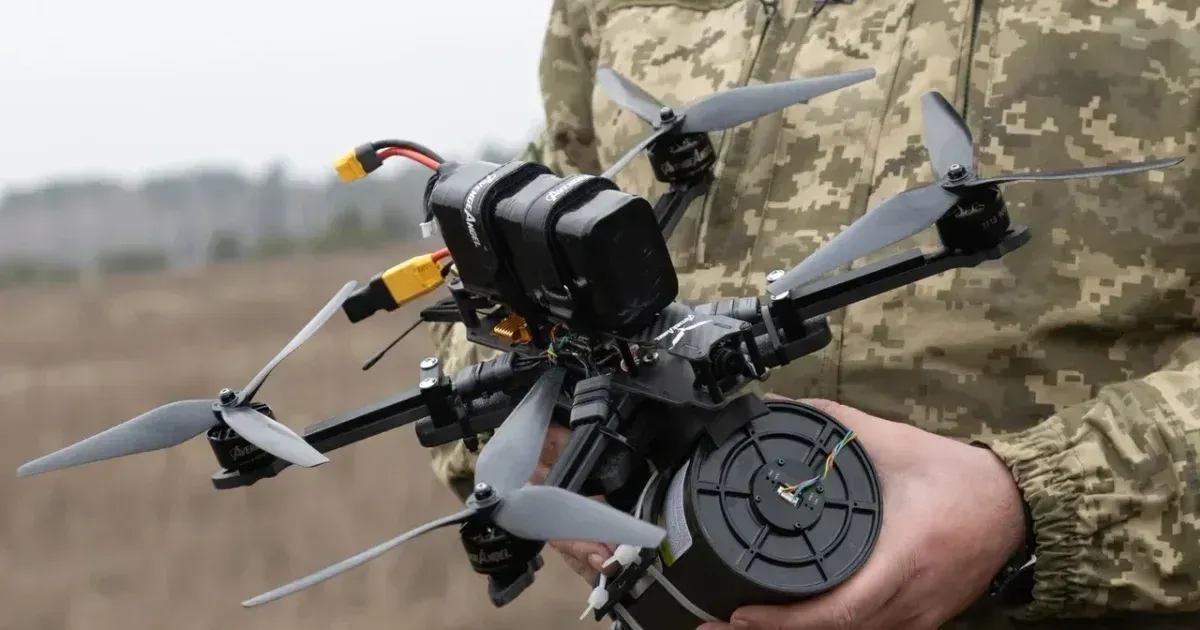
Federal agents and local officers dismantled a sprawling narcotics network using a fleet of unmanned aerial vehicles to track suspects across three state lines. Investigators spent months monitoring the syndicate as it moved bulk quantities of illicit substances from regional hubs to street-level dealers. Tactical units with thermal sensors and high-resolution cameras provided real-time coordinates to ground teams. By April 15, 2026, the operation had become a test case for how domestic agencies use police drones in complex interdiction work.
Large and small law enforcement agencies across the nation now operate more than 5,000 drone programs. Federal data indicates that the number of departments deploying these tools has doubled since 2022. Once considered a luxury for elite specialized units, unmanned systems are now standard equipment for patrol officers and sheriff's deputies. Smaller municipalities often favor these devices because they provide aerial perspectives for a fraction of the cost associated with traditional manned aviation. A standard quadcopter costs less than $20,000 to acquire and maintain. In contrast, a police helicopter requires millions in initial capital and thousands of dollars per flight hour for fuel and specialized mechanics.
Expansion of Drone Fleets in Law Enforcement
Agencies in rural and urban environments alike are integrating drones into daily operations. Departmental logs show that officers use these tools for search and rescue, accident reconstruction, and active shooter response. Tactical teams frequently deploy small, shielded drones to fly inside buildings during high-risk warrant executions. Specialized cameras allow operators to see around corners or through smoke using infrared technology. Such capabilities protect officers by providing situational awareness before they enter a dangerous environment. Early adoption was concentrated in coastal hubs, but midwestern and southern departments now lead in per-capita drone acquisition.
Technological improvements in battery life and encrypted data transmission have made long-range surveillance more viable. Modern police drones stay airborne for nearly an hour and can be controlled via cellular networks from miles away. Some departments have established Drone as a First Responder programs. In these cities, drones launch from rooftops immediately after a 911 call is received. Dispatchers often arrive at the scene via camera before the first patrol car clears the nearest intersection. Records from the Federal Aviation Administration show a 40 percent increase in public safety flight waivers over the last 18 months.
Tactical Advantages in Multistate Narcotics Interdiction
Narcotics investigators find drones particularly useful for long-distance tailing operations. Suspects often look for following vehicles or circling helicopters, yet a small drone hovering at 400 feet is nearly invisible and silent to those on the ground. During the recent multistate investigation, tactical teams used a relay system where one drone would replace another as battery levels dropped. Continuous coverage allowed the Department of Justice to map the entire supply chain from a single centralized command post. State boundaries proved no obstacle for the aerial units, which moved seamlessly between jurisdictions under mutual aid agreements. Evidence gathered from the sky provided the basis for dozens of simultaneous search warrants.
Coordinated strikes resulted in the seizure of thirty kilograms of synthetic opioids and several million dollars in cash. Officers also recovered a fleet of modified consumer drones used by the traffickers themselves to scout for police checkpoints. This technological arms race has forced agencies to invest in counter-drone systems capable of jamming or intercepting unauthorized signals. Private-sector consultants suggest that criminal organizations are increasingly using autonomous delivery methods to minimize human risk. Law enforcement response involves the use of tethered drones that can stay aloft for days at a time to monitor known smuggling routes.
Privacy Protections and the Fourth Amendment
Constitutional debates persist regarding the extent of aerial surveillance without a warrant. Privacy advocates argue that the Fourth Amendment should protect citizens from persistent tracking from the sky. Courts in several states have ruled that while a single flight over a backyard might be legal, long-term monitoring requires judicial oversight. Legislation varies sharply by state, with some governors signing strict limits on how long police can store drone footage. Public records suggest that most departments delete non-evidentiary video within thirty days. Despite these policies, civil liberties groups express concern about the potential for facial recognition integration.
“The use of unmanned aircraft systems provides an efficient and effective tool for law enforcement to enhance public safety while reducing risks to officers and the public,” a Department of Justice oversight report said.
Economic Drivers of Aerial Surveillance Adoption
Budgetary constraints often dictate the pace of technological adoption in local government. Many departments have phased out their aging Cessna airplanes in favor of versatile drone fleets. Insurance premiums for drone operations are lower than those for manned aircraft, further encouraging the transition. Federal grant programs have provided millions in funding for departments to purchase U.S.-made hardware. These grants often require that agencies avoid foreign-manufactured drones due to national security concerns. Manufacturers in California and Washington have seen a surge in orders as departments move away from Chinese-made platforms.
Training programs for police pilots have become a substantial industry in their own right. Officers must obtain Part 107 certification from the federal government to operate in national airspace. Many agencies now employ full-time coordinators to manage flight logs and maintenance schedules. Larger departments maintain dozens of pilots across different shifts to ensure 24-hour availability. Internal audits show that drone deployment reduces the time required to clear major traffic accidents by 30 percent. This efficiency allows roads to open faster and reduces the likelihood of secondary collisions.
Future developments will likely include the integration of artificial intelligence to identify specific vehicle makes and models automatically. Such software can alert officers when a suspect vehicle appears on camera without requiring a human to watch the feed constantly. Rapid advancements in sensor technology will also allow drones to detect chemical signatures associated with narcotics manufacturing from the air. These capabilities are expected to further centralize surveillance operations in major metropolitan areas. Most agencies continue to expand their programs as the technology becomes more reliable and accessible.
Surveillance After the Drug Bust
Nineteenth-century city planners never envisioned a world where the sky was a permanent police precinct. The proliferation of 5,000 drone programs across the United States is not a mere technological upgrade but a fundamental expansion of state power that has occurred almost entirely without public debate. By lowering the cost of aerial surveillance by 95 percent, law enforcement has removed the natural economic barrier that once protected the privacy of the average citizen. We are sleepwalking into an era of vertical panopticon where the expectation of being unobserved in public is officially dead.
Legislative bodies have failed to keep pace with the rapid deployment of these systems. While some states have implemented warrant requirements, the sheer volume of flight data being collected creates a vast, unregulated reservoir of civilian movement patterns. The data will eventually be fed into predictive policing algorithms, turning the sky into an active participant in criminal profiling. The argument that drones save lives is a potent shield against criticism, yet it masks the gradual erosion of the boundary between targeted investigation and mass observation. If every 911 call triggers an automated flight, then every neighborhood becomes a high-surveillance zone by default.
The narcotics trade remains the primary testing ground for these intrusive tools. Authorities use the threat of the opioid crisis to justify the normalization of persistent tracking, knowing that few will defend the privacy rights of traffickers. However, the infrastructure built to catch drug rings will inevitably be repurposed for more mundane social control. The sky is no longer a neutral space. It is the new frontier of the administrative state, and the window for effective regulation is closing fast. Vigilance is the only rational response to a government that can watch everyone from everywhere for almost no cost. Power never retreats from a new vantage point.