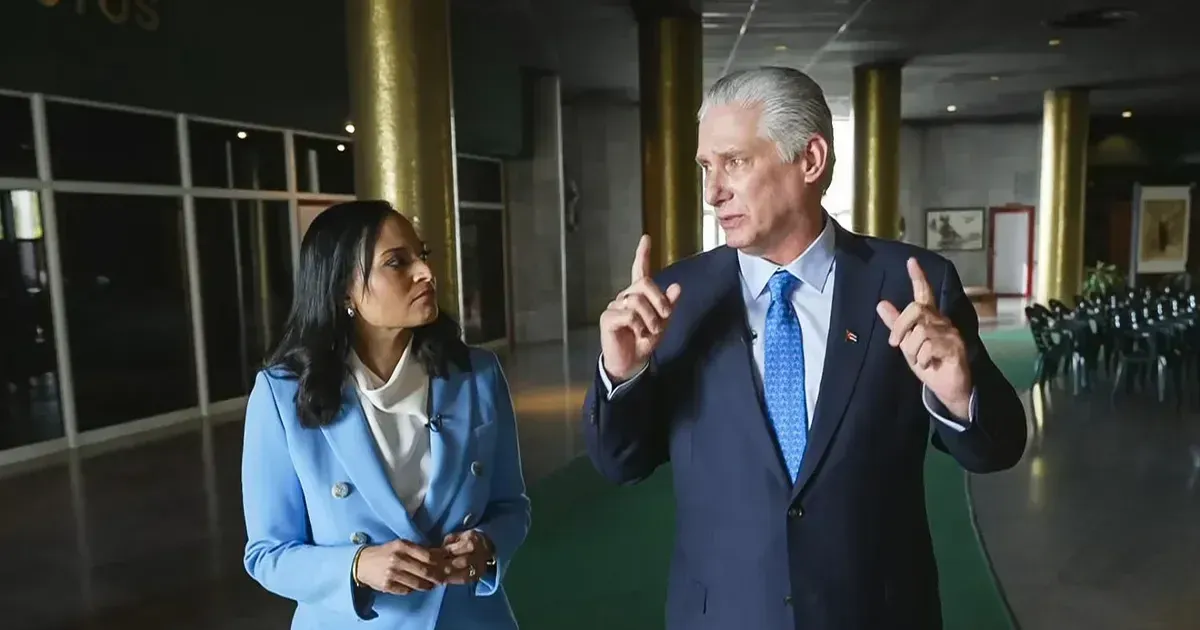
Miguel Díaz-Canel sat across from Kristen Welker to deliver a message of absolute defiance toward the United States. Speaking through a translator on the NBC program Meet the Press, the Cuban leader rejected recent threats originating from the White House. Havana, however, continues to brace for a potential escalation of hostilities. He insisted his nation maintains the capacity to repel any external aggression. Miguel Díaz-Canel told Welker that he feels no fear regarding the possibility of a direct American military intervention.
President Donald Trump has frequently discussed his desire to "take" Cuba during public rallies and policy briefings. These statements have pushed tensions across the Florida Straits to levels not seen since the Cold War. Havana stays on high alert for potential incursions. Nationalistic fervor is the primary shield against foreign influence.
“I have no fear. I am willing to give my life for the revolution,” Díaz-Canel said on “Meet the Press,” speaking through a translator.
Reference to the Cuban national anthem, which states that dying for the homeland is to live, highlighted the leader's rhetoric. If a military strike occurs, he predicted high costs for everyone involved. He doubted whether the American public would support a war against a small island located just 90 miles off the coast of Florida. Invasion talk has nonetheless persisted in Washington circles.
Military Mobilization and Defiance in Havana
Any attempt to remove the current government would meet stiff resistance from a population accustomed to hardship. Cuba has survived decades of isolation since the 1959 revolution. Every neighborhood maintains civil defense committees designed to mobilize for such a scenario. Armed forces regularly conduct drills to simulate the defense of the coastline against amphibious assaults. Survival is the only metric of success for the Communist Party. Independent military analysts note that the capture of Maduro in Caracas provides a blueprint that the Pentagon might seek to replicate. Havana remains one of the most fortified cities in the Western Hemisphere. Unlike the quick operations seen elsewhere, a conflict here would likely involve urban warfare. Such a prospect typically deters military planners, yet the current administration in Washington has shown a preference for disruptive action. This discussion on Meet the Press reflects a broader trend of political figures navigating high-stakes media interviews.
Economic Fallout of the American Blockade
Blockade measures enforced by the United States since January have tightened the economic noose around the island. This pressure has led to nationwide power grid failures that leave millions in darkness for hours each day. American officials claim the blockade is necessary to force a transition to democracy. Critics argue it primarily hurts the most vulnerable citizens. Relations between the two countries have reached a freezing point. Failure of the electrical infrastructure has forced Havana to implement strict rationing of basic goods. Food supplies have dwindled as imports become increasingly difficult to secure. Inflation has stripped the Cuban peso of its remaining value. While the government blames external pressure for these woes, many citizens also point to decades of internal mismanagement. Conflict seems inevitable if the economic collapse continues unabated.
Moscow continues to provide a lifeline to Havana despite the American blockade. Last month, President Trump allowed a Russian oil tanker to reach the island. He cited humanitarian reasons for this exception to the ongoing embargo. This single shipment, though helpful, provides only a temporary reprieve for the struggling energy sector. Russia stays a critical ally for a nation with few friends in the region.
Humanitarian aid from the Kremlin often arrives with strategic strings attached. Moscow seeks to maintain a footprint in the Caribbean to counter American influence in Eastern Europe. Oil shipments serve as both energy and a geopolitical signal. Strategic depth for Cuba depends almost entirely on these distant partners. Without this support, the island's ability to maintain basic services would vanish within weeks.
International observers believe the removal of Maduro changed the calculus for all left-leaning governments in Latin America. Havana watched the Caracas operation with intense scrutiny. Security around Díaz-Canel has reportedly increased since the Venezuelan leader was taken into custody. Fear of a similar surgical strike governs the movements of the Cuban elite. Intelligence services have prioritized identifying potential internal collaborators who might assist American forces.
Public statements from the White House suggest that Cuba is the final target in a broader campaign to reshape the hemisphere. International law provides little comfort to a government that Washington has labeled a threat. Strategic ambiguity in the Pentagon keeps Havana guessing about the timing of any potential strike. Defense networks stay prepared for a conflict that many hope will never arrive. Official channels for dialogue have been largely severed since the blockade began.
Defiance Under Military Pressure
History often repeats itself in the turquoise waters of the Caribbean, yet the White House seems determined to ignore the lessons of the 1960s. Does the American administration truly believe that a blockade will trigger a democratic awakening in Havana? Decades of isolationist policy suggest the opposite, yet Washington persists in a strategy that has historically solidified the internal power of the Communist Party. By threatening invasion, the White House provides the Cuban leadership with exactly what it needs: an external enemy to justify internal hardship.
This approach risks a regional fire for minimal gain. If the objective is to remove a thorn, the current tactics are merely sharpening the point. Capturing Maduro changed the map in South America, but Cuba is a different animal with a different history of resistance. A direct strike would likely yield a bloody mess rather than a clean transition. Economic strangulation hurts civilians while leaving the political elite relatively insulated. As long as Moscow finds humanitarian excuses to keep the lights on, the status quo will hold. The island stays defiant, and the cost of changing that fact is rising daily. The standoff persists.