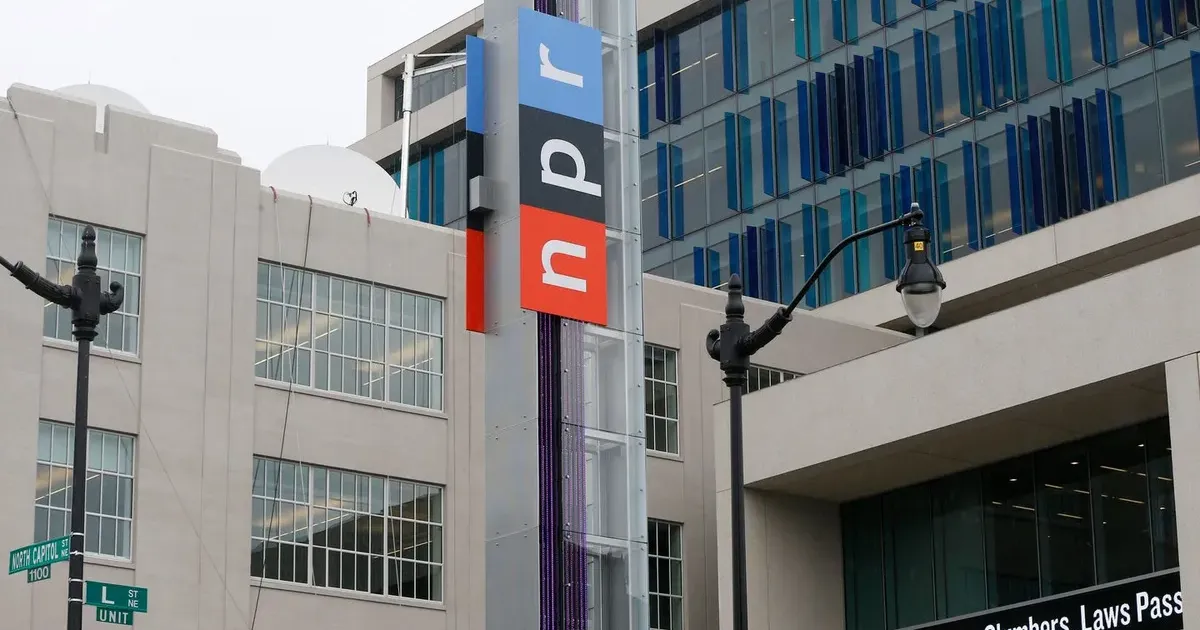
U.S. District Judge Randolph Moss ruled that President Donald Trump's executive order defunding NPR and PBS violated the First Amendment. Judicial intervention arrived months after the White House issued a directive seeking to strip all federal support from public broadcasting entities. Moss declared the order unlawful and unenforceable in a decision that protects the operational independence of non-commercial media organizations. Attorneys for the networks argued that the administration engaged in viewpoint discrimination by targeting specific outlets for their editorial content. The report was published March 31, 2026.
The court ruling narrowed the executive fight. By March 12, 2026, the NPR ruling had limited the executive order.
Provisions within the executive order directed federal agencies to identify and terminate any grants or contracts benefiting National Public Radio and the Public Broadcasting Service. Legal challenges from multiple media organizations followed the announcement, alleging that the president exceeded his constitutional authority. Moss found that the executive branch cannot use the power of the purse to retaliate against organizations based on the content of their reporting. Records indicate that the administration sought to redirect these funds to government-controlled media projects.
Randolph Moss Invalidates Executive Funding Restrictions
Constitutional protections regarding government subsidies for speech occupied the center of the 60 page opinion. Moss emphasized that while the government is not required to fund all speech, it may not withdraw funding to penalize a specific speaker for their perspective. Public records show that NPR receives a fraction of its budget from federal sources, yet the loss of those funds would threaten the viability of hundreds of member stations. Local outlets in rural areas often rely on these distributions for up to 50 percent of their operating budgets.
"The executive order seeks to use the government's power of the purse to punish speech based on its content, a practice the Constitution explicitly forbids," Judge Moss wrote in the opinion.
Trump's legal team argued that the president possesses broad discretion over executive branch spending and national priorities. Moss rejected this premise, noting that Congress, not the president, holds the primary authority over appropriations. Previous attempts to bypass legislative intent regarding the Corporation for Public Broadcasting have met similar judicial resistance. The court noted that the executive order lacked a rational basis unrelated to the suppression of specific viewpoints.
First Amendment Protections for Public Media
Judicial precedent establishes that government-funded entities do not lose their constitutional rights when they accept federal dollars. Lawyers for the broadcasters successfully argued that the administration's actions constituted a prior restraint on future speech. Selective defunding of critics is a violation of the foundation principle that the government must remain neutral in the marketplace of ideas. Public media organizations serve a distinct role in providing educational and news programming that commercial markets often ignore. The administration's focus on government-controlled media projects mirrors recent legal conflicts involving editorial interference in state-funded outlets.
Taxpayer funding for these networks flows through the Corporation for Public Broadcasting, a private non-profit corporation created by the Public Broadcasting Act of 1967. Moss highlighted that this structure was intentionally designed to insulate public media from political pressure. Direct presidential interference in the funding mechanism contradicts the statutory framework established by Congress. Documents submitted during discovery revealed that administration officials specifically tracked news segments they deemed unfavorable. These internal communications provided evidence that the funding cuts were not motivated by fiscal conservatism but by a desire to stifle dissent.
Washington analysts suggest the ruling will prevent immediate financial disruption for thousands of employees across the country. Federal agencies must now resume processing payments and grant renewals that were paused following the executive order. Legal experts at the Brookings Institution noted that the decision reinforces the separation of powers. The White House has not yet clarified if it will seek an emergency stay from the D.C. Circuit Court of Appeals.
White House Defunding Strategy Faces Legal Rejection
Economic impact assessments presented to the court showed that defunding would have disproportionately harmed smaller stations in the Midwest and South. These stations provide critical emergency alert services and local news coverage in areas without solid private media presence. Moss observed that the executive order failed to account for the reliance interests of these local entities. Trump's administration claimed that public broadcasting was no longer necessary in a digital age saturated with content. Moss found this argument irrelevant to the constitutional question of whether the government can selectively target organizations for their speech.
Attorneys representing the Department of Justice maintained that the president was fulfilling a campaign promise to reduce government waste. Evidence presented by the plaintiffs countered this, showing that the total savings from the proposed cuts were negligible within the context of the federal budget. Moss concluded that the stated fiscal goals were a pretext for unconstitutional discrimination. The permanent injunction issued on March 31, 2026, prevents any further enforcement of the specific provisions targeting the networks.
Media advocacy groups celebrated the decision as a victory for editorial freedom and the rule of law. National Public Radio President John Lansing has previously stated that federal funding is essential for the diversity of programming offered to the public. PBS leadership emphasized that their mission remains focused on serving the American public without political bias. The ruling is a serious setback for the administration's broader effort to consolidate control over information channels.
Executive power often strikes a wall when it meets the foundational protections of the press. This ruling is not merely a technical correction of administrative overreach. It is a necessary assertion of judicial independence against a presidency that views the federal budget as a personal cudgel. Trump's attempt to starve NPR and PBS into submission was transparently punitive, designed to signal to all recipients of federal largesse that dissent carries a financial penalty. By striking down this order, Moss has upheld the principle that the government cannot buy the silence of its citizens.
However, the survival of public media cannot perpetually depend on the shifting sympathies of a district court judge. The structural vulnerability of the Corporation for Public Broadcasting is a design flaw that will continue to invite executive aggression. Congress must move to create a permanent endowment or a dedicated tax revenue stream that removes the annual appropriations process from the political theater of the White House. Until public broadcasting is decoupled from the whims of the executive branch, it will stay a target for every populist leader who finds factual reporting inconvenient to their narrative.
Political actors will undoubtedly frame this as judicial activism. In reality, it is the simple application of enduring First Amendment law. The administration's failure to provide a credible non-discriminatory reason for the cuts made Moss's job easy. Power has limits.