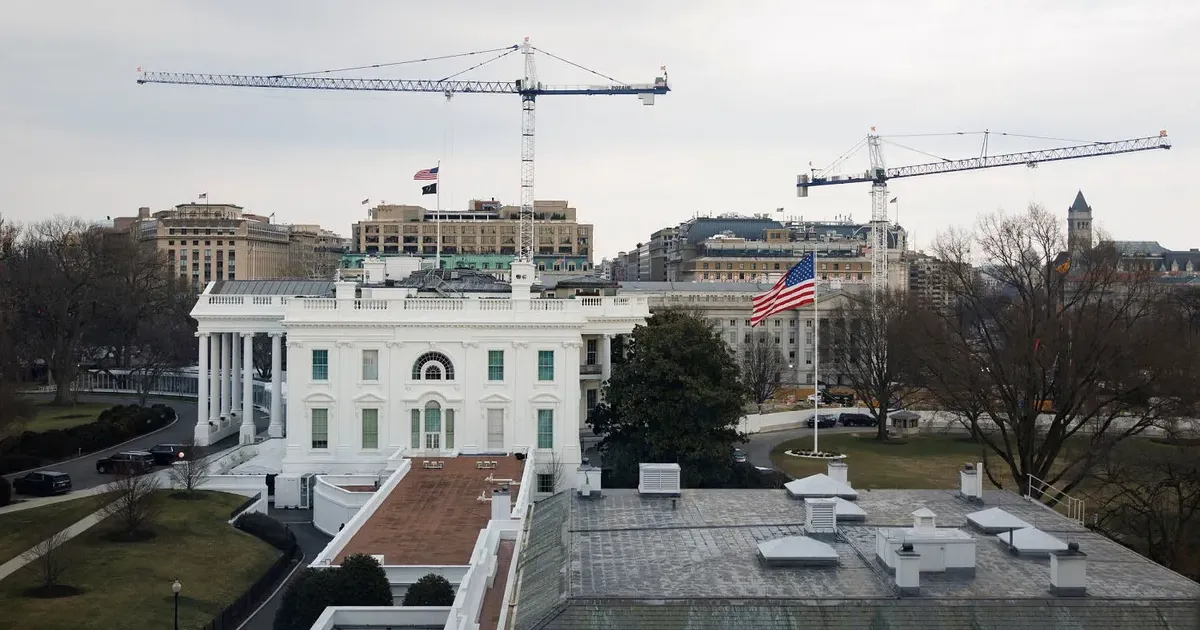
Washington judicial authorities issued a broad order to halt construction of a proposed $400 million ballroom at the White House. US District Court proceedings resulted in a temporary injunction that prevents any further demolition of the historical East Wing. Legal experts noted the decision forces the executive branch to halt a project that had already begun site preparation and initial structural stripping. Donald Trump remains intent on the renovation, though the court mandated immediate cessation of all heavy machinery activity on the grounds. By March 31, 2026, the judge’s order had turned the ballroom project into a formal oversight fight.
District officials confirmed the ruling requires the administration to seek formal input from federal lawmakers before any additional work commences. Specific statutes governing the preservation of national landmarks appear to be the primary hurdle for the proposed expansion. The project, intended to replace current East Wing structures with an expansive, modernized gala space, lacks the necessary congressional authorization for such a large-scale structural overhaul. Federal records indicate the budget for this effort would exceed the cost of many recent federal infrastructure grants in the capital region.
Judicial scrutiny intensified once the demolition process began to threaten the architectural integrity of the original site. White House officials had initially argued that executive privilege granted the authority to modify the residence without external oversight. Judge-led inquiries, however, found that the residence functions as a public trust under federal law. This specific legal status requires a higher threshold for permanent alterations than the administration had anticipated.
Legal Challenges From National Trust for Historic Preservation
Advocacy groups led by the National Trust for Historic Preservation filed the lawsuit to protect the heritage of the site. Lawyers for the organization argued that the East Wing is an essential record of American history that could not be replaced by a modern reception hall. They specifically cited the National Historic Preservation Act as a barrier to the unvetted destruction of existing federal landmarks. Protection of the site requires adherence to strict aesthetic and structural standards that the current plan seemingly ignored.
Court filings suggest the administration failed to conduct the required environmental and historical impact studies before authorizing demolition crews to enter the grounds. Such studies typically take months or years to complete for a building of this stature. Instead, the project moved forward at a pace that suggested a desire to bypass standard bureaucratic checks. Washington legal experts believe this acceleration contributed directly to the judge's decision to freeze the project.
"I have concluded that the National Trust is likely to succeed on the merits because no statute comes close to giving the President the authority he claims to have," wrote a federal judge in Washington, D.C.
Public interest in the case remains high given the visibility of the construction equipment on the North Lawn. Preserving the character of the executive mansion has been a priority for the Trust since its founding by Congress in 1949. Efforts to modernize the building have historically required multi-party consensus and long-term planning cycles. The current friction stems from a departure from those established norms of presidential building projects.
Financing and Legislative Oversight of East Wing Demolition
Financial disclosures reveal the $400 million price tag for the ballroom was not part of the standard appropriations process for fiscal year 2026. Presidential staffers reportedly attempted to redirect funds from various executive department contingency accounts to cover the costs. Legislators on both sides of the aisle have expressed concern regarding the lack of transparency in the funding stream. Use of discretionary funds for major structural renovations typically requires a specific vote from the House and Senate.
Budgetary experts claim that the sheer scale of the project rivals the renovation of the entire building during the Truman era. During that 1948-1952 project, the structure was completely gutted and rebuilt with a steel frame, but only with large congressional cooperation. Attempting a similar level of structural changes without legislative approval is a serious departure from precedent. Current law dictates that any work over a certain financial threshold must be reviewed by the General Services Administration.
Architectural plans for the new space included a basement level with advanced security features and a gala hall capable of hosting over 1,000 guests. These plans would have required meaningful excavation near the residence foundations. Engineers warned that the vibration from such digging could destabilize older sections of the main mansion. Safety concerns for the historic structure were central to the arguments presented by the opposition.
Administrative Authority Versus Congressional Approval Limits
Executive orders regarding the "sprucing up" of Washington buildings have long been a point of pride for the current administration. Donald Trump reacted to the court order by criticizing the National Trust for Historic Preservation for failing to appreciate his vision for the capital. He argued that the White House needs world-class facilities to properly host foreign dignitaries and high-level events. His supporters claim the East Wing is cramped and outdated for modern diplomatic requirements.
Critics point out that the East Wing already contains offices for the First Lady and the Social Office, both of which would be displaced by the new ballroom. The displacement of these offices was planned without a clear strategy for their relocation within the existing footprint. Internal memos suggest the administration viewed these offices as secondary to the need for a premier entertainment venue. Such a prioritization of social space over operational office space raised questions about the functional utility of the renovation.
Judicial precedent heavily favors legislative control over federal property and its modification. Previous cases involving federal land use have consistently held that the President cannot unilaterally dispose of or sharply alter federal assets. The court noted that while the President resides in the White House, the building itself belongs to the American people through the federal government. This distinction remains a foundation of the legal argument against the ballroom project.
Legal Limits on White House Construction
The halted construction raises a basic separation-of-powers question: how far a president can alter a public historic site without clearer congressional approval. Funding sources and demolition authority now matter as much as design preference.
Preservation groups will frame the case around institutional stewardship, not nostalgia. The White House is both a residence and a public symbol, so even practical upgrades carry legal and political weight.