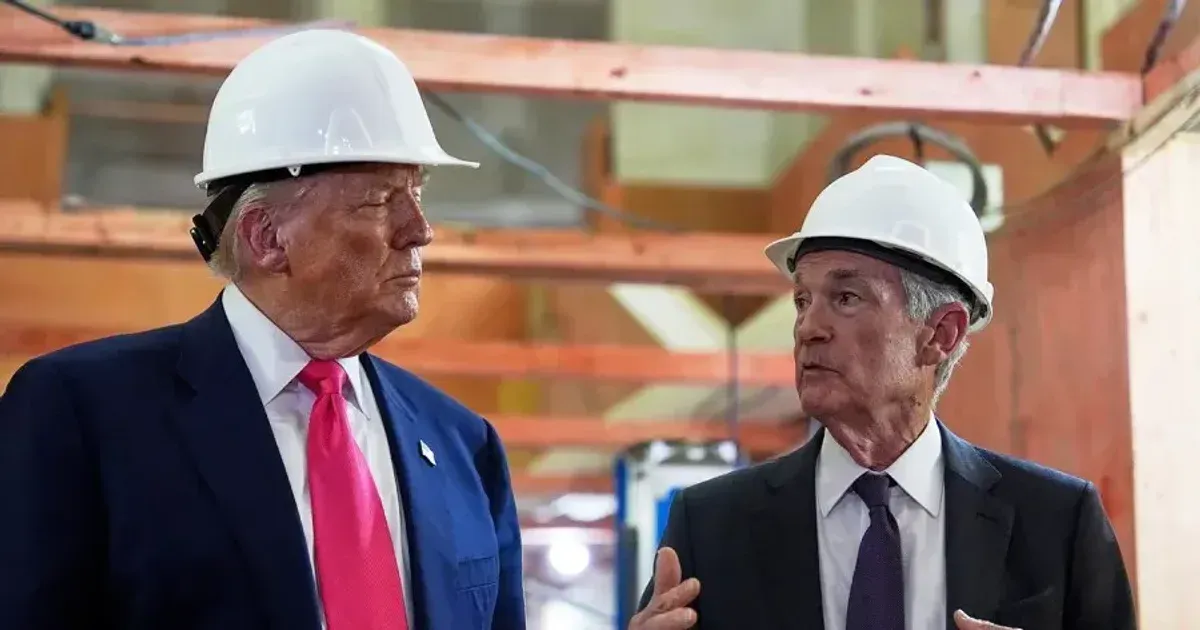
James Boasberg, a federal district judge, delivered a sharp rebuke to the Justice Department on Friday by quashing grand jury subpoenas directed at Federal Reserve Chair Jerome H. Powell. The ruling, unsealed in Washington, halts a federal investigation into a $2.5 billion renovation project at the central bank headquarters. The court decision was reported on March 13, 2026. Boasberg wrote in his decision that the Department of Justice failed to provide sufficient evidence of wrongdoing to justify the intrusive nature of the subpoenas. Federal prosecutors had sought personal and professional records from Jerome H. Powell and the Fed Board of Governors, alleging potential irregularities in the procurement process for the massive construction effort. The court order narrowed the subpoena fight.
Renovation plans for the Marriner S. Eccles Building and the neighboring Frick Family Building have drawn scrutiny since their inception. Costs ballooned from initial estimates, leading the Justice Department to launch a formal inquiry into how contracts were awarded and managed. Still, the court found that the government failed to establish a clear link between Powell and the administrative minutiae of the renovation contracts. Prosecutors argued that the chair had final oversight, but Boasberg countered that such a theory was insufficient for a grand jury subpoena. Judicial interference in executive criminal inquiries remains rare in the District of Columbia.
Boasberg Rejects Federal Reserve Renovation Probe
Court filings reveal that the Justice Department served two separate subpoenas on the Fed Board in an attempt to secure internal communications. These documents included emails, private meeting minutes, and financial disclosures related to the $2.5 billion project. But Boasberg suggested in his unsealed opinion that the timing and scope of the subpoenas hinted at a different motive. He explicitly mentioned the possibility that the investigation was designed to pressure the central bank chief rather than to uncover specific criminal activity. Such a move by the judiciary effectively shields Powell from the immediate threat of federal deposition.
Critics within the Justice Department pointed to the scale of the spending as justification for the probe. They noted that the renovation costs surpassed the budgets of many mid-sized federal agencies. Department attorneys claimed the subpoenas were a routine part of a white-collar investigation into government waste. In fact, the FBI had already conducted preliminary interviews with several contractors involved in the project before the subpoenas were issued. Evidence from those interviews did not satisfy the court's requirement for probable cause. Boasberg dismissed the government's arguments as speculative and legally thin.
Political Tension Surrounds Justice Department Investigation
Lawmakers on Capitol Hill have remained divided over the necessity of the investigation. Some members of the House Financial Services Committee have called for greater transparency regarding the Fed's internal expenditures. By contrast, others have decried the DOJ probe as a politically motivated attack on the independence of the Federal Reserve. For instance, Senator Elizabeth Warren and others have previously questioned the central bank's spending habits, though they have stopped short of accusing Powell of personal corruption. This expenditure on real estate has now become a focal point for broader debates about the Fed's autonomy.
Jerome Powell has consistently maintained that the renovation projects were necessary to modernize the aging infrastructure of the Eccles Building. The facility, which has served as the Fed's home since 1937, requires extensive upgrades to meet modern security and environmental standards. To that end, the Fed Board authorized the multibillion-dollar budget over several fiscal cycles. Records indicate that the renovation includes a total overhaul of the HVAC systems and the creation of new high-security meeting rooms. Architects and engineers on the project have faced numerous delays due to supply chain issues and rising labor costs.
The court must ensure that the grand jury process is not used as a tool for political use or administrative harassment against heads of independent agencies.
Power at the central bank relies as much on legal shielding as it does on interest rates. Boasberg's ruling reinforces the legal precedent that the Federal Reserve Chair is not a standard executive branch employee subject to the whims of the DOJ. Separately, legal scholars have noted that the 1913 Federal Reserve Act provides a unique layer of protection for board members. This ruling adds a new chapter to the long-running tension between the central bank and the executive branch. The Justice Department has not yet announced whether it will appeal the decision to the D.C. Circuit Court of Appeals.
Powell Legal Victory Limits Executive Oversight
Department officials had hoped to use the subpoenas to look for evidence of preferential treatment given to certain construction firms. They specifically sought records of communications between Powell's office and several major D.C.-based developers. But the judge found no evidence that the chair had any direct involvement in the selection of vendors or the negotiation of specific contract terms. In turn, the ruling suggests that the DOJ must find more concrete leads before it can compel a sitting Fed Chair to produce documents. The investigation into the contractors themselves may continue, but Powell is now legally insulated from the inquiry.
And the impact of the decision extends beyond the renovation project. It sets a higher bar for the Justice Department when investigating independent agencies that manage their own budgets. Most federal agencies rely on the General Services Administration for office space and renovations. The Federal Reserve, however, manages its own real estate portfolio independently. This ruling confirms that this independence extends into the area of criminal investigations and grand jury oversight. Federal prosecutors must now decide if they have enough evidence to proceed without the records they sought. The case remains open but stalled in the U.S. District Court.
Jerome Powell's legal team argued that the subpoenas were overly broad and placed an undue burden on the operations of the central bank. They contended that responding to the requests would require thousands of hours of document review. James Boasberg agreed, noting that the DOJ failed to narrow the scope of its request to specific timeframes or individuals. Even so, the shadow of the renovation costs continues to hang over the Fed's public image. The central bank recently released a statement defending the project as essential for the long-term viability of the headquarters. The project remains in the construction phase.
Executive Oversight Meets a Legal Limit
Boasberg’s ruling is a warning against treating criminal process as a political instrument. The Federal Reserve renovation may deserve scrutiny, but subpoenas aimed at a central bank chair cannot be built on insinuation and pressure alone. If prosecutors want credibility, they need evidence strong enough to survive court review, not a headline useful to the next campaign ad.