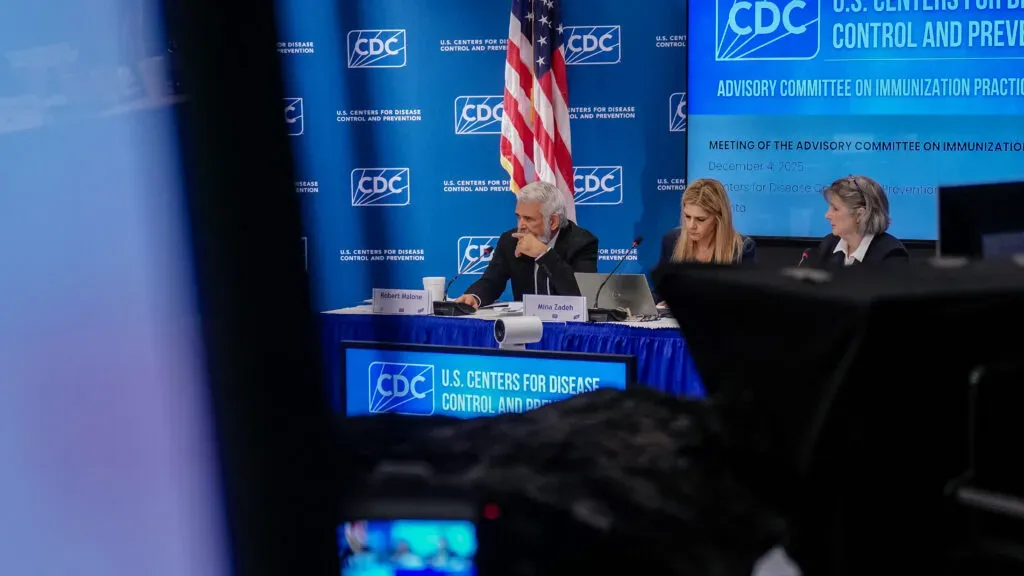
Judge Brian Murphy ruled that the executive effort to unilaterally alter the national immunization schedule lacked the necessary legal foundation. Robert F. Kennedy Jr., acting as Secretary of Health and Human Services, had overseen a series of rapid appointments to the Advisory Committee on Immunization Practices that the court found violated federal procedural requirements. By March 20, 2026, Monday's preliminary injunction had effectively invalidated a year of policy work conducted by the panel. At the center of the dispute are 13 members of the committee whose status is now in legal limbo while the administration decides its next move. HHS officials face an immediate logistical crisis as they determine whether to appeal the ruling or attempt to seat an entirely new panel. A person familiar with the internal deliberations noted that no final decisions have been made regarding a potential legal challenge. The court order specifically targets the decision by the Department of Health and Human Services to reduce the number of recommended vaccines for children. Judge Murphy concluded that such a major shift required a more rigorous public comment period and scientific review than was provided during the recent overhaul. The childhood vaccine schedule now reverts to its previous iteration across all federal guidance documents. But the fallout from the ruling extends beyond the courtroom into the halls of state legislatures. Nearly 30 states along with the District of Columbia have already signaled they will ignore the now-invalidated federal guidance. These jurisdictions intend to maintain their own rigorous immunization requirements despite the initial federal push for deregulation. Nonpartisan data from KFF shows a growing chasm between federal health priorities and state-level enforcement. Governors in several large states moved quickly to reassure local school boards that previous health standards remain in effect for the upcoming academic cycle.

Legal observers point to the Administrative Procedure Act as the primary tool used to dismantle the recent HHS directives. Judge Murphy noted in his 45-page opinion that the department failed to provide a reasoned explanation for departing from decades of established medical consensus. Career officials at the Centers for Disease Control and Prevention had privately expressed concerns about the speed of the changes before the court intervention. Their warnings focused on the potential for localized outbreaks of preventable illnesses if the recommended schedule was truncated without localized data support. The ruling suggests that the Department of Health and Human Services overstepped its statutory authority by treating advisory committee recommendations as secondary to executive preference.

Court Faults the Process

The tension within the administration is becoming increasingly visible to the public. White House pollsters have warned that the initiative to overhaul vaccine policy has become a political liability among suburban voters. These internal assessments suggest that the push for a total vaccine policy reset is unpopular with a large percentage of the electorate. While the Make America Healthy Again movement continues to lobby for even deeper cuts, senior advisors are reportedly urging a shift toward more popular topics. Food safety and chronic disease prevention have emerged as safer alternatives for the administration to champion as midterms approach.

Meanwhile, former members of the Advisory Committee on Immunization Practices are offering conflicting accounts of the committee's current operational status. One former member, speaking on the condition of anonymity, stated that health officials plan to restart the selection process from scratch. This would involve a new round of vetting for candidates who meet the specific scientific criteria required by the committee's original charter. Yet other sources close to the Trump administration insist that an appeal remains the most likely path forward. They argue that the executive branch maintains the right to shape the advisory panels that inform its policy decisions.

Kennedy has long campaigned on a platform of skeptical inquiry regarding the standard immunization schedule. His appointment to lead HHS was viewed as a direct mandate to implement these views through the Advisory Committee on Immunization Practices. By handpicking the current 13 members, Kennedy attempted to bypass the traditional peer-nomination process that had defined the group for decades. This strategy has now hit a major roadblock in the federal court system. Judge specifically took issue with the lack of diversity in the committee's scientific background, noting a heavy tilt toward ideological alignment over clinical expertise.

Public health experts at organizations like the American Academy of Pediatrics have expressed relief at the court's intervention. They contend that the integrity of the vaccine schedule is critical to maintaining herd immunity in dense urban centers. In fact, many medical professionals had begun drafting their own independent guidelines to counter the HHS proposals. The court's decision provides a temporary reprieve for clinics that were struggling to reconcile federal advice with their own professional standards of care. Medical boards in states like California and New York have already issued memos reinforcing the validity of the original schedule.

States Resist Federal Rollback

Pressure from the administration's base remains a potent force in Washington. Proponents of the vaccine overhaul view Judge Murphy as an activist interfering with a clear executive mandate. They have called on the White House to ignore the ruling or find a workaround that allows the committee to continue its work. For one, these supporters believe that the current system is too closely tied to the interests of large pharmaceutical firms. They see Kennedy as the only figure capable of breaking that perceived cycle of influence. The conflict has created a wedge between the populist wing of the party and more traditional healthcare advocates.

Separately, the financial implications of the ruling are beginning to surface in the private sector. Pharmaceutical companies that produce pediatric vaccines have seen a stabilization in their stock prices following the court's announcement. Uncertainty over federal procurement contracts had previously led to a period of market volatility for several major manufacturers. Investors are now operating under the assumption that the traditional vaccine market will remain intact for the foreseeable future. Industry analysts at Bloomberg suggest that any further attempt to disrupt the schedule would meet similar resistance from institutional participants. The market value of the top five vaccine producers rose by an average of 3 percent in the 24 hours following the ruling.

Even so, the administration may find it difficult to retreat from its stated goals. Kennedy has built a major portion of his political identity on the promise of transforming public health. For instance, his recent public appearances have focused almost exclusively on the need to challenge established medical norms. To that end, he may view the legal setback as a necessary fight to energize his supporters. Abandoning the effort now could be perceived as a surrender to the very institutions he promised to dismantle. The internal struggle between political survival and ideological purity is likely to intensify in the coming weeks.

Vaccine Guidance Faces Confusion

The ruling leaves the administration with a narrow choice: rebuild the vaccine schedule process through ordinary procedure or continue a legal fight that prolongs uncertainty for doctors, schools and state health agencies. The immediate effect is to keep existing immunization guidance in place while the court reviews how the advisory panel was changed. The strategic read is that vaccine policy fights now move quickly from agency process to courtroom restraint. A judge blocking Kennedy's schedule cut plan shows that public-health governance still depends on evidence, procedure and institutional trust.