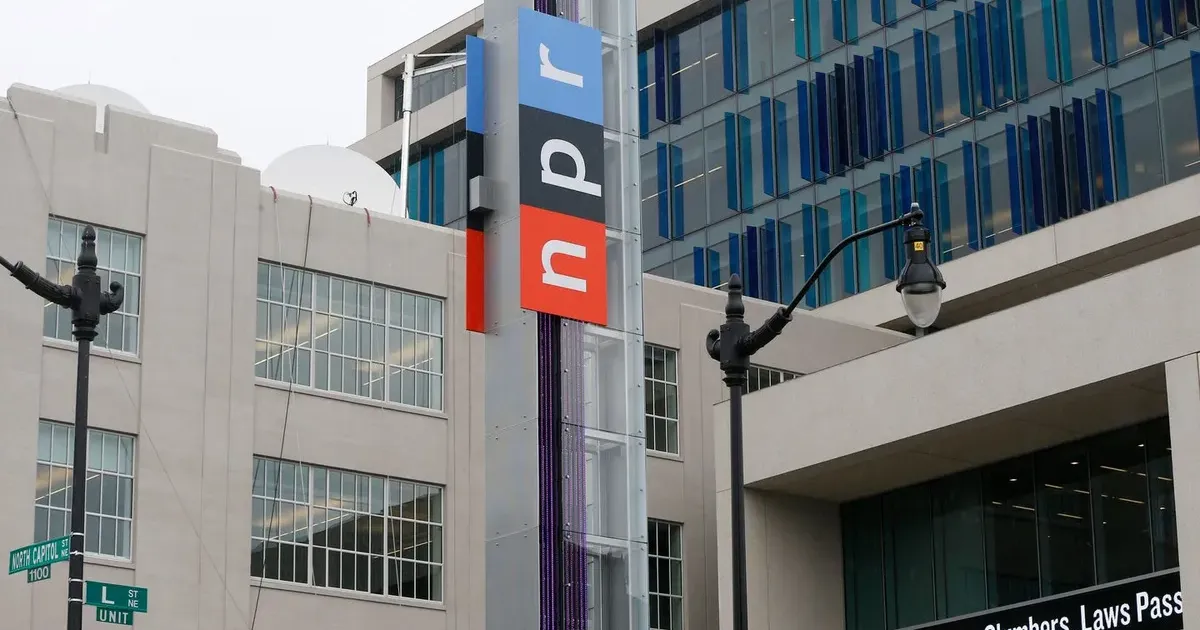
U.S. District Judge Randolph Moss permanently blocked President Donald Trump's executive order targeting federal support for NPR and PBS, but the ruling was not a broad promise that public broadcasters must receive federal money forever. It was a sharper constitutional judgment: the White House cannot use funding power to punish named media organizations for coverage, tone or perceived viewpoint.
The order, signed in 2025 under the title "Ending Taxpayer Subsidization of Biased Media," directed the Corporation for Public Broadcasting and federal agencies to cut direct and indirect support for NPR and PBS. NPR, PBS and public media stations challenged the directive as retaliation. Moss agreed that the record showed a government action aimed at speech the president disliked.
The Court Separated Spending From Retaliation
The important distinction is between ordinary funding policy and viewpoint punishment. Congress can argue about appropriations. Agencies can impose lawful grant conditions. A president can criticize public broadcasting. What the government cannot do is identify speakers by name and strip support because their editorial choices are politically inconvenient.
Moss's ruling therefore carried force beyond one media fight. He wrote that the First Amendment does not tolerate viewpoint discrimination and retaliation of this type. The phrase mattered because it moved the case out of routine budget politics and into a constitutional rule: public money cannot become a weapon against disfavored expression.
The Executive Order Was Too Targeted
The administration framed the directive as a taxpayer and bias issue. The legal weakness was the targeting. The order named NPR and PBS, followed repeated presidential attacks on their journalism and instructed federal actors to cut off support because of alleged bias. The explicit targeting made it difficult to present the action as neutral budget management.
Public broadcasting has always lived inside political tension because it receives public support while maintaining editorial independence. Congress created the CPB to add distance between elected officials and programming decisions. The executive order tried to collapse that distance. The ruling pushed it back open.
The Decision Did Not Restore the Money Already Lost
The legal win did not repair the public media system by itself. Separate congressional action had already stripped major funding from the CPB, and public broadcasters had faced layoffs, station cuts, fundraising pressure and uncertainty. The ruling stopped enforcement of the executive order; it did not reverse every financial blow from the broader political campaign.
The financial damage matters most for smaller and rural stations. Federal support can carry more weight in places with thin advertising markets, fewer donors and less local media competition. A national network can absorb some shocks through membership, sponsorship and digital products. A rural public station carrying local news, educational programming or emergency alerts may have less room.
Press Freedom Was the Core Holding
The ruling's strongest point was not sympathy for NPR or PBS as institutions. It was the principle that government cannot condition financial survival on favorable coverage. If that line weakens, the danger spreads beyond public broadcasting. Universities, museums, nonprofits, research groups and local newsrooms all learn that criticism can carry a budgetary penalty.
The speech principle is why the case cannot be reduced to whether one likes NPR programming or PBS documentaries. The constitutional issue is whether the state may use its spending machinery to discipline speech. Moss answered no, and he did so without telling Congress that public broadcasting must be funded at any particular level.
The Fight Is Likely to Continue
The White House can keep litigating and political allies can keep arguing that taxpayers should not support outlets they view as biased. Those arguments will remain part of public broadcasting politics. But after Moss's ruling, the government has to fight that battle through lawful appropriations and general policy, not targeted retaliation.
The decision protected the First Amendment more than it rescued public media's balance sheet. NPR and PBS won an important speech case, but stations still face a damaged funding field. The ruling says public money cannot be turned into a muzzle. It does not guarantee that public media will have enough money to rebuild what politics already took away.