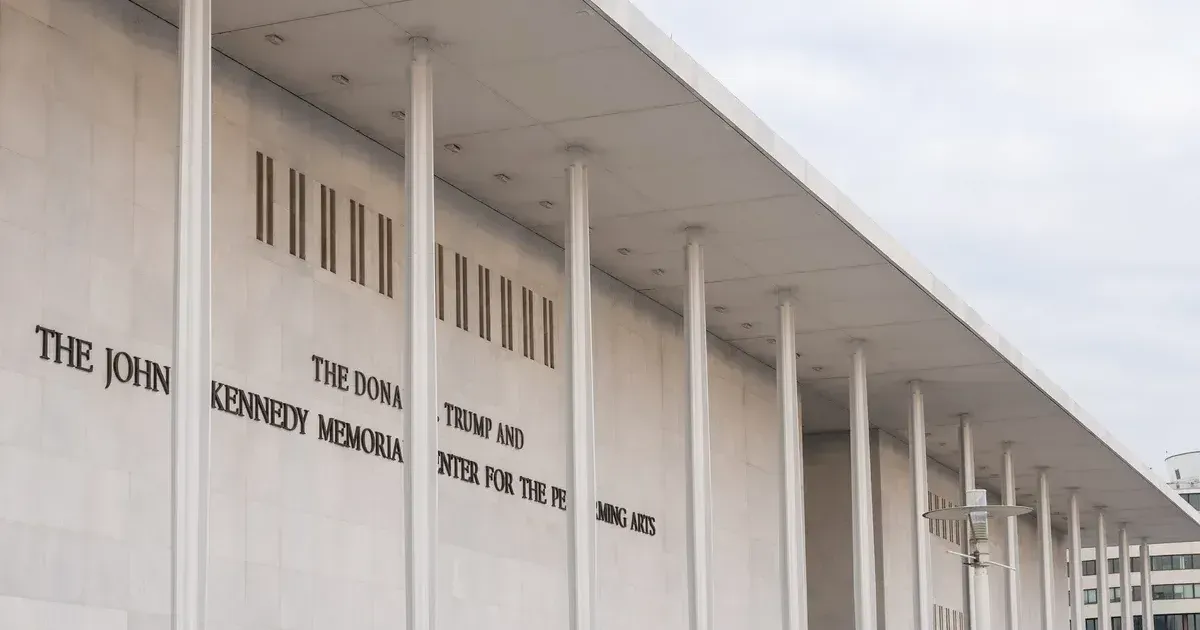
Federal District Court Judge Amit Mehta delivered a ruling on Saturday that shifts the balance of power within one of the nation's most prestigious cultural institutions. Joyce Beatty, a prominent Democratic representative from Ohio, won a major legal victory in her bid to gain access to the leadership chambers of the John F. Kennedy Center for the Performing Arts. The ruling ensures that she will be present at a high-stakes board meeting scheduled for next week. Mehta's decision requires the center to provide Beatty with all relevant planning documents, effectively ending her exclusion from internal deliberations. She will now have the authority to speak during the session and formally oppose several controversial proposals now under review by the board. Legislative oversight of the national cultural hub has become a source of partisan friction in Washington. Donald Trump and his administration have pushed for a sweeping overhaul of the facility that has drawn intense scrutiny from congressional leaders. The conflict centers on a proposal to shutter the entire complex to the public for an extended period. Documents released during the discovery phase of the lawsuit suggest that the administration intends to move forward with this plan regardless of opposition from arts advocacy groups. Representative Beatty argued in her filing that the board cannot legally exclude a sitting member of Congress who was appointed to serve as an ex officio trustee. Judge Mehta agreed with this interpretation of the center's founding statutes. Participation rights do not yet extend to a full voting role for the congresswoman. While the judge granted her the right to attend and participate in all discussions, he stopped short of authorizing her to cast a vote on the final renovation schedule. This distinction allows the board to proceed with a quorum of presidential appointees while still permitting legislative input into the record. Supporters of the congresswoman view this as a necessary first step toward full transparency in the governance of the Kennedy Center. They argue that excluding a member of the Congressional Black Caucus from these discussions would undermine the institution's commitment to diverse representation. The board now consists of 36 members appointed by the president and several ex officio members from the government.
The Kennedy Center access fight is about whether an arts institution can be turned into a partisan gatekeeping tool.
Judge Grants Kennedy Center Access
Court records indicate that the legal battle began when Beatty was denied access to sensitive financial projections related to the facility's maintenance. She requested these documents to evaluate the necessity of a total shutdown, citing concerns that a closure would disproportionately affect local workers and the regional tourism economy. The Federal District Court noted that the administration had provided no strong legal basis for keeping an appointed trustee in the dark. Judge Mehta emphasized that the legislative intent behind the National Cultural Center Act was to ensure a collaborative environment between the executive branch and Congress. He ruled that withholding information from a board member effectively nullifies their ability to perform their duties. Representative Beatty is entitled to participate at the board meeting for the purposes of discussing the proposed closure and renovation timeline. Legal counsel for the center had previously argued that executive privilege shielded certain planning documents from congressional members of the board. This argument failed to persuade the court, which found that the center operates as a public-private partnership rather than a strictly executive agency. Internal memos suggest that the board was preparing to finalize a contract for the renovations without a public comment period.
Renovation Fight Becomes Political
Plans to close the venue for two years have sparked a fierce debate over the future of federal arts funding.
But the administration remains firm in its assertion that the project must move forward without delay. Officials within the Office of Management and Budget have authorized a specific line of credit for the construction, contingent upon the project beginning in the current fiscal year. They argue that a phased renovation would double the cost of the project and extend the construction timeline by nearly a decade. For instance, the replacement of the HVAC system and the structural reinforcement of the Grand Foyer cannot easily be isolated from the rest of the building.
Engineers have reported that the original plumbing systems are failing at an accelerating rate. These technical failures provide a convenient justification for the administration's desire to reset the center's operations.
Governance Records Move to the Center
Governance of the center is traditionally a bipartisan affair, with seats reserved for members of both major parties from the House and Senate.
Beatty's legal team used a specific provision in the Administrative Procedure Act to challenge the board's internal rules. They argued that the board had unilaterally changed its bylaws to limit the participation of members who were not appointed by the sitting president. The legal strategy focused on the procedural failures of the board rather than the merits of the renovation plan itself. The judge's order allows for a much broader inquiry into the administration's motivations. By gaining access to the planning documents, Beatty will be able to see exactly who was consulted during the drafting of the closure proposal. She suspects that the administration bypassed the center's permanent staff in favor of outside consultants.
Closure of the primary performance halls in Washington would create a vacuum in the American arts field that cannot easily be filled. The Kennedy Center is not only a theater; it is a symbol of national heritage and a major employer for the metropolitan area. Beyond the loss of high-profile events like the Kennedy Center Honors, the suspension of daily free performances on the Millennium Stage would deprive thousands of residents of accessible culture. Artists from across the country have signed petitions urging the board to consider a more flexible timeline. They argue that a two-year gap in programming would sever the connection between the center and its audience. Younger generations of performers might never recover the momentum lost during such a hiatus.
Meanwhile, the board is preparing for what is expected to be a tense session on Tuesday. Security at the center has been strengthened in anticipation of protests from local arts groups and labor unions representing theater technicians. Members of the board will have to decide whether to push forward with the renovation vote or postpone the decision until Beatty's voting rights are clarified in a separate hearing. The congresswoman has already indicated that she will seek a preliminary injunction if the board attempts to finalize the closure plan without her vote.
The legal maneuver could tie up the project in the courts for several more months. The upcoming meeting will serve as a definitive test of the board's willingness to engage with its critics.
Public Institutions Need Open Oversight
Excluding a sitting member of Congress from the governance of a federally funded monument is an act of bureaucratic arrogance that borders on the authoritarian. The Trump administration's attempt to lock Joyce Beatty out of the room reveals a serious insecurity regarding the actual merits of their renovation plan. If a two-year closure were truly the only viable path forward, the board would have no reason to hide the supporting data from a trustee tasked with legislative oversight. Instead, we see a pattern of obfuscation and legal maneuvering designed to treat a national treasure like a private clubhouse for presidential appointees. It is not about the structural integrity of the HVAC system; it is about the structural integrity of democratic accountability.
Why should the public trust a renovation plan that cannot withstand the scrutiny of a single dissenting voice? The Kennedy Center was founded to be a living memorial, an institution that belongs to the people, not to the ephemeral whims of any single administration. By granting Beatty access, the court has reminded the board that they are stewards, not owners. The public deserves a full, unredacted release of all planning documents to the public. If the administration is so confident in their two-year shutdown, they should have the courage to defend it in the light of day. Anything less is a betrayal of the center's mission and a gross insult to the taxpayers who keep its lights on.