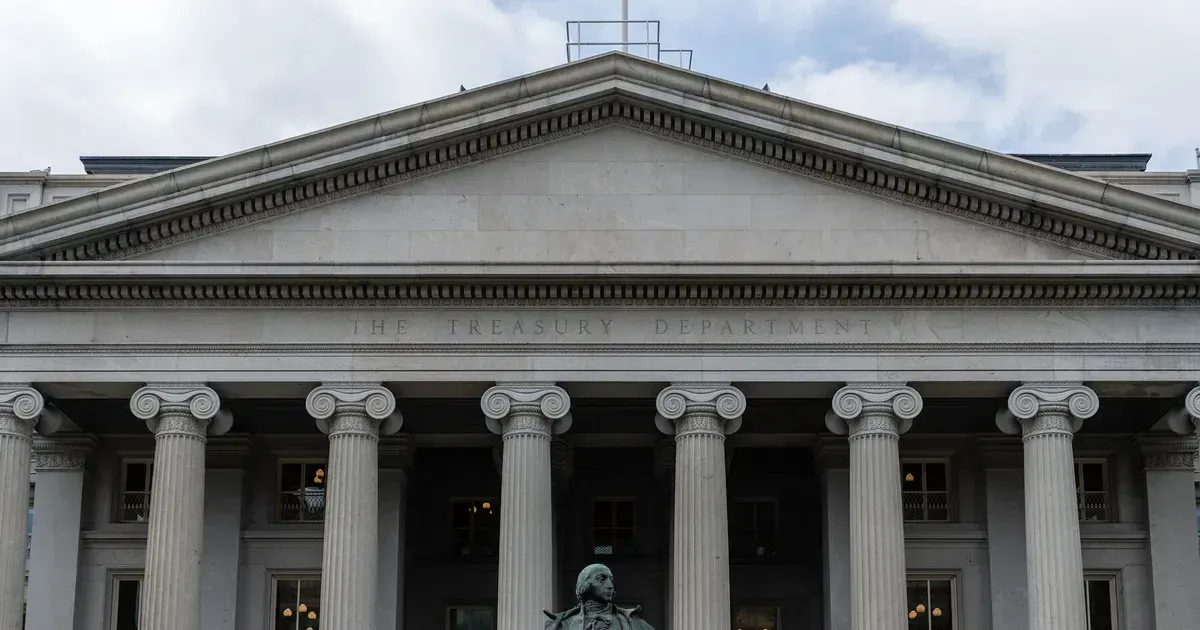
Washington finalized a deal Friday that forces the financial backers of TikTok to pay a major sum to the federal government. The agreement resolves years of regulatory scrutiny over the Chinese-owned social media platform. Investors representing the largest stakes in the app will transfer $10 billion to a specialized security fund managed by the executive branch. This arrangement allows the platform to continue operating in the United States while addressing long-standing concerns regarding data privacy and foreign influence. The agreement immediately turned Donald Trump has effectively transformed the executive branch into a collection agency for federal oversight. ByteDance, the parent company based in Beijing, faced an ultimatum to divest its American operations or face a total blackout. Rather than a clean sale to a domestic buyer, the administration negotiated a settlement where the current investment group remains in place but pays for the privilege of market access. Treasury officials claim the money will fund a permanent task force dedicated to monitoring the app's source code and data centers. Critics in both parties suggest the payment looks more like a regulatory toll than a standard mitigation agreement.
TikTok Settlement Turns Into Federal Fee
National security experts at the Committee on Foreign Investment in the United States spent months debating the legality of such a payout. The 2024 legislation that initially mandated a sale did not explicitly include a provision for a multi-billion dollar convenience fee. Lawyers for the investment group argued that the sum was excessive compared to previous corporate settlements. But the White House maintained that the risk posed by the platform required a rare financial commitment to ensure safety. Settlement details reveal that the money will be paid out over twenty-four months. The first installment is expected to hit the Department of the Treasury accounts by the end of the current fiscal quarter. The agreement also includes strict limits on how much data can be stored outside of domestic servers. Previous oversight attempts relied on voluntary compliance rather than direct cash transfers. This is not a fine, it is an entrance fee for the largest consumer market on the planet. Money from the settlement will not flow into general tax revenue. The administration has established the National Tech Integrity Fund to manage the capital. This mechanism ensures the funds are sequestered for technical audits and cybersecurity infrastructure. Analysts suggest this specific accounting move was designed to avoid legal challenges that would label the fee an unconstitutional tax.
Security Fund Replaces a Clean Sale
Treasury Secretary Scott Bessent oversaw the final hours of the negotiation from the main building on Pennsylvania Avenue. Behind the scenes, the tension centered on which investors would bear the brunt of the $10 billion cost. Major firms like General Atlantic and Sequoia Capital hold the largest minority stakes and were the primary targets of the administration's demands. Each firm had to weigh the cost of the fee against the potential loss of billions in valuation if the app were banned. Silicon Valley is watching.
Investors eventually realized that a payout was the only path to liquidity in a hostile political environment. Meanwhile, the Chinese government has remained uncharacteristically quiet about the cash transfer. Beijing previously signaled it would block any sale involving the platform's core recommendation algorithm. By allowing the current investors to pay a fee while retaining ownership, the White House may have found a loophole that avoids a direct confrontation with Chinese export laws.
Precedent Worries Tech Investors
Legal scholars point to a few instances where the government extracted major sums during corporate mergers, though none match this scale. For instance, the FTC once secured a $5 billion settlement from a social media giant over privacy violations. That fine was punitive and followed a specific investigation into past misconduct. In particular, the current TikTok fee is prophylactic, meaning it is being collected to prevent future risks rather than punish previous crimes. Federal courts have historically been skeptical of the government taking a cut of private transactions. Yet the Trump administration relies on the broad powers granted under the International Emergency Economic Powers Act. This law allows the president to regulate international commerce during times of declared national emergency. Every administration since the late 1970s has used this power, but few have used it to generate direct revenue from foreign investment deals.
One senior trade lawyer noted that the precedent could change how every foreign tech firm approaches the American market. If the government can demand a fee for a social media app, it might soon demand similar payments from electric vehicle manufacturers or biotech firms. The policy shifts the burden of proof from the regulator to the corporation. Companies must now prove they are safe enough to operate while paying for the oversight required to verify that safety.
Capitalism has a new price of entry. Venture capital firms are already adjusting their risk models to account for potential government surcharges on high growth technology sectors. Many firms have begun inserting "political risk" clauses into their term sheets for any company with major overseas operations. The cost of the TikTok fee has already lowered the internal rate of return for the fund managers involved in the ByteDance deal. Wall Street banks that provided bridge financing for the investors are also reconsidering their exposure. The cost of borrowing for tech firms with foreign ties has spiked since the announcement. Some smaller investors have opted to sell their stakes at a discount rather than participate in the $10 billion payout. These secondary market sales reflect a growing belief that the era of frictionless global tech expansion is over.
The agreement includes a clause that allows the government to demand further payments if security benchmarks are not met. Each quarter, the platform must submit to a third-party audit conducted by a firm approved by the administration. If the auditors find any evidence of data leakage, the investors could face additional fees of up to $500 million per incident. The structure of the deal ensures that the federal government remains a permanent, well-paid partner in TikTok's American business.
National Security Became a Price Tag
Sovereignty is becoming an expensive subscription service for international technology firms. When does a national security mitigation agreement cross the line into a state-sponsored shakedown? The Trump administration's extraction of $10 billion from TikTok's investors is a calculated move that treats the American consumer base as a private asset to be rented out to the highest bidder. It is not about code or data centers; it is about the cold reality of power. By forcing private investors to fund a government task force, the White House has bypassed the congressional appropriations process and created a self-funding regulatory machine.
It is a brilliant, if ethically bankrupt, application of corporate leverage against geopolitical rivals. Investors may complain, but they are paying because the alternative is a total loss of their capital. It sets a dangerous path where the rule of law is replaced by the art of the transaction. If every foreign entity must pay a multi-billion dollar tribute to enter the United States, we are no longer a free market. We are a gated community with a very aggressive bouncer at the door.
The executive branch has found a way to monetize national security, and it has no intention of stopping here.