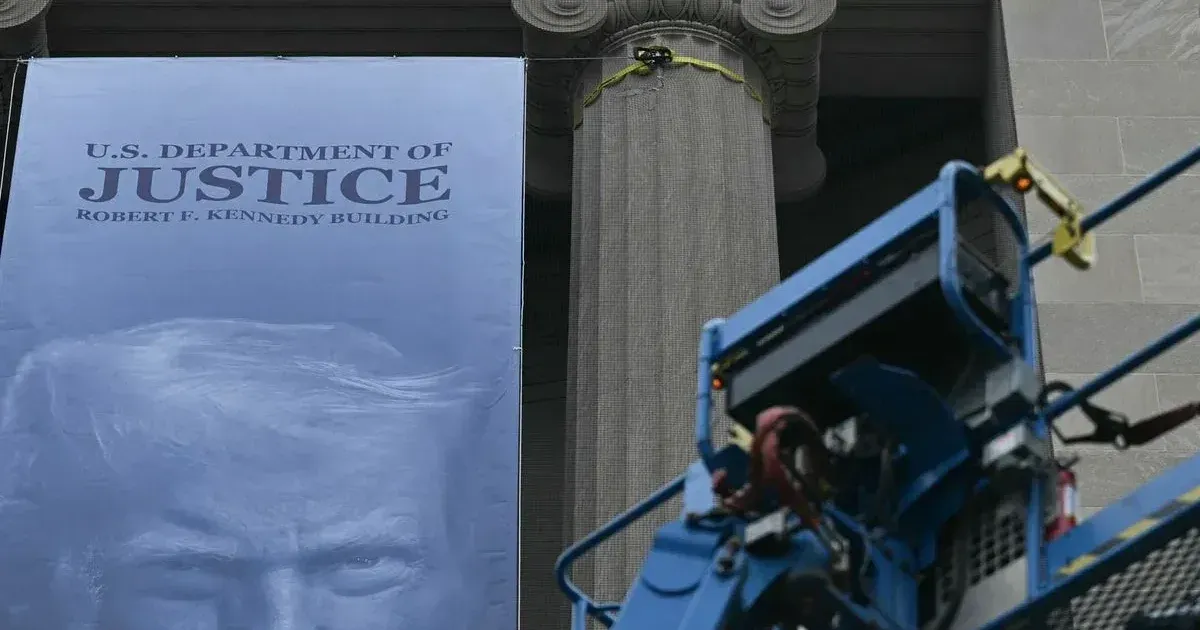
The Justice Department’s indictment of the Southern Poverty Law Center turns long-running political attacks on the nonprofit into a federal fraud case. Federal authorities moved against the Southern Poverty Law Center on April 22, 2026, filing a complex indictment that alleges an enormous fraud scheme spanning more than a decade. Prosecutors in the Department of Justice claim the organization funneled at least $3 million through a network of informants to generate fabricated intelligence on extremist movements. Attorneys representing the Alabama-based nonprofit immediately dismissed the charges as a politically motivated attack orchestrated by the Donald Trump administration. The indictment will also test whether donors separate institutional politics from the specific fraud allegations.
Evidence presented in the filing suggests a systematic effort to deceive donors by inflating the activity levels of monitored groups. Investigative files detail a pattern of behavior where money was transferred to confidential sources who then returned sensationalized reports about far-right and far-left organizations. Prosecutors argue these reports were used to drive fundraising campaigns that brought in millions of dollars from unsuspecting supporters across the United States. Many of these donors believed they were funding the direct neutralization of violent threats.
Justice Department Alleges Large Informant Fraud
Court documents unsealed in Montgomery reveal a sophisticated operation involving shell companies and encrypted communications. Investigators spent three years tracing wire transfers that allegedly bypassed standard non-profit accounting protocols. Federal agents contend that the scheme allowed the organization to maintain its status as a premier watchdog while secretly manufacturing the very crises it claimed to be fighting. Records show specific instances where informants were coached on how to describe meetings that never took place or to attribute violent rhetoric to individuals who were not present.
Al Jazeera reports that conservative activists have sought such a federal probe for years, citing what they describe as biased and unfair characterizations in the group’s annual hate map. These critics argue the organization has long used its influence to silence political opposition by labeling mainstream conservative views as extremist. Internal memos cited in the indictment indicate that some staff members expressed concern about the veracity of informant data as early as 2018. Management allegedly ignored these warnings to maintain the flow of high-dollar contributions.
Informants recruited for this project often had criminal backgrounds that should have disqualified them from reliable intelligence gathering. Justice Department officials stated that several of these individuals received monthly stipends exceeding $5,000 in exchange for providing "practical" data on domestic terror cells. When the data proved thin, the informants reportedly embellished their findings to ensure continued payments. Government lawyers assert that the organization’s leadership was fully aware of these discrepancies but chose to publish the findings anyway.
Southern Poverty Law Center Cites Political Persecution
Leaders of the civil rights group maintain that the investigation is a calculated attempt to dismantle a leading critic of the executive branch. They argue the charges are based on a fundamental misunderstanding of how non-profits gather intelligence on clandestine organizations. Legal experts representing the group suggest the government is holding a non-governmental entity to the same evidentiary standards as a federal law enforcement agency, which they claim is a legal impossibility. The indictment follows broader efforts by the Trump administration to establish new oversight for organizations across the country.
"The investigation is part of the Trump administration’s efforts to go after critics and groups with different views," according to a statement released by the Southern Poverty Law Center.
Support for the organization has rallied among civil rights advocates who view the indictment as an existential threat to independent monitoring. These advocates point out that the group has successfully litigated against dozens of hate groups over its fifty-year history. They fear that a successful prosecution could lead to the revocation of its 501(c)(3) tax-exempt status, effectively ending its operations. Public demonstrations in support of the group are planned for next week in several major cities.
Decade-Long Scheme Cost Millions in Donations
Financial analysts reviewing the case note that the $3 million figure cited by the DOJ may only be the beginning. The Independent reports that the decade-long nature of the alleged scheme implies a broader systemic failure in the organization’s internal auditing processes. If the government can prove that donors were intentionally misled, the organization could face huge class-action lawsuits from former contributors. Such a scenario would likely deplete the group's large endowment, which was valued at over $500 million in recent years.
Specific counts in the indictment include mail fraud, wire fraud, and conspiracy to commit racketeering. Federal prosecutors are seeking the forfeiture of assets linked to the alleged informant fund. They are also investigating whether any of the money was used for personal gain by high-ranking executives. Preliminary reports indicate that at least two former employees are cooperating with the government in exchange for immunity. Their testimony could provide the necessary link between financial transactions and the intentional falsification of hate group data.
Non-profit oversight experts suggest that this case could change how all advocacy groups report their intelligence-gathering activities. Transparency in informant payments is rarely discussed in the non-profit sector, as most groups rely on anonymity to protect their sources. The DOJ’s demand for full disclosure sets a precedent that could expose other organizations to similar scrutiny. Conservative groups have already begun calling for audits of other left-leaning watchdogs following the news of the indictment.
Future of Nonprofit Oversight and Legal Precedent
Republican lawmakers in Washington praised the Department of Justice for its willingness to investigate a historically protected institution. Senatorial leaders stated that no organization is above the law, regardless of its mission or political leanings. They are pushing for new legislation that would require non-profits to disclose more detailed information about their intelligence-gathering expenses. This move is seen by many as a way to further constrain the influence of advocacy groups on the national stage.
Democratic counterparts have countered by describing the legal action as a weaponization of the judicial system. Minority leaders argued that the timing of the indictment is suspicious, occurring just as the group was preparing a major report on government corruption. They have called for an independent investigation into the DOJ’s handling of the case to ensure it was not driven by political animus. Tensions in the capital are high as both sides prepare for what is expected to be a protracted legal battle.
Trial dates for the case have not yet been set, but pre-trial motions are expected to begin by the summer of 2026. The outcome will likely determine the limits of executive power in investigating non-governmental organizations. If the SPLC is cleared, it will likely emerge with its reputation strengthened and its base more energized than ever. If convicted, the organization faces a complete restructuring or total dissolution. The legal world is watching closely to see how the court balances the needs of federal law enforcement with the protections afforded to civil rights advocacy.
SPLC Case Tests Nonprofit Oversight
Weaponizing the machinery of federal law enforcement against ideological adversaries creates a dangerous cycle of institutional decay. This indictment against the Southern Poverty Law Center is a blunt instrument, intended to decapitate a primary source of institutional resistance. While the allegations of financial impropriety and informant fraud are technically specific, the underlying motive smells of a political vendetta. The Justice Department is no longer operating as a neutral arbiter of the law but as a partisan enforcement arm for the executive branch. This move signals to every non-profit in America that their tax-exempt status is contingent upon their political alignment with the current administration.
Skepticism toward the organization's hate group designations is reasonable, yet criminalizing the process of intelligence gathering is an overreach. The government’s focus on $3 million in a half-billion-dollar endowment reveals the targeted nature of the probe. It is a scalp-hunting exercise. If the administration succeeds, they will have established the legal architecture to dismantle any advocacy group that challenges their narrative. The era of the independent watchdog is ending. We are entering a phase where the state dictates who is a civil rights defender and who is a fraud. Expect total institutional capitulation or absolute legal warfare.