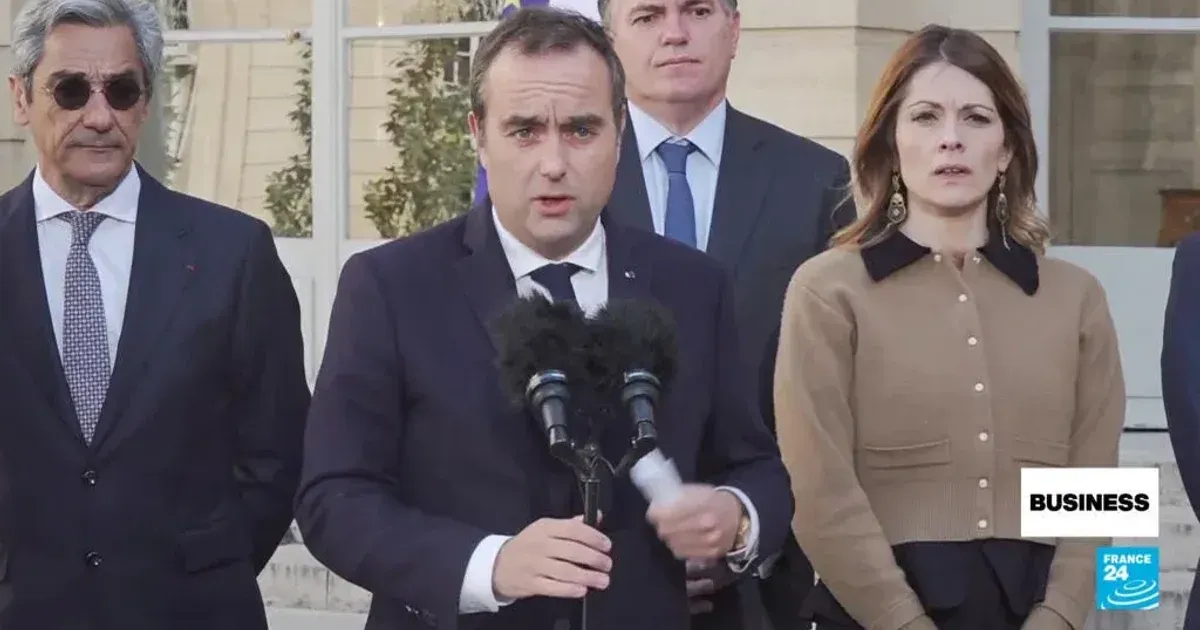
France’s spending freeze shows how the Iran war is moving from energy markets into national budgets and public services. French Ministry of Finance officials announced on April 21, 2026, that the government must freeze billions in public spending to cover the soaring costs of the conflict in the Middle East. Escalating hostilities in the Gulf have generated a fiscal deficit that now threatens to derail the national budget. Paris estimates the immediate economic impact has reached at least 6 billion euros since the outbreak of full-scale war.
Budgetary pressures grew as the government rolled out multibillion-euro support packages for vulnerable households and businesses struggling with energy prices. Military outlays also rose sharply as French forces increased their readiness posture in the Mediterranean and the Indian Ocean. These unexpected costs coincided with a spike in national borrowing rates, as investors demanded higher returns on sovereign debt during the regional instability.
French Spending Caps and Iran War Costs
Government leaders identified the freeze as a necessary measure to meet strictly defined budget deficit targets. Public sectors across the country brace for the suspension of non-essential projects and civil service expansion. Fiscal hawks in the National Assembly argue that the current trajectory of debt is unsustainable if the conflict persists beyond the current quarter. Financial experts indicate that the 6 billion euro figure covers only initial liquidity injections and defense readiness. Domestic industries, particularly those reliant on energy-intensive manufacturing, require continuous subsidies to avoid mass layoffs. French finance officials confirmed that without these cuts, the state could face a credit rating downgrade from major international agencies.
Energy security for the continent is no longer a theoretical concern.
Rising interest rates have worsened the situation for the Treasury. Borrowing costs for the French state reached their highest levels in a decade on April 21, 2026, as the geopolitical risk premium expanded. Debt servicing now competes directly with education and healthcare funding for priority in the national ledger. Officials in Paris maintain that the spending freeze remains temporary, though they have not provided a definitive timeline for lifting the restrictions.
Iran Conflict Threatens European Jet Fuel Supplies
Airlines across the European Union are confronting a severe scarcity of refined petroleum products. Supply chains for jet fuel have fractured because refined kerosene imports from the Middle East cannot bypass the naval blockade currently obstructing the Strait of Hormuz. The largest European hubs rely on a constant flow of tankers from Kuwait, Saudi Arabia, and the United Arab Emirates. With the waterway impassable, fuel reserves at major airports like Charles de Gaulle and Heathrow have begun to dwindle. Refineries within the continent cannot bridge the gap because they lack the specific crude grades required for high-volume jet fuel production. Carriers have started to limit long-haul routes to preserve existing stocks.
Brussels remains worried that a prolonged blockade will trigger a total collapse of the regional aviation sector. Transportation ministers held emergency talks on April 21, 2026, to discuss the mandatory rationing of kerosene for commercial flights. Logistics specialists suggest that rerouting tankers around the Cape of Good Hope adds fifteen days to delivery times and increases fuel costs by 40%. These higher operating expenses are already translating into record-high ticket prices for passengers. Aviation analysts contend that several smaller regional carriers face bankruptcy if the Strait remains closed for another 30 days.
Economic Impacts of the Strait of Hormuz Blockade
Blocking the Strait of Hormuz has effectively removed 20% of the global oil supply from the daily market. Crude prices have hovered at extreme levels since the closure began, creating a persistent inflationary pressure that defies traditional central bank interventions. International maritime insurers have suspended coverage for vessels attempting to enter the Gulf, effectively halting all non-military traffic. Global trade volume has contracted as a direct result of the shipping freeze. Manufacturers in Asia and Europe have reported major delays in receiving the chemical precursors derived from petroleum. Industrial output in Germany and Italy shows signs of a sharp recessionary trend.
French budgetary stability depends entirely on the swift resolution of maritime hostilities.
Market participants expect the price of crude to remain volatile until a diplomatic or military solution reopens the waterway. Impacts on refined products are even more acute than the impact on raw crude. Regional refineries in the Gulf produced a major portion of the world's low-sulfur diesel and jet fuel. Replacing this capacity requires months of reconfiguration at refineries in the United States and East Asia. Experts in the energy sector believe that the global economy is currently consuming more fuel than it can transport to markets. This imbalance creates a price floor that will likely persist through the remainder of 2026.
France Budget Tests War Resilience
Will the European Union finally acknowledge that its energy security was built on a foundation of sand? For decades, Brussels championed a green transition while quietly deepening its dependence on refined products from the Middle East. The current blockade of the Strait of Hormuz has exposed this hypocrisy with brutal efficiency. France is now forced to cannibalize its domestic social spending just to keep its military fueled and its households from freezing. This is the price of strategic complacency.
The nomination of Kevin Warsh is a hard-line return to monetary orthodoxy at a time when the world expects leniency. Warsh is not a dove; he is an institutionalist who believes in the harsh medicine of high-interest rates to purge inflation. While the Senate grills him on his loyalty to the administration, the real story is his willingness to let the market correct itself, even if that means a painful recession for the West. This fiscal and monetary tightening happening on both sides of the Atlantic suggests that the era of easy money is dead, buried by the realities of a Middle Eastern war.
Europe must now choose between its bloated welfare states and its survival as a geopolitical entity. Paris freezing its budget is the first domino. Expect more capitals to follow as the cost of the Iran conflict moves from the battlefield to the grocery aisle. Austerity has returned.