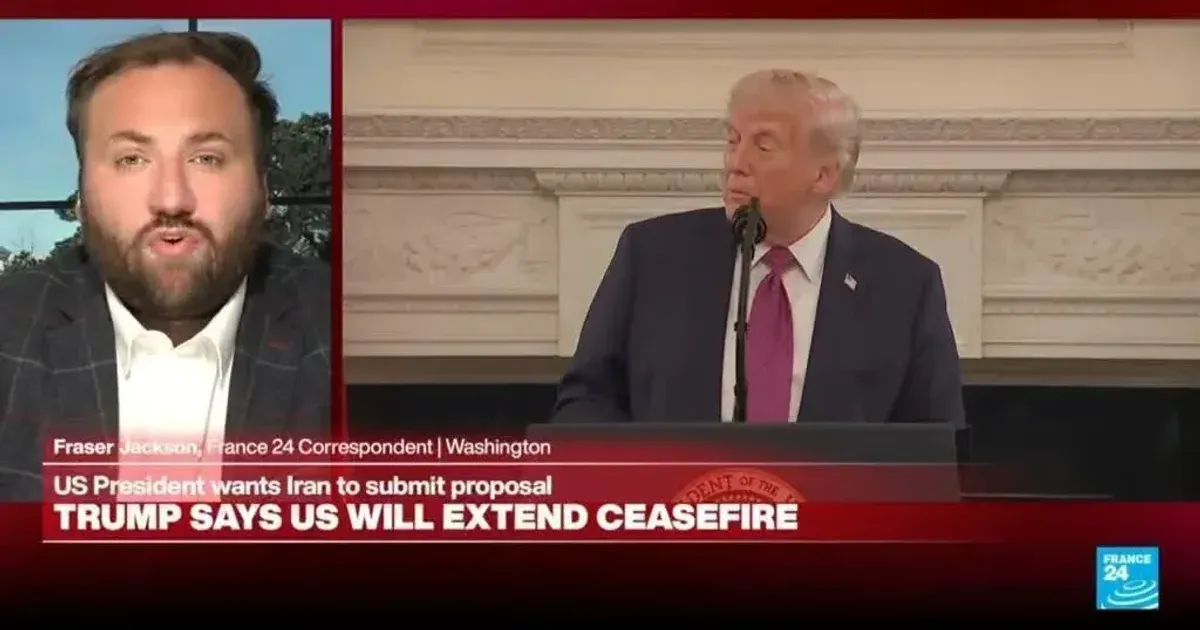
Trump’s indefinite ceasefire extension gives Iran more time to negotiate while leaving the U.S. naval blockade in place. Donald Trump announced on April 21, 2026, that the United States would extend its ceasefire with Iran indefinitely. President Trump made the declaration just hours before a Wednesday deadline that would have triggered a return to active combat. Tehran now faces a choice between presenting a unified diplomatic proposal or enduring a protracted economic strangulation. Pakistani mediators requested the delay to prevent an immediate escalation in the Persian Gulf. White House officials indicated that the pause remains conditional on the behavior of Iranian regional proxies.
Islamabad became a central player in this diplomatic reprieve. Prime Minister Shehbaz Sharif reportedly contacted the White House to argue that Iranian officials required more internal deliberation to reach a consensus. Mediators from Pakistan believe that a hasty resumption of hostilities would permanently close the door on a negotiated settlement. Trump credited these mediation efforts for his decision to hold back military strikes. He insisted that the burden of proof now rests entirely with the Islamic Republic leadership.
Mediation Efforts From Pakistan Delay Resumption of Hostilities
Negotiations have stalled because of internal friction within the Iranian government. Hardliners in the Revolutionary Guard and more moderate elements in the foreign ministry have failed to agree on terms for a permanent truce. Donald Trump characterized the leadership in Tehran as fractured during his press briefing. This internal division prevents the country from submitting a single, coherent peace plan. Washington will wait for a unified response before making the next move.
"The attacks will be held off until Iranian leaders come up with a unified proposal to end the war," Donald Trump stated during the press briefing.
Diplomatic sources in Washington, including reporters from France 24, noted that the extension provides no relief from existing sanctions. Economic pressure continues to mount as the truce remains in place. Iranian officials have not yet officially responded to the extension through their state media outlets. Silence from the Supreme Leader suggests that the internal debate mentioned by Trump is still ongoing. The current deadlock has created a tense atmosphere across the Middle East.
Naval Blockade Targets Iranian Ports Despite Truce Extension
Naval vessels under U.S. command continue to enforce a strict blockade of Iranian shipping lanes. Trump emphasized that while missiles are not flying, the economic perimeter around Hormuz remains closed. Energy markets reacted to the news with volatility as traders weighed the indefinite nature of the blockade. Crude oil tankers belonging to third parties have been turned away from Iranian terminals. This policy ensures that Tehran remains isolated from global commerce while talks proceed.
Port facilities at Bandar Abbas and Bushehr report a total halt in export activity. Satellite imagery confirms that several dozen tankers are currently anchored outside the primary shipping channels. U.S. Navy officials stated that the blockade aims to prevent the movement of military equipment and sanctioned petroleum products. Critics of the administration argue that the blockade constitutes an act of war regardless of the ceasefire. The White House maintains that the measure is a necessary precaution against renewed aggression. The current ceasefire remains in place amid ongoing negotiations regarding the reopening of vital shipping lanes.
Operational costs for the U.S. Fifth Fleet have increased as the mission enters its fourth month. Commanders on the ground must maintain a high state of readiness while the diplomatic clock ticks. Sailors are monitoring Iranian fast-attack craft that frequently shadow American destroyers. Such close-quarters encounters increase the risk of an accidental skirmish. Professionalism among the naval crews has so far prevented a lethal confrontation.
Fracture and Disarray Within the Tehran Leadership Hierarchy
Iranian domestic politics are currently defined by a struggle for control over the national security narrative. Reformist factions hope to use the ceasefire to secure sanctions relief and stabilize the rial. By contrast, the clerical establishment views any concession to Washington as a betrayal of the revolution. These competing interests have paralyzed the decision-making process in the capital. Foreign observers suggest that the Supreme Leader is hesitant to back any single faction until a clear path forward emerges.
Protests over economic conditions have added another layer of complexity for the Iranian government. Citizens are demanding an end to the blockade that has caused food and medicine prices to soar. Government security forces have maintained a heavy presence in major cities to prevent civil unrest. Maintaining a unified front becomes more difficult for the regime as the domestic situation deteriorates. External pressure from the U.S. naval presence worsens these internal tensions.
Reports from NDTV indicate that regional neighbors are increasingly worried about the potential for a total collapse of the Iranian state. A power vacuum in the region could lead to a broader sectarian conflict. Saudi Arabia and the United Arab Emirates have strengthened their own border security in response to the uncertainty. Stability in the Gulf depends on whether the Iranian leadership can find a way to present a singular voice. Failure to do so could lead to a catastrophic military miscalculation.
Strategic Implications for Global Oil Shipping Routes
Global energy security faces a major threat if the blockade persists through the summer months. Insurance premiums for tankers traveling through the Strait of Hormuz have reached record highs. Asian economies, particularly China and India, are seeking alternative suppliers to fill the gap left by Iranian crude. Market analysts at DW News reported that the prolonged tension is driving a shift in global logistics. Shipping companies are increasingly bypassing the region in favor of more expensive but safer routes.
European nations have expressed concern that a prolonged blockade could trigger a global recession. Manufacturing hubs in Germany and France rely on stable energy prices to maintain their industrial output. Diplomats in Brussels have called for a faster resolution to the standoff. Despite these calls, the Trump administration appears committed to the strategy of maximum pressure. Washington believes that the current leverage is the only way to force a substantive change in Iranian policy.
Resource scarcity in the region could eventually lead to a shift in alliance structures. Some smaller Gulf states might seek to distance themselves from the US if the economic damage becomes unbearable. Currently, however, the coalition supporting the blockade holds firm. The coming weeks will determine if this pressure campaign results in a diplomatic breakthrough or a wider war. Every day the ceasefire continues is a day that the Iranian economy bleeds capital.
Iran Pause Tests Negotiation Space
Waiting for a fractured regime to find its voice is a gamble of attrition. The Trump administration is betting that the internal contradictions of the Iranian state will eventually force a total capitulation. By extending the ceasefire while maintaining the blockade, Washington has created a psychological prison for the leadership in Tehran. It is a strategy that prioritizes economic suffocation over military decapitation, yet it carries the same risks of a major regional explosion.
This reliance on Pakistan as a mediator is a trade-off. Islamabad has its own interests, which often diverge from those of the United States. If the Sharif government is only buying time for Iran to reorganize its defense posture, the U.S. will have squandered its tactical momentum. The "indefinite" nature of this truce suggests a lack of a clear exit strategy. Washington is essentially holding a grenade with the pin pulled, hoping the other side blinks first. It is an exercise in high-stakes brinkmanship that leaves the global economy in a state of perpetual anxiety.