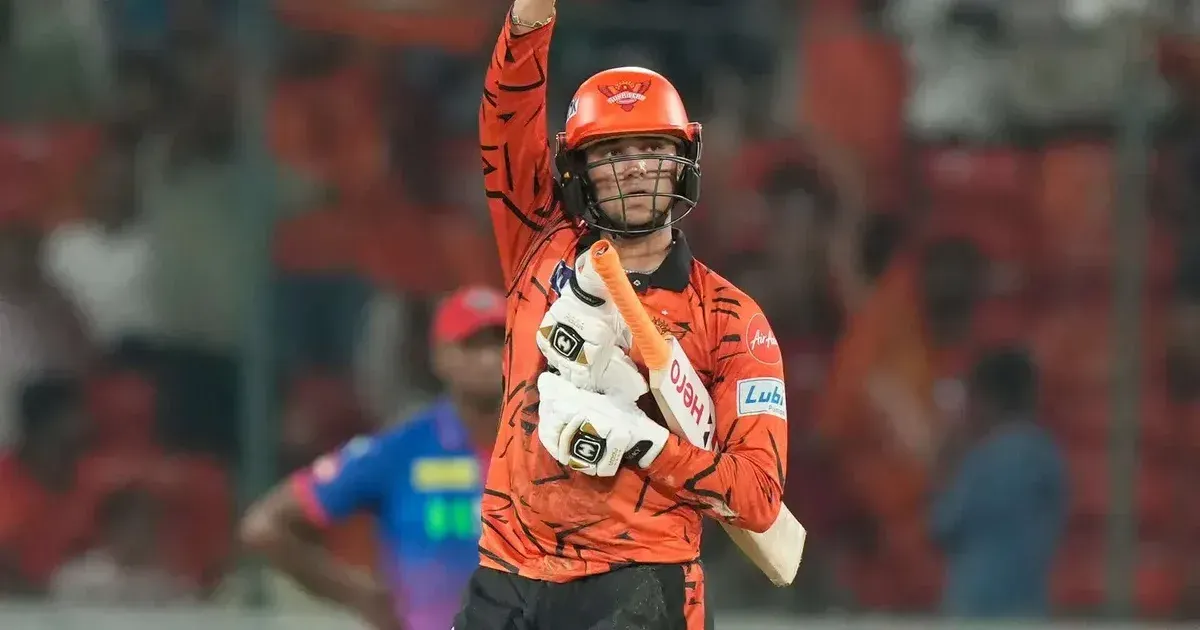
Abhishek Sharma’s unbeaten 135 turned a dominant innings into a record test for Delhi Capitals’ bowling strategy. Abhishek Sharma dismantled the Delhi Capitals bowling attack on April 21, 2026, during a record-shattering Indian Premier League performance. His unbeaten 135 runs off just 68 deliveries secured a large total of 242 for 2 for Sunrisers Hyderabad. Every sector of the ground saw white balls flying into the stands as the young opener used a placid track to perfection. Statistical records fell throughout the evening, placing the left-hander among the elite tier of T20 power-hitters. Spectators witnessed a display of calculated aggression that redefined the scoring ceiling for this season.
Sunrisers Hyderabad batters entered the pitch with a clear mandate to exploit the batting-friendly conditions. Abhishek Sharma led the charge by clearing the ropes 10 times, neutralizing both pace and spin with equal ease. Analysts noted that his strike rate remained consistently high, never dipping even when wickets fell at the other end. Heinrich Klaasen provided a quick-fire cameo that further strengthened the total, ensuring the momentum never shifted toward the bowling side. Power hitting of this caliber requires extreme technical precision. Success in the IPL often hinges on these explosive starts that demoralize the opposition before the halfway mark of the innings.
Delhi Capitals Tactical Failures Open Scoring Gates
Delhi Capitals captaincy decisions faced immediate scrutiny as the run rate climbed into double digits within the powerplay. Axar Patel and the rest of the bowling unit struggled to find a length that could contain the surging scoring rate. Tactical errors, particularly in the field placements and bowling rotations, allowed the Sunrisers to dictate the terms of engagement. Miscalculations in the early overs forced the spinners into defensive roles far earlier than planned. Defensive lines became predictable, allowing the Sunrisers Hyderabad top order to step out and loft deliveries over the infield.
Pressure mounted on the Delhi fielders as the boundaries began to flow with rhythmic regularity. Several bowling changes failed to produce the desired breakthrough, leaving the Capitals stranded in a cycle of reactive cricket. Bowlers missed their yorker lengths, delivering full tosses that Abhishek Sharma dispatched with clinical efficiency. The absence of a coherent plan to counter the short-ball ploy allowed the batting side to settle into a comfortable groove. Calculations suggest that nearly 40% of the runs came through the mid-wicket and long-on regions, highlighting a failure to protect the shortest boundaries.
Abhishek Sharma scythed through a hapless Delhi Capitals bowling attack with a scintillating unbeaten century as Sunrisers Hyderabad posted an imposing 242 for 2 on a placid track.
Elite-level cricket demands immediate adaptation, but the Delhi Capitals unit looked paralyzed by the sheer volume of boundaries. Records show that this total represents one of the most severe defensive collapses in recent league history. Critics pointed toward the lack of variety in the pace attack as a primary reason for the runaway score. Variations in speed were either too slow or lacked the accuracy to deceive the batter. Momentum remained firmly with the Sunrisers because the bowling side could not sustain pressure for more than three balls at a time.
Historical Context of the Abhishek Sharma Century
Abhishek Sharma now holds the distinction of producing the 5th highest individual score in the history of the league. His performance on April 21, 2026, draws direct parallels to the aggressive styles of previous record holders. Equalling certain milestones set by Virat Kohli, the young batter has proven that consistency can coexist with high-velocity scoring. Comparisons between different eras of the tournament suggest that the modern game favors those who can clear the ropes with minimal footwork. This century is his second in the competition, cementing his status as a reliable primary scorer.
Global scouts often look for the ability to dominate top-tier international bowlers under high-pressure scenarios. Sharma demonstrated that he could handle the expectations of a franchise that has historically struggled with middle-order stability. Historical data indicates that scores exceeding 240 almost always result in a victory for the side batting first. Few teams possess the depth to chase such a target without taking reckless risks from the first delivery. Aggression from the start is no longer a luxury in T20 cricket; it has become a survival requirement.
Boundaries in modern stadiums are often smaller, yet the 135 runs scored by Sharma would have cleared any boundary in the world. His 10 sixes were more than edges or fortunate strikes but clean hits that landed deep in the seating tiers. History will remember this innings as a masterstroke in placement and timing. Every milestone reached during this game adds to the growing narrative of a shift toward total batting dominance. Critics of the current format argue that the balance between bat and ball is disappearing entirely.
Sunrisers Hyderabad Ownership Reacts to Performance
Kavya Maran, the visible face of the Sunrisers Hyderabad management, became a viral sensation once again during the record-breaking innings. Her reactions in the VIP box mirrored the excitement of the fans as the total surpassed the 200-run mark. Franchise ownership in the IPL is increasingly about brand visibility and emotional investment in the players' success. Professional sports leagues thrive on this intersection of celebrity and athletic achievement. Success on the field directly translates to increased valuation and fan engagement for the Hyderabad-based franchise.
Ownership stability has allowed the team to recruit aggressive talent like Heinrich Klaasen to complement the local core. Support staff and management decisions have focused on creating an environment where young batters feel empowered to take risks. Maran's presence at the matches is a symbol of the franchise's commitment to its long-term vision. Branding experts suggest that viral moments involving team owners help humanize the corporate structures behind the sport. The energy within the dugout was palpable as the final overs approached, with every staff member anticipating the historic finish.
Abhishek Sharma Milestone Parity with Virat Kohli
Reaching a score of 135 not out puts Sharma in a statistical bracket occupied by legends of the Indian game. Virat Kohli remains the benchmark for most milestones in the league, but Sharma is beginning to match the veteran's pace in specific categories. Young Indian players are no longer intimidated by the reputations of international stars. They use the platform to showcase a brand of cricket that is fearless and technically sound. Consistency across multiple seasons is the next challenge for the Sunrisers opener.
Cricket analysts frequently debate whether such high-scoring matches are healthy for the long-term prospects of the sport. Placid tracks provide a spectacle for the crowd but offer nothing for the bowlers who must toil in difficult conditions. Despite the lopsided nature of the contest, the technical proficiency of the batting was undeniable. Abhishek Sharma has effectively forced his way into the conversation for national team selection through sheer weight of runs. Future auctions will likely see his market value soar as teams seek out players who can win matches single-handedly.
Abhishek Innings Changes Hyderabad Momentum
Does the total annihilation of a bowling attack still qualify as a competitive sport, or have we transitioned into a scripted exhibition of hitting? The performance by Abhishek Sharma is undeniable in its technical brilliance, but it highlights a terminal illness in the current T20 format. Bowlers are no longer participants in the contest; they are reduced to delivery mechanisms for the batting side's highlight reel. When a player can score an unbeaten 135 on a track described as placid, the fundamental tension of the game evaporates.
The management of the Delhi Capitals must answer for tactical blunders that bordered on professional negligence. Axar Patel and his colleagues failed to adapt, choosing instead to provide a steady diet of hittable deliveries to a batter in peak form. If the IPL continues to prioritize flat pitches to ensure high scores for television ratings, the art of bowling will perish. We are moving toward a reality where the toss determines the outcome more than the talent on display. This trend threatens the integrity of cricket as a balanced contest between two disciplines.
Sunrisers Hyderabad found a goldmine in Sharma, yet they are benefiting from a system that has rigged the scales. Entertainment is replacing competition. The result is a hollow spectacle. Success should be earned through a struggle against the ball, not gifted by a groundman's roller. High-octane scoring is a marketing tool. Real cricket is dead.