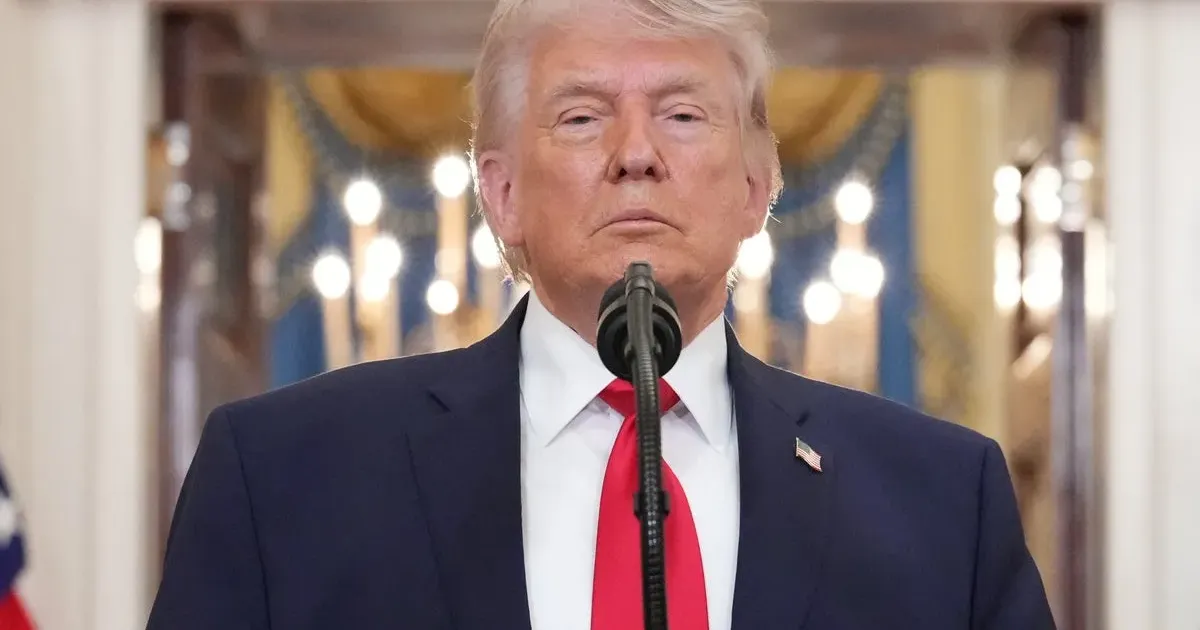
Donald Trump reorganized the executive branch by designating Vice President JD Vance as the national Fraud Czar. The appointment occurred just hours after the dismissal of Pam Bondi, who previously held a senior role within the administration. JD Vance now assumes a portfolio specifically designed to scrutinize Democratic-led jurisdictions with large non-white populations. Reports from within the West Wing indicate that the new position carries broad investigative authority over state-level financial management. The April 3, 2026, appointment arrived during a broader White House personnel shake-up.
Donald Trump announced the move during a private briefing, where he specified that the initiative will focus on regions he claims are rife with systemic corruption. White House insiders suggest the personnel shift is part of a broader strategy to exert federal pressure on local governments before the upcoming midterm elections.
Democratic leaders in California, Illinois, and Minnesota were singled out as primary targets for the new Fraud Czar. Each of these states has maintained an adversarial relationship with the current administration regarding federal funding and election protocols. Legal experts note that the title of Czar lacks a formal statutory definition, giving the office holder broad flexibility in how they deploy resources. Donald Trump characterized the mission as an effort to ensure accountability for federal tax dollars spent in urban centers. Critics argue that the moves weaponize the Department of Justice and the Treasury against political rivals. National data shows that the states mentioned contribute a substantial portion of the federal tax base. While JD Vance has not yet released a formal operational plan, his staff began drafting subpoenas for municipal records within hours of the announcement.
Vance Takes Over Blue State Enforcement
Vance now oversees a task force dedicated to auditing the distribution of federal grants in specific metropolitan areas. Sources close to the Vice President claim his focus will center on social welfare programs and infrastructure projects in Chicago, Los Angeles, and Minneapolis.
"His focus will be everywhere but primarily in Democratic-run states like California, Illinois, and Minnesota," Donald Trump stated during the announcement.Legal analysts at the American Civil Liberties Union expressed concern over the racial demographics mentioned in the initial briefing. Targeting states based on their non-white populations could trigger immediate constitutional challenges under the Equal Protection Clause.
Federal investigators already assigned to these regions may now report directly to the Vice President rather than through traditional agency hierarchies. The centralization of power avoids the bureaucratic delays often associated with interagency cooperation. Government records show that California currently manages billions in federal environmental and housing grants.
Political analysts observe that the Fraud Czar role often results in short tenures for those who hold it. Previous officials tasked with similar oversight roles struggled to navigate the complex legal boundaries between federal authority and state sovereignty. JD Vance enters the role with a clear mandate to produce evidence of misconduct before the November voting cycles. Failure to deliver high-profile indictments or audit findings could result in a loss of presidential favor. Recent history shows that the President prefers immediate results over long-term investigative thoroughness.
Legislative allies in Congress have already signaled their support by proposing budget increases for the Fraud Czar’s office. National polling indicates that voters are deeply divided on whether federal oversight of state spending is a necessary check or a political tool.
Cabinet Turmoil Follows Pam Bondi Dismissal
Dismissing Pam Bondi indicates a continued pattern of high-level turnover within the President’s inner circle. Bondi, a long-time loyalist, reportedly clashed with the White House Chief of Staff over the scope of executive orders targeting sanctuary cities. Her departure leaves another vacancy in a Cabinet that has seen three different heads of the Department of Justice in less than two years. Senior officials describe the atmosphere as increasingly volatile as the administration seeks to finalize its policy agenda. Several other Cabinet members are currently under review for potential removal, including the Secretary of Education and the Secretary of Labor.
Donald Trump has frequently used the threat of termination to ensure absolute compliance with his directives. Private conversations among advisors suggest that the President is looking for more aggressive advocates for his border security policies. The average tenure for a Cabinet secretary in this administration is currently fourteen months.
Administrative stability is often cited by market analysts as a factor in economic predictability. Frequent leadership changes at the federal level can delay the implementation of trade policies and regulatory adjustments. Investors have reacted cautiously to the news of Bondi’s ousting, with several major indices showing slight declines in late-afternoon trading. Business leaders in the technology sector expressed particular concern about the lack of a permanent liaison for digital commerce. Each departure requires a lengthy Senate confirmation process for a permanent successor, unless the President utilizes acting appointments.
Current vacancies across various agencies have left hundreds of senior policy positions filled by temporary staff. The Government Accountability Office noted in a recent report that reliance on acting officials can lead to a lack of long-term strategic planning.
Personnel decisions in the executive branch are increasingly tied to the upcoming 2026 midterm elections. Appointing a high-profile figure like JD Vance to a confrontational role allows the administration to dominate the news cycle. Campaign strategists believe that focusing on fraud in Democratic states will resonate with the President’s core constituency. The narrative provides a counterpoint to criticisms regarding federal spending and inflation. Congressional Republicans have praised the move as a necessary step toward fiscal responsibility. Opposing candidates in blue states are already using the Fraud Czar’s appointment as a fundraising tool for their own campaigns.
Illinois officials have already prepared a legal response to any federal attempts to seize state financial records. Governor JB Pritzker indicated that the state would not comply with requests he deemed to be politically motivated. A similar stance has been adopted by leadership in California, where the Attorney General has a history of filing lawsuits against federal overreach. The legal battles can drag on for months, often reaching the Supreme Court. The judicial system is now the primary arbiter of the Fraud Czar’s authority. Several pending cases already challenge the administration’s ability to withhold federal funding from non-compliant states.
Federal courts have issued conflicting rulings on this issue in the past year. Donald Trump remains confident that his judicial appointments will favor his administration’s interpretation of executive power.
Operational costs for the newly created office are expected to reach several hundred million dollars. Funding will likely be redirected from other Department of Justice initiatives, including civil rights enforcement and environmental litigation. Budget documents reveal a major shift in priorities toward domestic surveillance and financial auditing. Staffing for the Fraud Czar will include dozens of former federal prosecutors and forensic accountants. The new staff members are being recruited from private firms and other government agencies. The focus on Democratic states suggests that the administration is preparing for a period of intense legal and political friction.
Fraud Czar Role Expands Executive Reach
The appointment of a Fraud Czar to specifically target political opposition zones is a calculated escalation of executive authority. Opening a new front in the war against blue states allows the administration to frame political disagreements as criminal investigations. The tactic effectively shifts the burden of proof onto local governments, forcing them to defend their administrative records in the court of public opinion. History suggests that such centralized oversight often backfires when the target states possess the legal and financial resources to fight back.