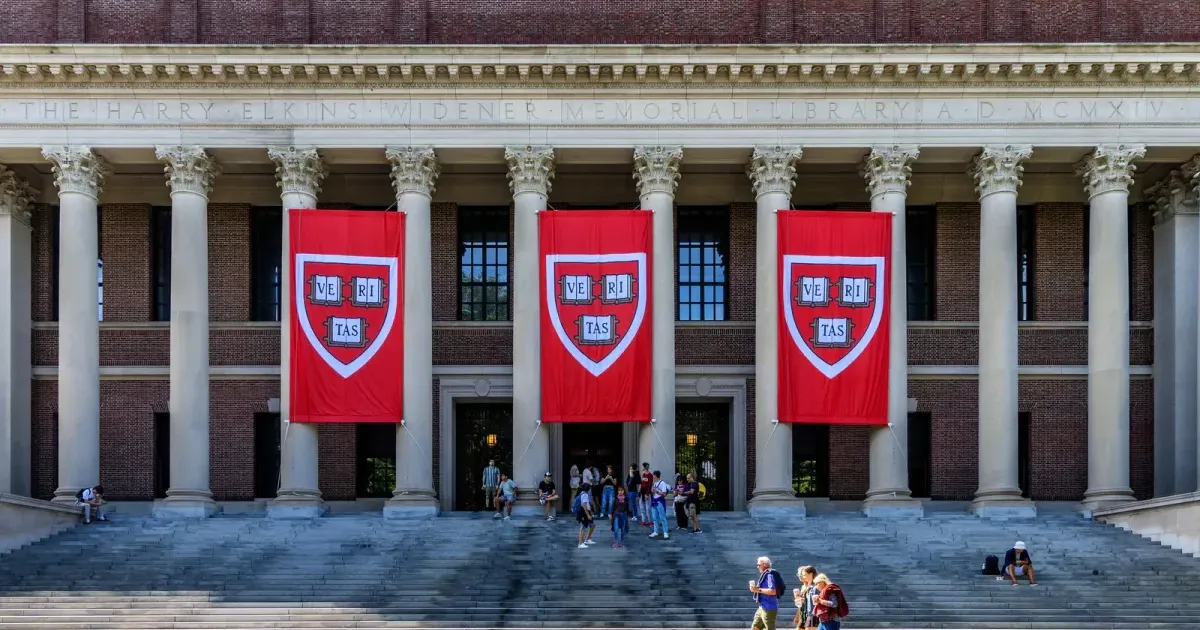
Justice Department attorneys filed a civil complaint against Harvard University in Massachusetts federal court alleging widespread antisemitism violations. Litigation targets the university for failing to protect Jewish and Israeli students from a hostile environment on campus. This legal action seeks to claw back federal grants previously awarded to the institution while barring future access to such funds. Federal officials cited Title VI of the Civil Rights Act of 1964 as the primary basis for the intervention. Under this statute, organizations receiving federal money must operate without discriminating on the basis of race, color, or national origin. Investigators claim the university allowed harassment to flourish unchecked during the 2023 through 2025 academic years.
Court filings submitted on Friday morning describe a pattern of administrative negligence. Prosecutors argue that the institution disregarded multiple internal reports of physical and verbal abuse directed at Jewish students. These failures allegedly transformed the Cambridge campus into a discriminatory space. Federal funding for the university often exceeds $1.2 billion annually, much of which supports high-level scientific and medical research. The government now demands a full accounting of how those funds were utilized while discriminatory practices allegedly persisted. Legal experts suggest this move is a major expansion of federal oversight into private higher education. Evidence cited in the 85-page complaint includes social media posts, internal emails, and testimony from current faculty members. Harvard University administrators have previously defended their response to campus protests as a commitment to free expression. Still, the new federal filing suggests that free speech protections do not extend to the creation of a pervasive hostile environment. Litigation of this scale typically takes years to resolve in the federal court system. Government lawyers requested a jury trial to determine the extent of the university's liability. The filing mentions specific incidents where students were allegedly blockaded in study halls or followed by protesters without intervention from campus police.
Harvard Federal Grant Repayment Demands
Recouping federal research funds is a central component of the litigation. Justice Department officials have asked the court to order the return of grants tied to any department where Title VI violations occurred. For one, the National Institutes of Health provides hundreds of millions of dollars to Harvard researchers every year. If the government successfully argues that the institution was in breach of its civil rights obligations, those researchers could lose their funding overnight. Most universities rely on these overhead payments to keep their laboratories and facilities operational.
Financial records show that federal money accounts for approximately 11% of Harvard's total operating revenue. Disruption of these streams would force immediate budget cuts across the graduate and undergraduate schools. Administrative staff at the university have already begun preparing for a lengthy legal defense against these clawback provisions.
Separately, the lawsuit could set a precedent for other Ivy League institutions facing similar complaints. To that end, federal investigators have already requested documents from several other elite universities in the Northeast. Yet the case against the Cambridge institution is the most detailed to date. Internal memos from the Department of Education indicate that the decision to sue was reached after months of failed negotiations regarding a voluntary settlement. Harvard reportedly refused to accept the level of federal oversight demanded by government monitors. This refusal led directly to the Friday filing in the U.S.
District Court for the District of Massachusetts. Prosecutors seek not only the return of money but also a permanent federal monitor to oversee campus discipline and diversity programs.
Justice Department Civil Rights Allegations
Legal arguments in the complaint focus on the definition of a hostile environment under federal law. Prosecutors must prove that the harassment was so severe and pervasive that it denied students equal access to educational opportunities. In fact, the complaint alleges that some Jewish students were forced to take leaves of absence due to safety concerns.
In Friday court filings, the Trump administration again accused the university of failing to protect Jewish and Israeli students from antisemitism and harassment.Civil rights division lawyers spent the better part of a year interviewing students and reviewing video footage from campus protests.
The resulting dossier claims that the university's disciplinary board failed to punish students who violated code-of-conduct rules during anti-Israel demonstrations. Harvard officials maintain that they have applied disciplinary measures fairly and consistently across all student groups.
By contrast, the Justice Department paints a picture of a selective enforcement regime. Lawyers for the government argue that the university was quick to punish other forms of bias while ignoring antisemitic rhetoric. And the complaint details instances where faculty members allegedly participated in or encouraged disruptive protests. If these allegations are proven, they would constitute a clear violation of the university's federal contracts. Each grant agreement contains a clause requiring compliance with non-discrimination laws. The government contends that Harvard's breach of these clauses makes the grant money recoverable as a matter of contract law.
This strategy avoids some of the constitutional hurdles typically associated with punishing private speech. It treats the university as a government contractor failing to meet the terms of its service agreement.
Antisemitism Complaints and Campus Environment
Campus climate surveys conducted over the last 18 months reveal a deep divide within the student body. Some groups feel the administration has been too harsh on protesters, while others feel entirely abandoned by the leadership. Meanwhile, donor dissatisfaction has already led to a major drop in philanthropic giving to the university. Several high-profile alumni publicly severed ties with the institution throughout 2024 and 2025. The decrease in private funding makes the federal grant money even more critical to the university's survival. Even so, the Justice Department remains unmoved by the potential for institutional bankruptcy.
Government officials stated that no institution is too prestigious to be held accountable for civil rights violations. The lawsuit specifically names several deans and high-ranking administrators who allegedly ignored warnings from the university's own security task force. the Harvard antisemitism lawsuit turns campus governance into a federal pressure point. The legal case will matter, but so will whether universities believe funding, reputation and autonomy are all in play.