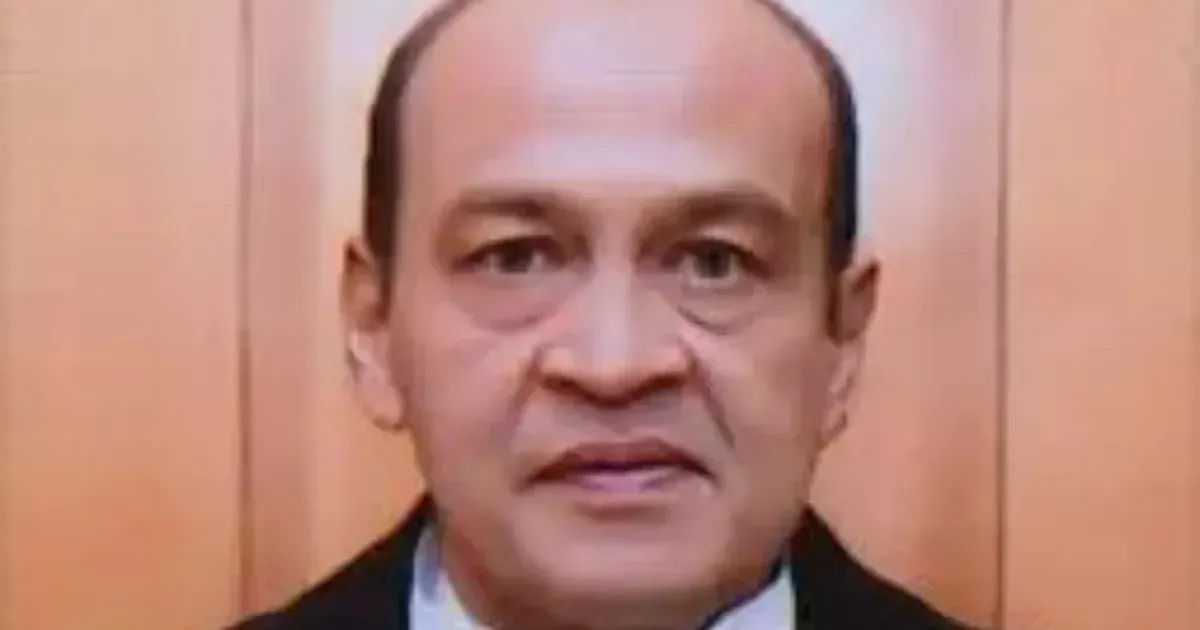
Justice Yashwant Varma submitted his formal resignation to President Droupadi Murmu, concluding a tenure increasingly defined by a high-stakes financial investigation. Varma departed his position at a moment when the Indian legislative body had already activated the mechanisms for his removal. Recovery of large unaccounted cash occurred during a routine emergency response to a fire at the jurist's private residence, which immediately triggered a high-level inquiry by the Supreme Court. The resignation was confirmed on April 10, 2026, during an escalating judicial accountability fight. Investigative teams discovered currency notes in quantities that the sitting judge could not reconcile with his declared income and tax filings. Documents submitted to the President's office indicate the resignation takes effect immediately upon receipt.
Legislative leaders in both the Rajya Sabha and Lok Sabha had moved toward a vote of removal following the initial findings of the judicial probe. Varma resisted the proceedings for several months, often filing legal petitions to halt the investigation. His resignation letter expresses a sense of deep anguish but avoids direct engagement with the specific allegations of corruption or financial misconduct. While the letter confirms his departure, it does not offer an apology or an explanation for the cash discovered by fire safety officials in early 2026. Police reports from the night of the fire indicate that the currency was found stashed in concealed containers within a study room.
Cash Recovery Investigation at Varma Residence
Emergency responders arrived at the Varma household during the late evening hours to extinguish a blaze caused by an electrical short circuit. While clearing debris and ensuring the structural integrity of the property, fire marshals uncovered multiple bags filled with high-denomination banknotes. Local authorities immediately notified the Enforcement Directorate and the Central Bureau of Investigation regarding the discovery. Preliminary counts suggested the amount reached figures far beyond the standard savings of a public official. Search warrants executed in the subsequent days yielded further ledger books and digital records that linked the judge to several offshore accounts.
Supporters of the judge initially characterized the incident as a political vendetta or a misunderstanding of familial assets. Parliament, however, viewed the evidence as sufficient to warrant the invocation of the Judges (Inquiry) Act of 1968. Members of the investigative committee noted that the proximity of the cash to the judge's personal workspace suggested direct knowledge and possession. Banking experts analyzed the serial numbers on the recovered bills and found they originated from several corporate entities recently involved in litigation before the high court. Evidence logs from the CBI now include these currency samples as primary exhibits in the ongoing criminal portion of the case.
Parliamentary Action and Supreme Court Inquiry
Inquiry proceedings began in earnest after the Supreme Court of India constituted a three-member panel to examine the ethical breaches. This panel included two sitting chief justices from other regional high courts and a distinguished legal scholar who examined the timeline of Varma’s recent rulings. Data from the court registry showed a pattern of favorable verdicts for specific infrastructure conglomerates during the same period the cash began accumulating. Investigators interviewed several law clerks and administrative assistants who worked closely with Varma to determine if any internal protocols were bypassed. These testimonies pointed toward an irregular handling of sensitive case files and private meetings with defense counsel outside of official chambers.
Legislators moved the impeachment motion with historic speed, garnering signatures from over 100 members of the lower house within forty-eight hours. Constitutional law stipulates that a judge can only be removed on the grounds of proven misbehavior or incapacity. The committee tasked with the investigation presented a 400-page report detailing the financial discrepancies and the lack of a credible defense from the Varma legal team. Proponents of the impeachment argued that the integrity of the judicial branch depended on a swift and public resolution to the scandal. Formal debates in the chamber focused heavily on the bank statements and the physical evidence recovered from the fire site.
Constitutional Challenges to Judicial Impeachment
Varma did not accept the inquiry without a legal fight, choosing to challenge the very constitutionality of the parliamentary committee. His defense team argued that the executive and legislative branches were overstepping their bounds by scrutinizing a judge’s private property before a criminal conviction. A petition filed in the apex court claimed that the discovery of the cash violated his right to privacy and that the evidence was fruit of a poisonous tree. Judges presiding over the challenge rejected these arguments, citing the higher standard of transparency required for individuals holding constitutional offices. The court ruled that the preservation of public trust outweighed the individual privacy concerns of a sitting justice.
While refusing to venture into the reasons which have constrained me to submit this missive, it has been an honour to serve in the office.
Legal analysts noted that the resignation likely aims to preempt the formal vote of impeachment, which would have carried the lifelong penalty of being barred from future public office. By resigning before the final vote, Varma maintains certain pension benefits and avoids the historical ignominy of being the first judge successfully removed through the full parliamentary process. Records show that several previous attempts to impeach Indian judges ended in a similar fashion, with the accused resigning just days or hours before the final tally.
Public interest litigants have already filed new petitions demanding that the criminal investigation continue regardless of his employment status. The Ministry of Law and Justice confirmed that the resignation does not grant immunity from prosecution under the Prevention of Corruption Act.
Historical Precedents for Indian Judicial Scandals
Judicial history in the region contains few instances where the impeachment process reached its final stage in the legislative chambers. Varma’s case mirrors the 2011 proceedings against Justice Soumitra Sen, who also chose to resign after the Rajya Sabha voted for his removal but before the Lok Sabha could take up the motion. Another parallel exists in the 1990s case of Justice V. Ramaswami, where the motion failed to pass due to political abstentions. Current legislative leaders insist that the Varma case is a different level of severity because of the physical evidence of cash recovery. Forensic auditors continue to trace the origin of the funds found in the study room to ensure no other members of the bench were involved.
Market reactions to the resignation remained stable as investors viewed the move as a sign of institutional strength rather than systemic failure. Bar associations across the country issued statements calling for stronger asset disclosure requirements for all members of the higher judiciary. The Supreme Court is now considering a new collegium rule that would require annual financial audits for judges and their immediate family members. Varma has returned to his private residence under heavy security as the Central Bureau of Investigation prepares its next set of charges. Prosecutors expect to file a formal chargesheet by the end of the fiscal quarter.
Resignation Exposes an Accountability Gap
Does the resignation of a high court judge under the shadow of a cash-filled suitcase constitute a victory for accountability, or is it a strategic retreat through a constitutional loophole? The departure of Yashwant Varma on April 10, 2026, highlights the deep inadequacy of the current impeachment framework. By stepping down before the legislative gavel could fall, Varma effectively short-circuited the democratic process intended to purge the bench of corruption. This maneuver allows the accused to retain the title of Retired Justice while sidestepping the permanent disqualification that a completed impeachment would have enforced. It is a calculated escape that preserves a shred of prestige at the expense of total transparency.
The recovery of unaccounted funds in a judge's home is not a minor lapse; it is a systemic alarm. If the judiciary is to function as the ultimate arbiter of truth, it cannot allow its members to treat the robe as a shield for illicit enrichment. That a house fire was required to expose this financial rot suggests that existing oversight mechanisms are functionally decorative. We must demand more than the removal of a single tainted actor. The legislature must move to amend the Judges (Inquiry) Act to ensure that a mid-process resignation does not halt the formal recording of guilt or the forfeiture of taxpayer-funded benefits. Varma’s exit is a tactical win for him, but a strategic failure for the state.