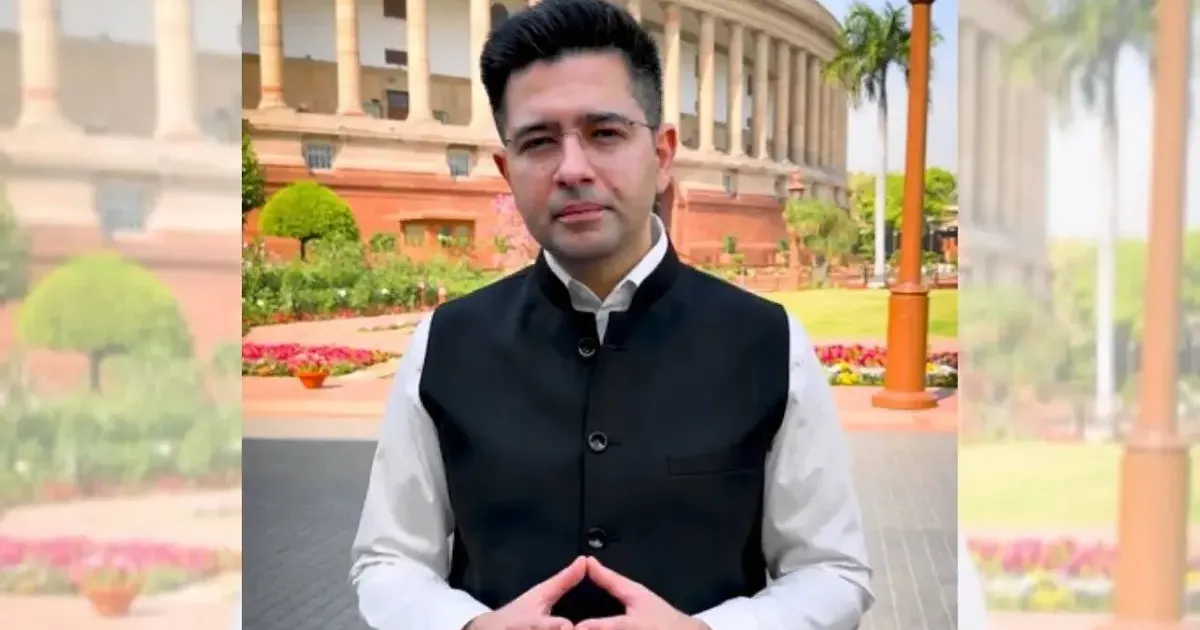
Raghav Chadha's removal as AAP deputy leader in the Rajya Sabha first looked like an internal message-discipline fight. Within weeks, it read differently. The Aam Aadmi Party replaced him with Ashok Kumar Mittal in early April 2026, Chadha responded publicly that he had been silenced rather than defeated, and later reports said Chadha, Mittal and several other AAP Rajya Sabha MPs moved to the BJP.
The later development changes the political meaning of the event without proving every motive behind the original demotion. What could have been described as a parliamentary role change became an early public sign of a much larger rupture inside AAP's national and Punjab-facing strategy.
The demotion was procedural on paper
A party replacing its deputy leader in the upper house can look technical. The role affects coordination, speaking visibility, floor strategy and the way a party presents itself in Parliament, but it is still an internal designation.
The first version of the story therefore needed restraint. AAP had sent the change to the Rajya Sabha secretariat, and Ashok Mittal became the replacement. Anything about internal motives had to be attributed, not stated as fact.
Chadha turned it into a public argument
Chadha's response ensured the move would not remain administrative. His message to supporters framed the removal as an effort to mute him. Chadha's response gave the story emotional and factional force, especially because he had been one of AAP's most visible national faces.
The public argument also created risk for both sides. Chadha preserved his public profile by refusing to absorb the demotion quietly. AAP, by contrast, had to decide whether to treat him as a disciplined member, a dissenting figure or a leader already moving outside the party's control.
Ashok Mittal's role changed quickly
Mittal's appointment initially suggested AAP wanted a different parliamentary face. He was a Punjab MP, a university founder and a less combative public figure than Chadha. Mittal's profile made him a plausible replacement if the party wanted a quieter upper-house style.
The later report that Mittal also joined the BJP alongside Chadha changed the reading. The replacement did not stabilize the story. It became part of the same broader break, which made the initial reshuffle look less like tidy control and more like a sign that control had already weakened.
The BJP move altered the whole frame
Once Chadha and other AAP MPs were reported to have moved to the BJP, the demotion could no longer be treated only as a dispute over parliamentary messaging. It became part of a realignment story. AAP lost not only one title-holder but a cluster of upper-house figures.
BJP entry was not fixed from the first day. Political breaks develop through public pressure, internal calculation and negotiation. The safer point is that the demotion was one visible stage in a process that later became far larger.
AAP's centralized style faced a test
AAP has often depended on disciplined messaging around Arvind Kejriwal and a small leadership circle. The model can make the party fast and coherent. It can also create strain when visible figures develop independent profiles, especially in Parliament and national media.
Chadha's visibility made that tension more visible. He could draw attention to issues, speak to younger voters and project competence beyond state-level politics. Chadha's profile could also become uncomfortable if party leaders believed the line was drifting away from headquarters.
The deeper issue is inner-party democracy
The deeper issue is not only which party gained or lost MPs. It is how Indian parties handle ambition, dissent and representation once a leader becomes bigger than the role assigned to them. Removing a visible figure may solve a short-term coordination problem, but it can deepen the perception of internal closure.
Chadha's removal, Mittal's brief elevation and the later BJP move together show the cost of weak internal repair mechanisms. When parties cannot absorb disagreement inside the institution, disagreements travel outside it. In this case, the travel became public, parliamentary and politically expensive.