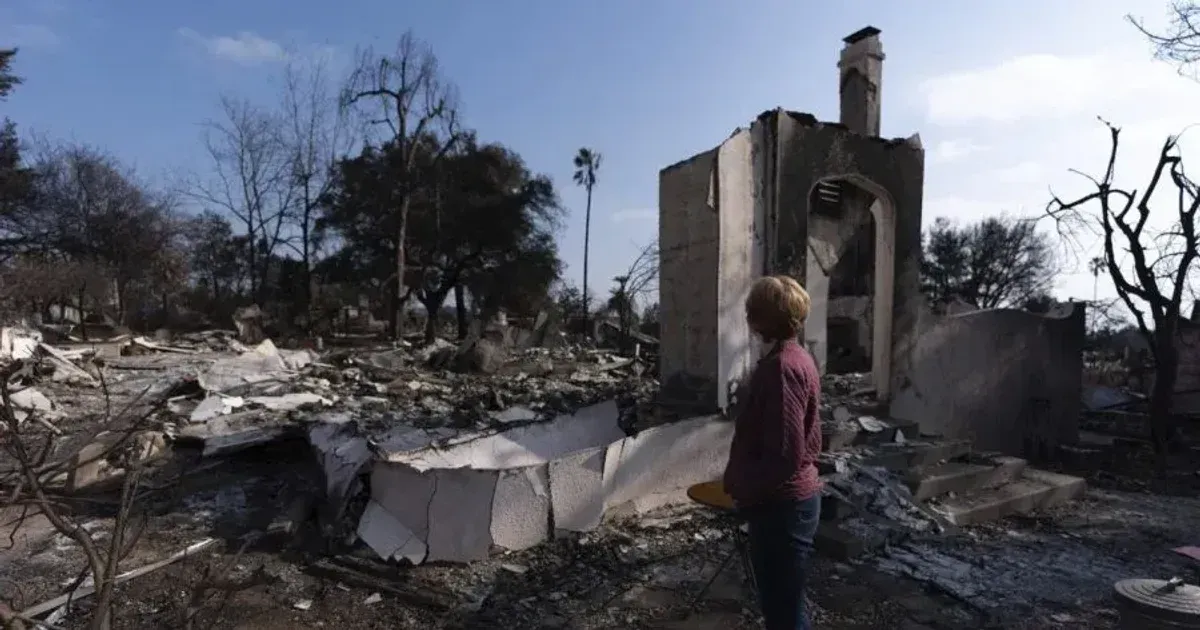
Wildfire recovery brought Kathryn Barger and Karen Bass to Washington with a shared demand for faster federal help. Their meeting with President Donald Trump puts Los Angeles rebuilding needs ahead of the region’s usual partisan fault lines. Damaged neighborhoods are waiting for decisions that convert promises into housing, debris removal and infrastructure repair. The timing leaves little room for another slow relief cycle. Los Angeles County Supervisor Kathryn Barger traveled to Washington on April 26, 2026, to coordinate emergency relief efforts with President Donald Trump following a season of catastrophic wildfires. Joining her in the high-stakes meeting was Los Angeles Mayor Karen Bass, highlighting a rare moment of bipartisan cooperation between the Republican supervisor and the Democratic mayor. Both leaders aimed to speed up the release of federal resources for a region still reeling from severe infrastructure damage and residential loss. Preliminary damage assessments across Southern California suggest recovery costs will exceed several billion dollars. Regional officials are pushing for a formal major disaster declaration to trigger the full suite of individual and public assistance programs.
Federal agencies face mounting pressure to distribute aid as multiple natural disasters stretch the national emergency budget. Barger, during an interview with CNN’s Elex Michaelson, confirmed that while her meeting with the president was productive, Los Angeles is not alone in its request. Other states currently sit in line for FEMA assistance, creating a bottleneck that could delay critical funding for local municipalities. Competition for federal attention remains high as the scale of climate-related disasters increases across the Pacific Northwest and the Gulf Coast.
Barger noted that her conversation with the president focused on the immediate necessity of debris removal and the restoration of essential utilities in charred canyons. Specific timelines for the disbursement of these funds were not publicly confirmed during the visit.
Los Angeles County Navigates Federal Funding Barriers
Barger arrived at the White House with a detailed dossier outlining the destruction of at least 400 structures and the compromise of critical watersheds. Local governments frequently struggle to manage the initial financial shock of such events before federal reimbursement arrives. Under the provisions of the Stafford Act, the president holds the authority to unlock large tranches of capital, but the application process is notoriously slow. Administrative hurdles often force counties to exhaust their emergency reserves while waiting for federal auditors to verify damage claims. This meeting occurred precisely when the county treasury began showing signs of strain from the ongoing cleanup operations.
"I'm appreciative that the president sat down with us and listened to the concerns of Los Angeles County residents who have lost everything in these fires," Barger told CNN’s Elex Michaelson.
Recent reports from the Los Angeles County Fire Department indicate that several fires are still being monitored for hotspots, even as the recovery phase begins. Recovery efforts involve more than clearing ash; they require the stabilization of hillsides to prevent mudslides during the upcoming rainy season. If FEMA does not approve the requested funding soon, the county may have to divert money from other public services. Barger emphasized that the bipartisan nature of her trip with Mayor Karen Bass was intended to show a united front to the executive branch. Such a display of unity is often necessary when competing against other states for a finite pool of federal disaster money.
Bipartisan Coalition Prioritizes Regional Wildfire Needs
Bass and Barger have maintained a consistent working relationship despite their differing political affiliations, particularly regarding homelessness and public safety. Wildfire response has become another area where the two leaders find common ground. During their discussion with Donald Trump, the duo highlighted the economic impact of the fires on the local agricultural and tourism sectors. Federal assistance typically covers 75 percent of eligible costs, leaving the state and local governments to cover the remaining 25 percent. Negotiating a higher federal cost-share is a primary goal for the California delegation. Previous disasters have seen this federal share increased to 90 percent in cases of extreme hardship.
National politics often complicates these negotiations, but the presence of a Republican supervisor like Barger provides a bridge to the current administration. President Donald Trump has previously criticized California’s forest management practices, calling for more aggressive clearing of brush and timber. Barger addressed these concerns by detailing the county's recent mitigation efforts and its investment in advanced fire-tracking technology. Data presented during the meeting showed that the county has increased its fire prevention budget by 15 percent over the last three years. These statistics were meant to reassure federal officials that the local government is taking proactive steps to reduce future risk. Trump reportedly expressed interest in these mitigation strategies during the closed-door session.
National Competition for Limited FEMA Emergency Resources
Other governors and local leaders are simultaneously lobbying for their own disaster priorities. State officials in Florida and Texas are also seeking large shares of the FEMA Disaster Relief Fund following recent hurricane and flood events. The balance of this fund is a constant concern for Congress, which must frequently pass supplemental spending bills to keep it solvent. Barger, however, noted that the urgency in Southern California is unique due to the immediate threat of secondary disasters like flash flooding. Without federal intervention, the window for effective preventative engineering is closing rapidly. Weather patterns suggest that early autumn rains could arrive sooner than expected.
Logistical constraints within the federal government also play a role in the speed of aid delivery. Staffing shortages at FEMA have been a recurring issue, with many experienced coordinators reaching their overtime limits. Barger told Michaelson that she discussed the need for dedicated federal liaisons to be embedded within the county’s emergency operations center. This would allow for real-time processing of claims and faster technical assistance for local engineers. While the president did not commit to specific personnel changes, he did direct his senior staff to maintain a direct line of communication with Barger’s office. The county now waits for a formal response to its latest grant application.
Institutional Challenges in Rapid Disaster Response
Structural damage to the power grid remains one of the most expensive hurdles for the region. Southern California Edison has reported that replacing thousands of charred utility poles and miles of high-voltage wiring will take months. Federal grants are often the only way to fund the modernization of these systems to make them more resilient to future blazes. Barger has argued that simply rebuilding to previous standards is no longer sufficient. She is advocating for the undergrounding of power lines in high-risk areas, a project that requires huge capital investment. The current federal framework for disaster relief often favors replacement over improvement, a policy Barger is hoping to challenge.
Financial analysts suggest that a delay in federal funding could impact the county’s credit rating. High emergency expenditures without clear reimbursement timelines create uncertainty for bondholders and institutional investors. Barger’s visit to the White House was partly intended to provide a signal of stability to these financial markets. By securing a personal meeting with Donald Trump, she demonstrated that the county has the necessary political access to navigate the federal bureaucracy. Whether this access translates into immediate checks for the treasury is a matter of administrative process. The county is continuing its cleanup operations using bridge loans and internal reallocations of funds.
Los Angeles Is Trapped in a Broken Federal Disaster Funding Cycle
Barger and Bass appearing together in the Oval Office is an exercise in political pragmatism that masks a much deeper systemic failure. The reality is that California remains in a perpetual state of environmental and fiscal vulnerability, forced to beg for crumbs from a federal table that is increasingly bare. Trump’s penchant for transactional politics means that any aid package likely comes with unspoken strings, perhaps related to land use or forest management mandates that the state’s Democratic leadership usually abhors. This meeting was not about a shared vision for safety; it was a desperate scramble for cash in a zero-sum game where California is competing against Florida and Texas for the same dwindling pot of money.
Disaster relief has become a tool of executive patronage rather than a reliable safety net for taxpayers. While Barger plays the role of the sensible Republican intermediary, the underlying problem is that the FEMA model is broken. It is designed for occasional catastrophes, not the seasonal, multi-billion-dollar infernos that now define the American West. The current administration knows this and uses the resulting leverage to extract concessions from rebellious states. Reliance on the Stafford Act is a failing strategy.
Los Angeles is not just in line for help, it is trapped in a cycle of dependency that the federal government has no incentive to fix. Barger’s gratitude is the price of admission for a system that only functions when the cameras are on. The real work of recovery will likely be buried in the same bureaucracy that created the backlog in the first place.