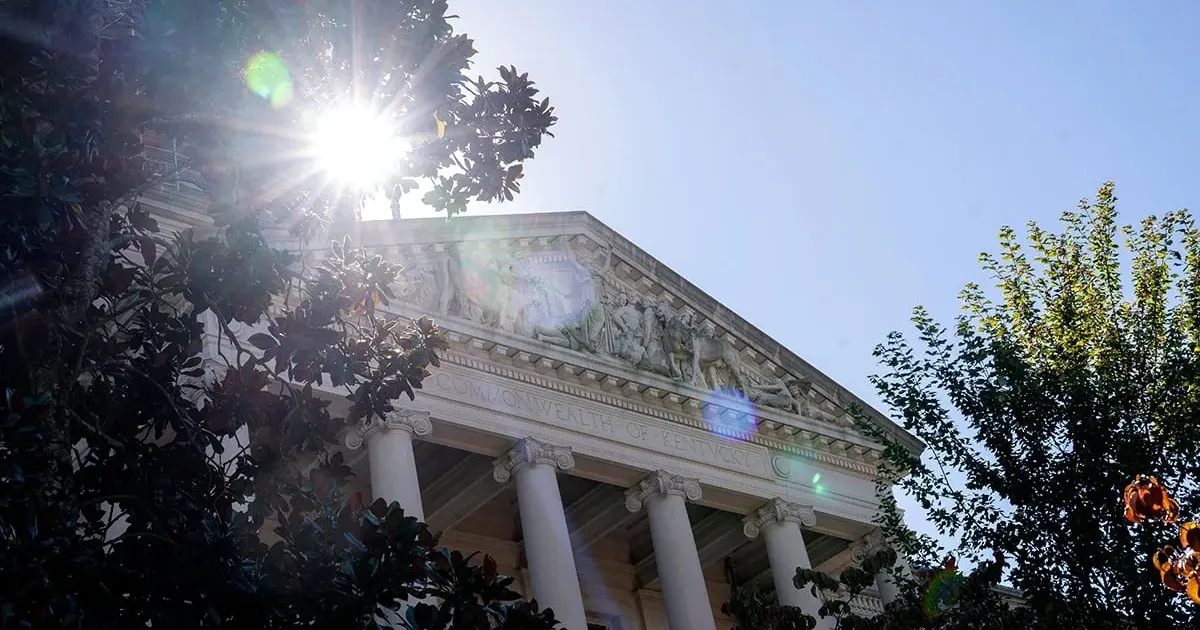
Kentucky's tenure fight and Portland Community College's strike were not the same dispute, but they exposed the same pressure inside higher education. Public colleges are trying to manage enrollment uncertainty, funding limits and labor costs. Faculty and staff are trying to stop flexibility from becoming permanent insecurity. Students are left to absorb the instability when either side runs out of room.
The two cases now have outcomes. Kentucky lawmakers overrode Governor Andy Beshear's veto and enacted a bill making it easier for public institutions to lay off faculty, including tenured faculty, for financial reasons. Portland Community College reached agreements after a historic strike disrupted classes and services. Neither outcome resolves the larger question: who carries higher education's financial risk?
Kentucky Turned Tenure Into A Budget Tool
Kentucky's HB 490 allows public university boards to terminate faculty under conditions tied to financial exigency, low enrollment or a mismatch between revenue and costs. Inside Higher Ed reported that the measure required only 30 days' notice for affected professors to defend their jobs to board members.
Supporters framed the bill as a way to make campuses more responsive to changing student demand and fiscal reality. Faculty groups saw something different: a weakening of tenure, academic freedom and the expectation that universities protect long-term intellectual work even when a program is not immediately profitable.
Tenure Is About Power, Not Comfort
The argument is not only about individual professors. Tenure changes the balance of power inside a university. It gives faculty room to research, teach and criticize institutions without fearing quick removal when a field becomes politically inconvenient or financially weak.
If dismissal becomes easier when a program is judged under-enrolled or misaligned with revenue, departments with fewer majors or less obvious market value become exposed. The exposure reaches fields central to civic education but harder to defend in a spreadsheet.
Portland Showed The Wage Side
Portland Community College's labor fight came from the other direction. More than 2,000 faculty and staff went on strike in March after long contract negotiations over pay, benefits and working conditions. Axios described the action as Oregon's first community college strike, affecting about 30,000 students.
The strike ended after tentative deals. Classified employees secured a 5 percent cost-of-living adjustment for 2026-27 and a $1,350 lump-sum payment. Faculty reached a separate agreement that included a 2 percent retroactive cost-of-living increase, a 3 percent increase for 2026-27 and lump-sum payments for full-time and part-time faculty.
Students Pay For Institutional Instability
Students are caught between both pressures. Tenure changes can reduce program stability and make small departments more vulnerable. Strikes can interrupt classes, delay terms and complicate financial aid, work schedules and graduation planning.
Those outcomes are often discussed as collateral damage, but they are central to the public mission. A college that cannot promise stable courses, stable instructors and stable advising cannot ask students to treat enrollment as a predictable investment.
Enrollment Pressure Deepens The Conflict
Universities do face real pressure. Demographic decline, uneven state funding, inflation, deferred maintenance and student skepticism about college value are not imaginary. Some campuses will need to close programs, merge operations or rethink staffing.
The danger is using crisis language to make instability normal. If every budget problem becomes a reason to weaken tenure or hold down wages, the institution solves today's spreadsheet by making tomorrow's workforce less secure.
Public Mission Does Not Fit A Pure Profit Test
A university is not just a collection of profitable majors. It is a civic institution that preserves fields, methods and public knowledge whose value is not always measured by this semester's tuition flow. No program can be immune from review, but review needs transparent standards and due process strong enough to survive politics.
Portland's strike makes the same point from the labor side. Campuses run on people whose work is often treated as adjustable until they stop working. Instructors, academic professionals and classified staff are not background infrastructure. They are the institution students actually experience.
The Risk Is A More Disposable Campus
Higher education is being pushed toward a flexible-workforce model. Lawmakers want faster cuts. Administrators want room to restructure. Workers want guarantees that public institutions will not use crisis language to erase stable careers.
The risk is a more disposable campus: fewer durable programs, weaker faculty independence, more labor conflict and students forced to navigate uncertainty that institutions should be absorbing. Once that happens, the budget problem becomes an identity problem. A campus cannot keep asking for public trust while treating stable labor as optional.