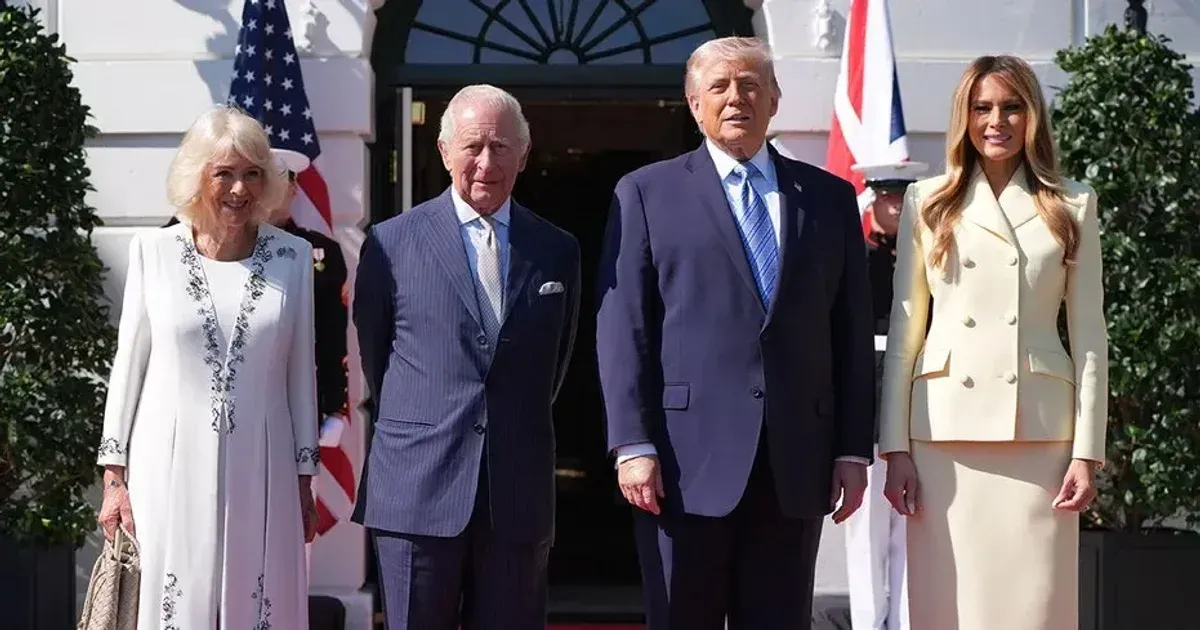
King Charles’ White House meeting placed royal diplomacy inside a city still adjusting to a recent security breach. The visit is meant to stabilize transatlantic relations, but protection planning now shadows every public appearance. Trump and the British monarch are also using ceremony to project continuity during a volatile week. President Donald Trump welcomed King Charles III to the White House as the British monarch began a multi-day state visit focused on stabilizing transatlantic relations. Posing for photographs alongside First Lady Melania Trump and Queen Camilla, the four leaders exchanged pleasantries before moving inside for a private meeting. White House tea took place on April 27, 2026, a day before Charles was scheduled to address a joint meeting of Congress. NBC News reports indicated the atmosphere remained cordial despite the complex political backdrop in Washington.
Royal Visit Security
Heightened security protocols defined the royal visit after a recent security breach at the White House Correspondents' Dinner. Federal prosecutors have officially charged Cole Allen with the attempted assassination of the president after he allegedly tried to storm the media event. Federal court records describe Allen as a motivated actor whose actions forced a review of all executive protection details. Local law enforcement maintains a high-alert status throughout the District of Columbia to ensure the safety of the visiting dignitaries.
Republican lawmakers are currently scrambling to secure additional funding for the Secret Service as the agency manages heightened security pressures. Congressional leaders emphasized that the protection of a foreign sovereign is a non-negotiable obligation. Parallel to these fiscal debates, the king prepared his remarks for the Capitol. He is the first British monarch to address a joint meeting of Congress since his mother, Queen Elizabeth II, did so in 1991.
The visit carries a diplomatic message beyond ceremony. Associated Press reporting said Charles is expected to emphasize the durability of the U.K.-U.S. relationship at a moment when the two governments have disagreed over the Iran war and other foreign policy choices. British officials are relying on royal soft power to reinforce long-term ties without turning the trip into an open political argument. Washington, meanwhile, is treating the visit as one of the most visible ceremonial events of America's 250th anniversary year. His itinerary also includes a formal state dinner, a visit to the Sept. 11 memorial in New York and a Virginia event tied to the anniversary, giving the trip a broader diplomatic frame than one speech on Capitol Hill.
One striking absence from the official itinerary is the king's younger son. Prince Harry, who lives in California with his family, is not scheduled to meet with his father during the trip. New York Times reporting noted that the omission appears deliberate, signaling that the state visit will focus on institutional duties. Palace officials declined to comment on the private family dynamics involving the Duke of Sussex. Observers noted that the king's schedule is packed with high-level meetings, a state dinner and public events that leave little room for personal detours.
"On a state visit designed in part to repair U.S.-British relations, King Charles's schedule does not include plans to see his younger son," the New York Times reported regarding the royal itinerary.
Security stays tight throughout the legislative district. Capitol Police have established a wide perimeter around the building in anticipation of the monarch's arrival. Lawmakers from both parties are expected to attend the historic address to show a unified front in support of the special relationship. Charles is expected to touch upon democratic values and the shared history of the two nations. These institutional rituals provide a brief period of bipartisan cooperation amid a season of intense political division.
Royal Ceremony Cannot Hide Washington’s Protection Strain
Does the presence of a foreign sovereign during a period of heightened domestic threat escalate the burden on federal agencies beyond their current capacity? Cole Allen's attempted assassination charge exposed specific vulnerabilities in the perimeter defense of high-profile events. Law enforcement must now balance the visible pomp of a state visit with the less visible necessity of protective planning. Secret Service operations are already under personnel strain that could affect future campaign security as the midterm elections approach.
Political rhetoric in the United States has reached a boiling point where even traditional statecraft is analyzed through the lens of security risk. Strategic planners are looking toward the Secret Service funding bill as a barometer for how seriously Congress treats these emerging dangers. Failure to provide adequate resources would leave both domestic leaders and international guests in an unstable position. Protection is the first priority of the state.