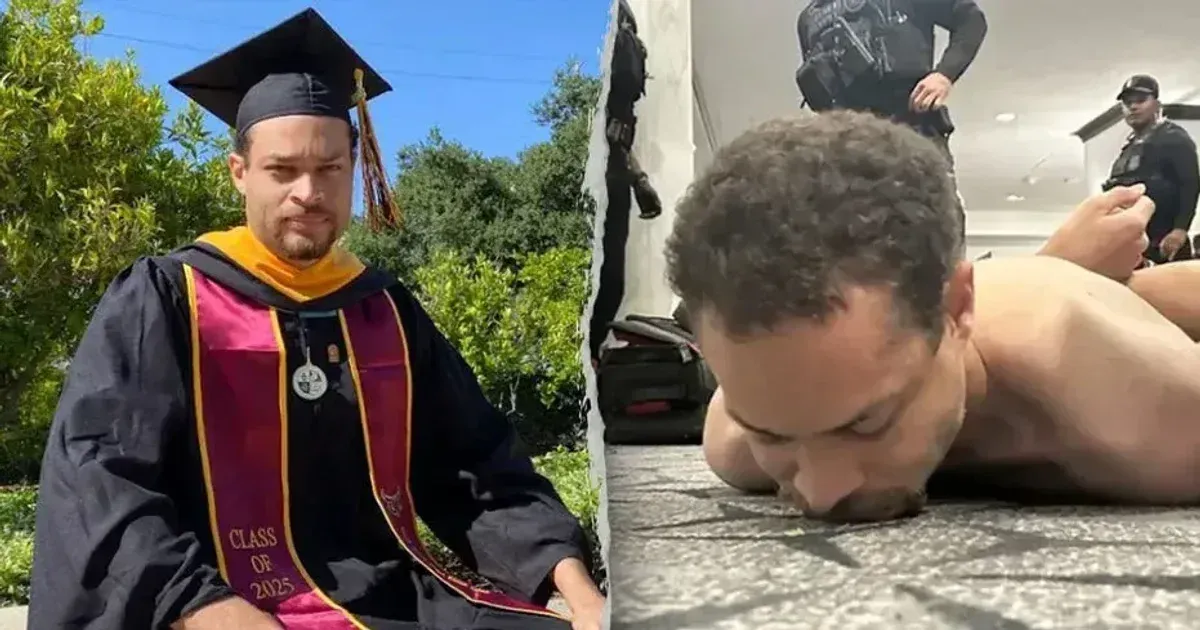
Federal charges in the Trump dinner attack moved the Washington Hilton breach from emergency response to courtroom record. The case now depends on what prosecutors can prove about intent, planning and the suspect’s route through security. Federal prosecutors filed charges against a 31-year-old California man accused of attempting to assassinate Donald Trump during a high-profile media event in the capital. Federal filings described the chaotic scene at the White House Correspondents’ Dinner on April 25, 2026. Investigators stated the suspect intended to kill as many high-level officials as possible during the gathering. Documents filed in federal court describe a premeditated effort to infiltrate the secure perimeter of the Washington Hilton.
Law enforcement officials identified the suspect as an individual from California who traveled across the country specifically for the event. Security personnel apprehended him quickly once the first shots echoed through the ballroom. Secret Service agents moved Donald Trump to a secure location while other members of the detail neutralized the immediate threat. The prompt response likely prevented a mass casualty event given the density of political figures and media members present in the room.
Donald Trump adopted a conciliatory tone during his first public remarks on Saturday night. He called for national unity and expressed gratitude to the security details that protected him. While the president sought to lower the political temperature, members of his administration launched a sharp critique of the broader political environment. Staffers pointed to a persistent climate of divisive rhetoric as the primary driver for such violence.
Legal Proceedings and Suspect Identification
Prosecutors currently seek the maximum penalty for the 31-year-old suspect under federal assassination statutes. Evidence collected from the suspect’s residence and digital devices suggest a long-term plan targeting the dinner. Investigators recovered a manifesto that outlined a desire to eliminate multiple leaders within the executive branch. Specific targeting of high-level officials elevated the case to a national security priority for the Department of Justice.
Legal experts suggest the trial will focus heavily on the suspect’s movements in the weeks leading up to the attack. Federal agents are examining how he obtained a weapon despite existing travel and purchase restrictions. Preliminary reports indicate the weapon was acquired legally in another state before being transported into the District of Columbia. The 31-year-old man remains in federal custody without bond while the investigation continues into potential accomplices or radicalization sources.
Concerns regarding the suspect’s background have triggered inquiries into domestic extremism monitoring. Data from his social media accounts showed a pattern of escalating hostility toward government institutions. Federal authorities stated that while the suspect acted alone during the shooting, his motivations were deeply rooted in online extremist circles. Judicial proceedings will likely occur in the District of Columbia under heavy security. The Washington Hilton has a long, troubled history as the site of previous attacks on political figures.
Political Fallout and Rhetoric Disputes
Administration officials shifted the focus toward political opponents and journalists in the hours after the suspect was charged. They argued that years of aggressive coverage and partisan attacks created a permissive environment for physical violence. NBC News reports that these officials accused Democrats and news organizations of fueling the very animosity that motivated the shooter. Administration officials believe the media bears responsibility for portraying the president in a manner that invites radical responses.
Congressional leaders from both parties initially issued statements of support for the president. That consensus vanished quickly as Republicans and Democrats began trading accusations on Sunday morning. CBS News reported that Republicans blamed progressive rhetoric for dehumanizing political figures. Democrats countered by noting that years of incendiary language from the right had already damaged the national discussion. The disagreement has stalled efforts to pass a bipartisan resolution condemning the attack.
"The Secret Service handled the shooting well under the circumstances," said Philip Bobbitt, director of the Center for National Security at Columbia Law School.
Public sentiment regarding the event shows a nation deeply divided over the cause of the violence. Polling conducted in the immediate aftermath indicates that most voters view the attack through a purely partisan lens. That division complicates the administration's attempt to use the event as a moment for broad national reflection. Instead, the incident has become another data point in the ongoing struggle over political messaging and accountability.
Secret Service Scrutiny and Security Reviews
Secret Service Director Sean Curran faced renewed scrutiny from lawmakers after the breach. Members of Congress demanded to know how an armed individual could bypass multiple layers of screening near the Hilton ballroom. Preliminary findings suggest a potential failure at one of the auxiliary checkpoints. Ed O'Keefe reported that the Trump administration has already ordered an exhaustive review of all security procedures for upcoming public appearances.
National security experts have offered a different perspective on the agency's performance during the crisis. Philip Bobbitt, director of the Center for National Security at Columbia Law School, noted that the speed of the intervention saved lives. He argued that no security perimeter is absolute and the true measure of a detail is how it reacts when a threat materializes. Bobbitt insisted that the tactical response was nearly flawless despite the initial failure to detect the weapon. Debate over the agency's effectiveness will likely influence the next federal budget cycle.
Future public events involving the president will now feature sharply enhanced protection protocols. Department of Homeland Security officials are considering a ban on large indoor gatherings for the remainder of the election season. Such a move would fundamentally change how political campaigns interact with voters in the final months. Security officials are also reviewing the credentialing process for journalists and event guests to prevent similar infiltrations. Security networks stay under constant pressure as the threat environment evolves.
Congressional committees have scheduled hearings to investigate the specific failures at the Washington dinner. Lawmakers plan to subpoena communications between the Secret Service and local police departments. They want to determine if warnings about the suspect were ignored or lost in the bureaucratic shuffle. Hearing outcomes will determine if the agency requires a leadership overhaul or simply more resources to manage its large protectee list.
The Hilton Breach Exposed a Failure of Intelligence-Led Protection
Does the persistence of political violence suggest that traditional security perimeters are now obsolete against the threat of decentralized radicalization? Security architectures built for the 20th century are struggling to keep pace with an era where threats are incubated in digital silos and executed by individuals with no prior criminal records. Washington's dinner security failure was more than a tactical lapse in a ballroom; it was a systemic failure to anticipate the determination of a lone actor. While Philip Bobbitt defended the tactical response, the broader failure to prevent the weapon from entering the room indicates a gap in intelligence-led policing.
A dangerous divergence has emerged between the President’s public posture and the strategic messaging of his administration. By adopting a conciliatory tone while his staff attacks the media, Donald Trump is playing a dual-track game that attempts to secure the moral high ground while simultaneously energizing his base through grievance. Such a maneuver may provide short-term political gains, but it ensures the national temperature never truly drops. A focus on rhetoric rather than security logistics suggests that the administration views the attack primarily as a political asset. A hard reality exists: until the focus shifts to the physical vulnerabilities of high-level events, the risk of a successful assassination stays elevated.