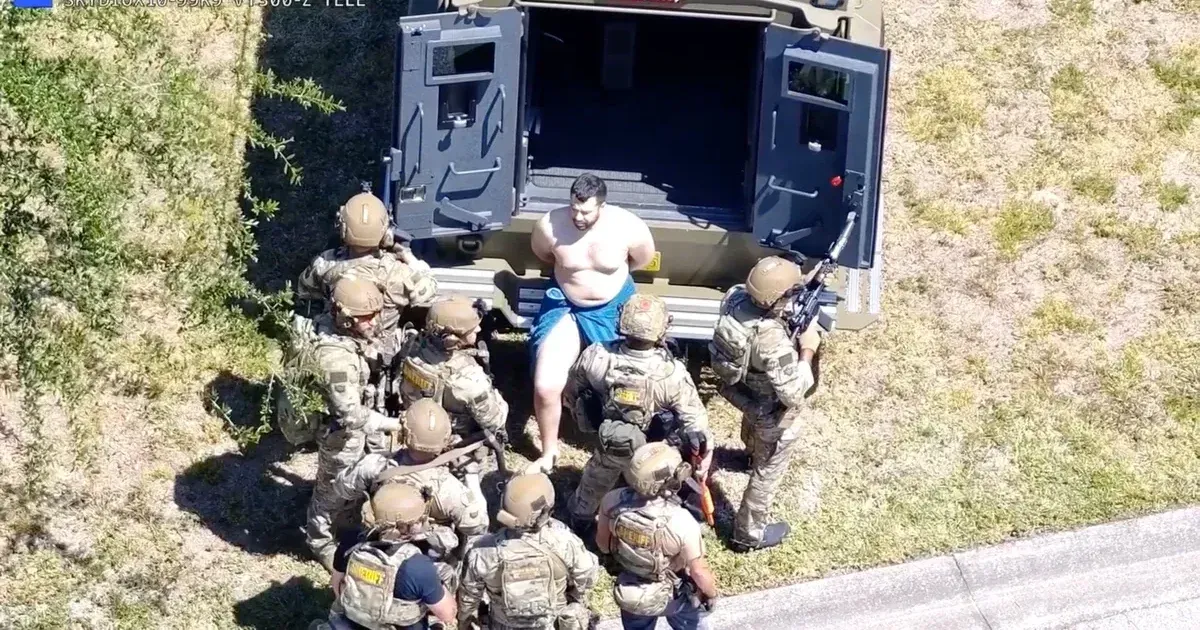
A Tampa murder case has placed AI search records at the center of a violent-crime prosecution. The allegations against Hisham Abugharbieh are being built from physical evidence, location data and digital prompts. For prosecutors, the ChatGPT searches matter because they may speak to planning rather than curiosity. For courts, the case raises a newer problem of how conversational records should be treated. Hisham Abugharbieh appeared in a Hillsborough County courtroom on April 27, 2026, to face formal murder allegations involving the deaths of two individuals closely linked to his personal circle. Prosecutors revealed that digital evidence suggests a level of premeditation involving artificial intelligence queries before the victims disappeared. Authorities identified the victims as Zamil Limon and Nahida Bristy, both 27-year-old University of South Florida doctoral students, with Limon described as the suspect's roommate.
Hillsborough County Sheriff's Office investigators focused on the Tampa Bay bridge corridor where specialized recovery teams worked throughout the weekend. Officials said remains connected to the search were found near Interstate 275 and 4th Street North at the west end of the Howard Frankland Bridge in St. Petersburg. The discovery deepened the homicide investigation into the missing University of South Florida doctoral students. Forensic technicians processed the area for physical evidence near the recovery site.
Court filings cited ChatGPT prompts and location data as investigators examined the suspect's interactions with generative artificial intelligence. Documents filed in the circuit court describe a series of unsettling prompts sent from an account linked to the defendant during the timeline of the disappearances. Investigators allege the user specifically sought information regarding the logistics of body disposal and the limitations of local waste management systems. "The defendant asked ChatGPT questions about putting a person in a black garbage bag and throwing the bag in a dumpster," court documents state.
Legal teams for the prosecution claim these queries provide a window into the defendant’s state of mind and intent. The timing of the search history aligns with the estimated window when the roommate was last seen alive in their shared residence. Analysts from the digital crimes unit noted that the queries were not theoretical or academic in nature. Instead, the prompts focused on the practicalities of concealment and the speed of municipal trash collection schedules.
Hillsborough County Detectives Recover Human Remains
The recovery followed a multi-day search involving law enforcement teams across the Tampa Bay area. Authorities said location data placed the suspect along the Howard Frankland Bridge on April 17, the area where Limon's remains were later recovered. Officials also said newly found remains in the search for Bristy had been sent to the medical examiner for identification. Medical examiners are working to determine the final cause and manner of death in the case.
Concurrent with the discovery of the remains, police expanded their cordons to include the apartment complex where the suspect resided. Neighbors described the environment as quiet until the sudden arrival of forensic vans and tactical units. Witnesses recall seeing Hisham Abugharbieh on the premises in the days leading up to his arrest, though few reported seeing anything suspicious at the time. Physical evidence removed from the apartment includes cleaning supplies and electronic devices now undergoing deeper scrutiny.
Digital Footprints Lead to Hisham Abugharbieh Investigation
Investigators used advanced data recovery techniques to bypass encrypted layers on several mobile devices found during the initial sweep. While standard web searches often provide leads, the conversational nature of the AI prompts offered a more detailed look at the suspect’s planning phase. This shift in criminal methodology highlights how modern tools are being used in ways the developers did not anticipate. Prosecutors plan to introduce the full log of interactions as a primary component of their case during the upcoming trial phase. Investigators said the digital trail was essential in reconstructing movements before the bodies were found. Court filings cited location data that placed the suspect along the Howard Frankland Bridge on April 17, where Limon's remains were later recovered. The ChatGPT prompts about a garbage bag and dumpster became part of the state's argument that the searches were tied to planning rather than curiosity.
OpenAI Records Reveal Specific Dumpster Disposal Queries
Court documents cited ChatGPT queries made on April 13, days before the students were last seen. One prompt asked what would happen if a human were placed in a black garbage bag and thrown in a dumpster, prosecutors alleged. The filing also described location data and other digital records that investigators say connect the suspect to the disposal route. Those details became public as prosecutors sought to keep Abugharbieh jailed before trial. Legal experts suggest that this case could set a major precedent for how AI-related records appear in violent-crime prosecutions. The filings show investigators relying on digital traces before physical evidence could be further degraded by Florida's climate. Within the documents, prosecutors argued that the suspect's searches reflected logistical planning. The case now raises difficult questions about evidence retention, user privacy and safety obligations for AI companies.
University of South Florida Community Responds to Violence
The University of South Florida community is grieving the deaths of Nahida Bristy and Zamil Limon. Campus safety officials have increased patrols around student housing areas to provide a sense of security for the grieving student body. Counselors are available at the student union for those impacted by the news of the double murder. Many students held a vigil near the campus library to honor the memory of their classmates.
Security protocols at the university are under review to determine if any early warning signs were missed in the weeks prior to the incident. Records show the suspect was a former student with no prior history of violent behavior on campus. This lack of a criminal record makes the calculated nature of the AI queries even more jarring for the local community. Faculty members who knew the victims describe them as dedicated students with promising futures in their respective fields.
Judicial proceedings are expected to continue through the summer as the state builds its case against the defendant. A judge set bond at $1 million during the preliminary hearing, citing the gravity of the charges and the risk of flight. Defense attorneys have not yet commented on the specific AI evidence but are expected to challenge the admissibility of the digital logs. The next court appearance is scheduled for late May in Tampa.
The Abugharbieh Case Demands Clear Rules for AI Evidence
This case involving Hisham Abugharbieh shows how everyday AI tools can become part of a criminal evidentiary trail. The allegations do not mean a chatbot caused the killings, but they show that conversational systems can preserve intent in ways older search histories rarely did. Prosecutors are treating the prompts as a window into planning, and that should force a harder public debate about retention, safety filters and lawful disclosure.
AI companies need clearer policies for retaining, reviewing and disclosing records when violent crimes are under investigation. A platform should not become a private planning archive that investigators can understand only after victims are dead. Privacy remains a right, but it cannot be treated as a blanket answer when prosecutors allege that digital prompts helped document intent in a double murder case. The urgent task is to make AI evidence rules faster, clearer and harder to exploit.