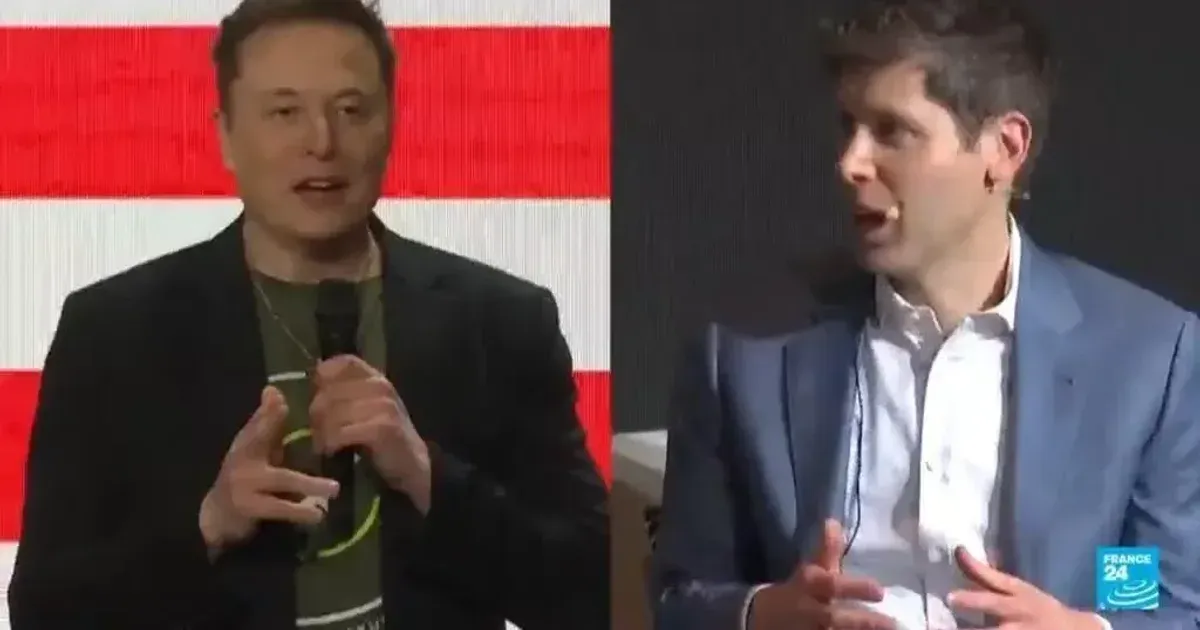
The Musk-Altman trial has turned OpenAI’s founding promise into a legal question with industry-wide stakes. A courtroom fight over mission, money and control now threatens to define how AI labs can change shape. The dispute is also a personal clash between two figures who helped create the organization’s early mythology. Investors are watching because the outcome could reach far beyond one company. Elon Musk entered a San Francisco courtroom on April 27, 2026, to initiate a high-stakes legal confrontation against Sam Altman and the leadership of OpenAI. Attorneys representing the plaintiff argue that Sam Altman manipulated the organization's trajectory to favor commercial interests over its original charitable mandate. OpenAI now commands a market valuation of $852 billion, a figure that Elon Musk claims resulted from the misappropriation of his early financial contributions and intellectual property.
Legal warfare between these two technology giants centers on the founding principles of the lab established in 2015. Musk asserts that his initial funding, which exceeded $44 million during the early years, was based on a binding agreement that the entity would stay a nonprofit research facility. Documents filed in the case suggest that the vision for the company shifted dramatically when Microsoft committed billions in capital, effectively turning the lab into a closed-source subsidiary for corporate interests. xAI, the current artificial intelligence venture owned by Musk, is the primary competitor to the systems developed by his former partners.
Musk Legal Strategy Focuses on Founding Principles
Attorneys for the plaintiff spent the opening session detailing the 2015 founding of the startup. Musk maintains that the original charter required all research to be open to the public and for the benefit of humanity. Records show that the early iterations of the board included individuals committed to AI safety, yet the governance structure evolved as the technology matured. Lawyers representing Musk contend that the transition to a capped-profit model in 2019 constituted a breach of contract that ignored the donor intent of early contributors.
Evidence presented to the court suggests that the internal culture of the laboratory changed once the potential for large commercialization became clear. Musk alleges that the focus shifted from long-term existential risk to short-term product cycles and market dominance. Defense teams for Altman countered by arguing that no formal, written contract ever bound the organization to a permanent nonprofit status. They claim the evolution was a necessary response to the immense computing costs required to develop Large Language Models like ChatGPT. Betrayal is the central theme of the Musk complaint.
While the defense points to the absence of a signed agreement, Musk relies on years of email correspondence and public statements. These communications, he argues, created a constructive contract that the defendants subsequently ignored. Documents from 2016 show Altman discussing the need for huge scale, which Musk initially supported before the infusion of private equity changed the power dynamics within the board. Conflict escalated when Musk attempted to take control of the entity to counter Google, a move that the current leadership rebuffed.
OpenAI Valuation Reaches Eight Hundred Billion Dollars
Financial analysts watching the trial noted that the $852 billion valuation makes this one of the most lucrative corporate disputes in history. Success in the generative AI market has allowed the company to outpace legacy tech firms in both growth and public influence. Musk argues that this wealth belongs to the public or should at least be governed by the original nonprofit board. His legal team suggests that the intellectual property developed using his funds remains the foundation of the current profit-making enterprise.
Defense lawyers maintain that the capital provided by Microsoft and other venture firms was the true catalyst for the current success. They argue that Musk stopped funding the project in 2018, leaving the organization with no choice but to seek alternative revenue streams. Internal financial ledgers show that the cost of training newer models surpassed the initial donations within months of the pivot. Altman has stated in previous depositions that the survival of the mission depended on the ability to attract top-tier engineering talent through competitive equity packages.
Altman Defends Microsoft Partnership and AI Safety
Altman took the stand to testify that the partnership with Microsoft did not compromise the safety mission of the firm. He asserted that the profit-capped structure ensures that most of the value generated by the technology eventually returns to the nonprofit parent. Critics, however, pointed out that the definition of profit-capped is flexible enough to allow for hundreds of billions in private gain. The relationship with the software giant from Redmond has provided the necessary infrastructure for systems that currently power a substantial portion of the global digital economy.
The courtroom remained tense as the questioning turned to the events of late 2023 when Altman was briefly removed from his position. Musk claims this upheaval was the final indicator that the board had lost its ability to oversee the development of AGI. Current directors testified that the restructuring followed a period of intense internal debate regarding the pace of deployment. Legal experts suggest that if Musk succeeds, the court could theoretically force the company to open-source its most advanced models, a move that would disrupt the entire industry.
Forensic Audit of 2015 Founding Documents
Investigators spent months reviewing the digital paper trail left by the founders during the early weeks of the project. A forensic audit of the communication between Musk and the technical team revealed that the term open in the name was intended to reflect a transparent research philosophy. Defense teams argue that this was a naming convention rather than a legal straitjacket. They believe that the competitive environment created by Google and Meta required a shift toward proprietary technology to maintain a safety lead.
Market reaction to the trial has been volatile, with investors weighing the risk of a court-ordered divestiture or model release. If the judge finds that the nonprofit mission was indeed a binding contract, the financial implications for the $852 billion entity could be catastrophic. Silicon Valley observers have noted that this case will likely set the precedent for how future research labs handle the transition from academic curiosity to commercial powerhouse. The trial is expected to continue for several weeks as more early employees are called to testify about the internal promises made by the leadership.
The OpenAI Trial Puts Silicon Valley’s Nonprofit Fiction on the Stand
Why did a self-proclaimed quest to save humanity devolve into a multi-billion-dollar custody battle over source code? The answer lies not in the lofty rhetoric of AI safety, but in the base reality of corporate control and the vanity of titans. Elon Musk is not a disinterested whistleblower acting for the public good; he is a spurned founder who realized too late that he financed his own obsolescence. By walking away from the table in 2018, he vacated the seat of power, and his current litigation is a desperate attempt to use the judiciary to claw back influence he surrendered years ago.
The CEO of OpenAI has masterfully navigated the gray area between charitable intent and predatory capitalism. By maintaining a thin veneer of nonprofit oversight while accepting billions from Microsoft, he created a structure that enjoys the moral high ground of a lab with the aggressive expansion of a monopoly. This trial exposes the fiction of the Silicon Valley nonprofit model. These entities are frequently used as incubators for technology that is only open until it becomes valuable. Once the code starts generating revenue, the open-source spirit is discarded like an old skin.
A ruling for the current board would signal that, in the world of high-tech, a handshake and a mission statement hold little weight against a term sheet. The era of altruistic AI would look increasingly fragile.