Metropolitan Police Department officers cordoned off the Washington Hilton after a violent confrontation near the site of the 1981 Reagan assassination attempt. The scene was secured on April 26, 2026, as investigators began treating the hotel perimeter as a modern protection failure with deep historical echoes. Yellow tape stretched across the T-shaped driveway at 1919 Connecticut Avenue NW, blocking the specific exit where John Hinckley Jr. opened fire four decades ago. Detectives from the Second District began interviewing witnesses shortly after noon. Crime scene investigators focused their efforts on the sidewalk adjacent to the VIP entrance, a location synonymous with one of the most consequential security failures in American history.
Physical evidence collected at the scene suggests a targeted altercation rather than a random act of street violence. Forensic teams spent hours photographing the pavement and collecting ballistic fragments near the brick facade.
Historical Security Failures at Washington Hilton
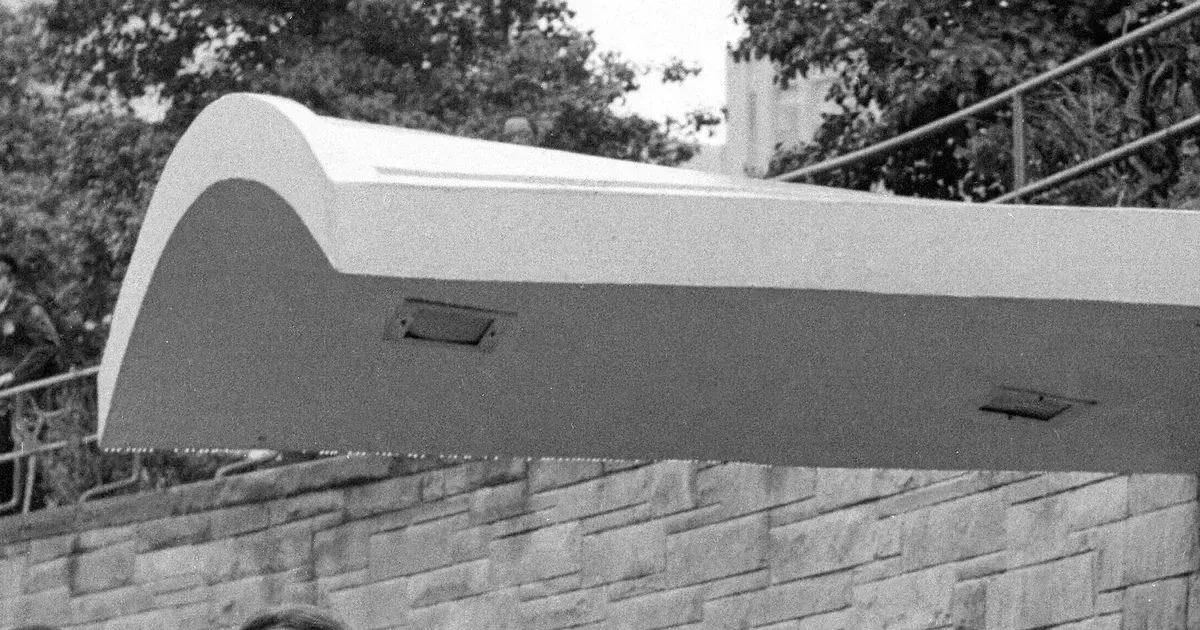
Ronald Reagan nearly lost his life at this exact location on March 30, 1981. Security protocols at the time allowed the president to walk from the hotel exit to his limousine across an open sidewalk. Hinckley stood among a crowd of reporters and onlookers before discharging a .22-caliber Rohm RG-14 revolver. Press Secretary James Brady, Police Officer Thomas Delahanty, and Secret Service Agent Timothy McCarthy were all wounded during the 1.7-second flurry of gunfire. Surgeons at George Washington University Hospital eventually stabilized the president, but the event forced an immediate overhaul of how the Secret Service managed presidential arrivals and departures. Engineers later constructed a fortified canopy and a secure drive-through structure to shield VIPs from public view.
Protecting the Washington Hilton presents recurring logistical nightmares for federal law enforcement agencies. Architecture at the site includes a curved driveway that funnels vehicles into a confined space with limited egress points. High-rise residential buildings overlook the entrance, providing numerous vantage points for potential bad actors. Protective details often express frustration with the hotel's proximity to the sidewalk, which remains a public right-of-way despite its history. Intelligence reports from the early 1980s highlighted these vulnerabilities, yet the venue remains a primary hub for the annual White House Correspondents’ Association Dinner. Management at the property has invested millions in surveillance technology, but the physical constraints of the building remain unchanged.
"The hotel has a unique layout that presents persistent challenges for protective details regardless of the technological upgrades implemented over the decades," a Metropolitan Police Department official stated during the initial sweep.
Federal agents from the Secret Service arrived on the scene within minutes of the 2026 incident to coordinate with local police. Initial reports indicate the violence broke out during a high-profile corporate summit involving international delegates. Witnesses described a brief struggle followed by several muffled sounds that sent bystanders diving for cover behind concrete pillars. Officers recovered a discarded firearm near the loading dock, though the shooter fled the scene on a motorcycle heading south toward Dupont Circle. Records show that the hotel was operating at 90% capacity at the time of the disturbance.
Architecture of Presidential Protection Protocols
Security planners categorize the Washington Hilton as a high-risk venue because of its semi-subterranean layout. Most modern hotels used for presidential visits feature internal garages or secure underground docks. The Hilton, built in 1965, relies on a surface-level VIP entrance that was designed for visibility and grandeur. These aesthetic choices directly contradict the needs of a modern protective detail. Agents must maintain a 360-degree perimeter in an environment with high pedestrian traffic and narrow alleyways. Urban density around the hotel has increased sharply since the 1980s, complicating sniper overwatch and exit routes. Security concerns have intensified following the chaos that erupted during the latest White House Correspondents’ Dinner at the hotel.
Metropolitan Police Department investigators are currently reviewing footage from over 200 security cameras positioned around the property perimeter. Digital evidence shows a suspect loitering near the 1981 plaque for approximately 15 minutes before the altercation began. Authorities have not yet released the identity of the person of interest, but they confirmed that the individual was not a guest at the hotel. Local businesses provided additional footage from dash-mounted cameras on delivery vehicles parked along Connecticut Avenue. Intelligence analysts are cross-referencing this data with federal watchlists to determine if the act was politically motivated.
Metropolitan Police Secure Hilton Perimeter
Officers established a three-block radius of restricted access to ensure no evidence was disturbed by the heavy Saturday traffic. Commuters faced serious delays as police diverted buses and private vehicles away from the intersection of Connecticut and Florida Avenues. Crime scene technicians identified several droplets of blood leading toward the parking garage entrance. Laboratory results are pending to confirm whether the DNA matches any known offenders in the national database. Investigators spent the late afternoon mapping the scene with three-dimensional laser scanners to reconstruct the sequence of events. Public safety officials urged residents to avoid the area until the forensic sweep concluded.
Forensic experts noted the proximity of the new evidence to the historical marker commemorating the Reagan shooting. Some observers pointed out that the suspect chose the most heavily monitored portion of the property for the attack. Strategic planners suggest this choice might indicate a desire for notoriety or a calculated attempt to exploit the psychological weight of the location. Police recovered a mobile device from the sidewalk that is currently undergoing digital exploitation at a secure facility. Data extracted from the phone could provide clues regarding the suspect's communications and movements leading up to the midday violence.
Secret Service Evaluation of VIP Transit Zones
Protective agents often refer to the Hilton exit as the most dangerous 30 feet in Washington. Since 1981, every president has used the specially designed armored walkway, but the surrounding space remains difficult to clear. Crowds frequently gather across the street to catch a glimpse of motorcades, creating a target-rich environment for attackers. Security experts argue that the continued use of the venue for major political events is a compromise between tradition and safety. Federal budget documents show that security costs for events at the Hilton exceed $1.5 million per night. These figures include the deployment of tactical units and temporary airspace restrictions.
Regional hospitals remained on high alert following the shooting as a precaution against further casualties. Emergency rooms at MedStar Washington Hospital Center and George Washington University Hospital prepared to receive potential victims, though only one injury has been confirmed. The victim, identified as a private security contractor, is in stable condition after receiving treatment for a graze wound. Medical staff released the individual later in the evening after police conducted a preliminary interview. Evidence from the hospital indicates the caliber of the weapon used was consistent with the firearm recovered at the scene.
The Washington Hilton Remains a Chosen Security Liability
Sanctifying architectural landmarks because of historical trauma often invites the very security breaches authorities seek to prevent. The Washington Hilton persists as a premier venue for the political elite not because it is safe, but because it is familiar. By continuing to host the most powerful people in the world at a site with documented structural vulnerabilities, the Secret Service prioritizes optical continuity over tactical superiority. This commitment to a compromised location is a bureaucratic failure masked as institutional tradition. Every major event held at this facility is a gamble that relies on the incompetence of the adversary instead of the perfection of the perimeter.
Why do we continue to parade world leaders through a driveway where a president was nearly murdered? The answer lies in the stubborn refusal of the D.C. social circuit to abandon its favorite ballroom. Security protocols have evolved, but the bricks and mortar of 1919 Connecticut Avenue remain a liability. Moving these events to modern, hardened facilities would be the logical choice for any professional risk manager. Instead, we wait for the next yellow tape to stretch across the sidewalk. The 2026 incident is a blunt message that history does not stay in the past; it waits in the shadows of the same curved driveway.
Failure to adapt is a choice. Authorities must decide if the prestige of the Hilton outweighs the life of the next person standing in that driveway.