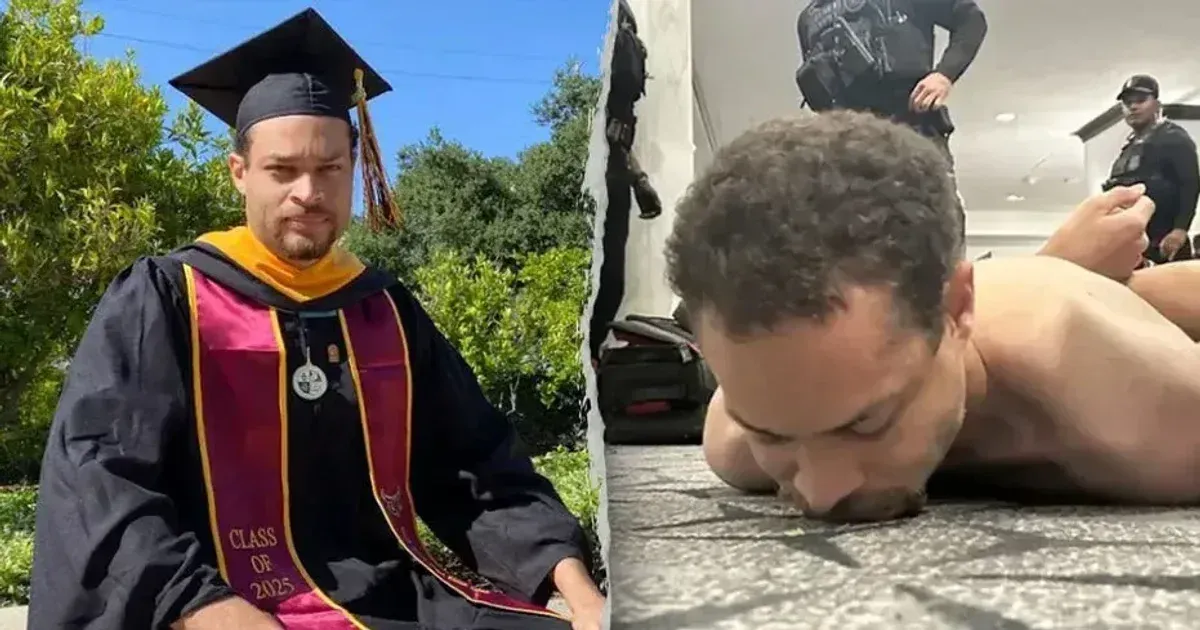
Cole Tomas Allen became the focus of a federal charging review after investigators tied him to a high-level security breach at the Washington Hilton during the White House Correspondents Association dinner. The identification was announced on April 26, 2026, as law enforcement agencies in the nation's capital moved to process the 31-year-old resident of Torrance, California, following his apprehension at a secondary checkpoint. Initial reports from the scene described a chaotic sequence where a man bypassed early security layers before being tackled by a combined force of Secret Service agents and local police officers. Federal prosecutors later unsealed a detailed FBI affidavit against Cole Allen, moving the case from charging review to formal court record.
Todd Blanche Evaluates Assassination Charges
Acting Attorney General Todd Blanche confirmed during a Sunday morning interview on CNN that federal prosecutors are considering the most severe charges available under the United States Code. When asked specifically if the government would pursue charges related to an attempt to assassinate President Donald Trump, Blanche replied that such a path was absolutely on the table. Investigators currently believe the suspect intended to target the highest levels of the current administration. Blanche's prosecutorial stance shows that the Department of Justice views the breach not as a trespass or a simple security violation, but as a direct threat to the executive branch.
Legal experts suggest that such a prosecution would likely rely on 18 U.S.C. § 1751, a statute specifically designed to address attempts to kill, kidnap, or assault the President of the United States. Conviction under this federal law carries a mandatory minimum sentence that sharply exceeds standard assault or weapons charges. Prosecutors must now prove specific intent, a high evidentiary bar that requires demonstrating the suspect possessed a clear plan and the means to carry out an attack. Federal agents are currently analyzing digital devices seized from the suspect to establish a timeline of his movements and motives.
"The suspect apprehended could be charged with trying to assassinate the US president, absolutely, and we are looking at all officials targeted," Blanche said.
Simultaneously, the Federal Bureau of Investigation is leading a multi-agency task force to determine if the suspect acted alone or as part of a broader conspiracy. Evidence gathered at the hotel entrance included a discarded backpack and a mobile phone that investigators are working to decrypt. Evidence of premeditation often is the foundation for assassination charges, making the digital forensics of this case paramount for the Department of Justice. Blanche noted that the investigation is in its earliest stages, yet the gravity of the incident justifies the consideration of maximum penalties.
Security Failures in the Cole Tomas Allen Breach
Security protocols at the Washington Hilton are under intense internal review after multiple attendees reported glaring vulnerabilities in the screening process. Reports from Newsweek highlighted a particularly concerning observation from a foreign correspondent who claimed that a single credential pass was the only requirement for ballroom entry. Such a simplified verification system contradicts the standard multi-layered identification checks typically required for events involving the President. Secret Service officials have yet to explain why the usual secondary biometric or hardware-based credentialing was not strictly enforced at every portal. Authorities have since confirmed that Cole Tomas Allen was the individual involved in the security breach incident.
Video footage posted by Donald Trump on social media showed a man, identified as Allen, sprinting through a designated checkpoint while security personnel appeared momentarily disoriented. Video evidence has fueled criticism regarding the physical layout of the hotel security zone. Critics argue the proximity of the press filing center to the main ballroom entrance created a bottleneck that the suspect exploited. Professional security consultants often warn that high-traffic areas are the most vulnerable to rapid-onset breaches because of the high volume of legitimate attendees.
Ballroom access usually involves a sequence of magnetometers, bag searches, and manual credential checks. Witnesses suggest that the sheer volume of high-profile guests, including Hollywood celebrities and media executives, may have strained the capacity of the onsite security detail. Secret Service officials maintain that the inner perimeter remained secure, but the suspect's ability to reach the secondary checkpoint suggests a failure in the outer rings of protection. Departmental investigators are now interviewing every agent assigned to the checkpoint where the initial breach occurred.
Investigation Into Cole Tomas Allen
Investigators in Torrance have spent the last several hours canvassing the neighborhood where Allen resided before traveling to Washington. Local records searches in Los Angeles County reveal that the 31-year-old has no prior criminal history or civil court record, a fact that has surprised behavioral analysts at the FBI. Individuals without a criminal footprint are frequently described as clean skins in the intelligence community, as they rarely appear on domestic surveillance radars. Absence of a paper trail makes the process of identifying a motive far more difficult for law enforcement.
Neighbors in the southern California suburb described Allen as a quiet individual who kept to himself. No public social media profiles under his name have shown overt political radicalization, though federal agents are digging into private messaging platforms and encrypted forums. Absence of a prior record often suggests a recent or rapid radicalization process, or perhaps a long-term plan executed with careful discipline. Behavioral specialists are currently reviewing his financial records to see how he funded his travel and stay in the District of Columbia.
Specifically, the travel history of the suspect is being scrutinized for any international connections or domestic extremist affiliations. Law enforcement officials have reached out to the Los Angeles Police Department and the California Highway Patrol to gather any peripheral information regarding his recent activities. Every lead is being pursued to determine if Allen received training or logistics support from a third party. Allen's lack of an obvious criminal past has shifted the focus toward his employment history and recent personal interactions.
Federal Prosecution Strategy for Executive Protection
Prosecuting a case under the Presidential Assassination Statute requires a careful assembly of circumstantial and direct evidence. Federal attorneys will likely focus on the physical actions captured on video and the proximity of the suspect to the President at the time of the arrest. While the suspect was stopped before reaching the main ballroom floor, the intent to do so while armed or with harmful intent is sufficient for a federal grand jury to return an indictment. Prosecutors will likely build the legal strategy around witness testimony and forensic evidence collected at the hotel.
Federal authorities have not yet recovered a manifesto or established a clear political motive for the breach. Defense attorneys may use the evidentiary gap to argue that the incident was a mental health crisis rather than a calculated political assassination attempt. In previous cases involving security breaches at the White House, the mental state of the defendant has frequently been the primary point of contention. Prosecutors are expected to counter this by highlighting the logistical planning required to travel across the country and navigate the complex security layers of a high-profile DC event.
Security at the Washington Hilton now faces a total overhaul for all future events involving protected individuals. White House Correspondents Association officials have already announced a full review of credentialing procedures in coordination with federal agencies. New restrictions on movement are likely to alter the relationship between the press corps and the Secret Service immediately. Allen remains in federal custody without bond as the legal machinery of the Department of Justice begins its formal prosecution.
The Hilton Breach Ends the Illusion of Accessible Political Security
Secret Service officials often describe their protection as a series of concentric circles, but the breach at the Washington Hilton proves these circles are only as strong as their weakest bureaucrat. A single press pass functioning as the golden ticket into one of the world's most high-stakes rooms is an indictment of the security theater that has come to define modern Washington events. For decades, the White House Correspondents Association dinner has balanced the need for security with the desire for a glamorous, accessible social atmosphere. That balance is now dead.
Reliance on the perceived prestige of the venue is a rookie mistake that the Secret Service cannot afford. A commercial space like the Washington Hilton cannot be treated as a fortress without inviting the exact kind of infiltration seen with Cole Tomas Allen. The suspect was a clean skin with no record, the exact profile that should keep intelligence directors awake at night. If a 31-year-old from Torrance can sprint through a checkpoint while the world elite are sipping wine a few yards away, the system is not just broken, it is non-existent.
One hard truth remains. Secret Service leadership has allowed the agency to become reactive, prioritizing optics over operational integrity. The incident should lead to an immediate purge of the leadership responsible for the Hilton detail. Expect the upcoming campaign season to be defined by a large, intrusive expansion of security zones that will further isolate political leaders from the public they serve. Accessible-politician politics is over. Performance security failed.