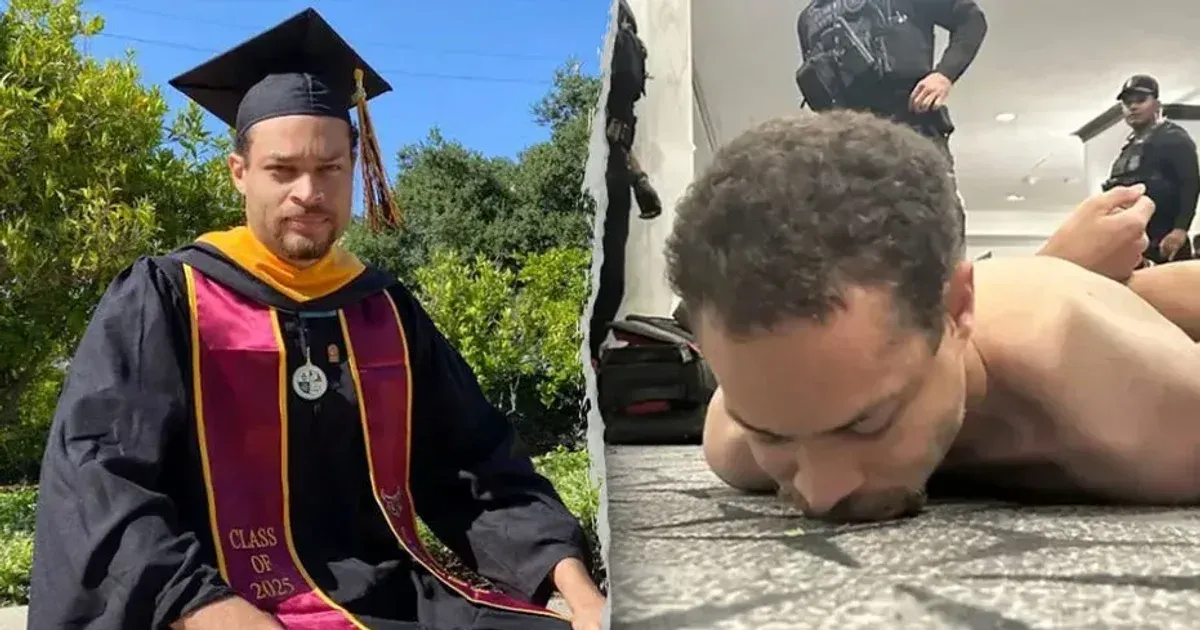
The identification of Cole Allen gave investigators a name but not yet a full motive for the White House dinner shooting. His background in engineering, tutoring and graduate study complicates the search for a simple threat profile. Police now have to connect the suspect’s movements, weapons and digital trail to the breach at the Washington Hilton. The federal timeline is beginning to matter as much as the arrest itself. Cole Allen, a 31-year-old computer scientist from Torrance, California, allegedly stormed a security checkpoint and fired shots at the Washington Hilton during the White House Correspondents' Dinner on April 26, 2026. Metropolitan Police Department officers and Secret Service agents apprehended the suspect at the scene after a brief exchange that left one agent wounded. President Trump was rushed from the ballroom by his security detail as the venue transitioned into a lockdown state. Early reports from law enforcement confirm that Allen was armed with multiple firearms and several knives at the time of his arrest.
Metropolitan police officials describe the suspect as a high-achieving academic whose professional trajectory centered on complex engineering and digital simulation. Investigative teams spent the morning of April 26, 2026, scouring his residence in Torrance for evidence of a motive or possible accomplices. Sources close to the investigation indicate that Allen acted alone. Digital footprints suggest he spent years developing complex systems for both entertainment and scientific research. His arrest has prompted a large review of security protocols at high-profile events in the capital.
Academic Record at CalTech and NASA JPL
Educational records confirm that Allen was a student of exceptional technical caliber. He enrolled in the California Institute of Technology, widely known as CalTech, in September 2013. The institution, located in Pasadena, is regarded as one of the most rigorous engineering schools in the world. Allen pursued a Bachelor of Science in mechanical engineering and successfully completed the program in 2017. CalTech administration verified his graduation to investigators, noting his participation in several advanced robotics projects.
During his sophomore year, Allen secured a highly competitive position as a summer undergraduate research fellow. This role placed him at the NASA Jet Propulsion Laboratory, where he contributed to astrophysics research initiatives. Colleagues from that period remember him as a focused individual with a deep understanding of orbital mechanics and physical simulations. His work at NASA involved analyzing data from deep-space probes. He translated these complex physical principles into his early efforts in software development.
Mechanical engineering studies at CalTech provided Allen with the skills to build both offensive and defensive robotic systems. His online professional profiles detailed his experience in designing autonomous machines capable of navigating complex environments. These projects often required a mastery of CAD software and advanced mathematics. Academic peers noted his intensity when discussing the intersection of physical hardware and computer logic. He graduated with honors before moving into the private sector of software engineering.
Evolution of Video Game Development Career
Software development became the primary outlet for Allen's technical skills following his time at CalTech. He founded an independent development studio and began work on a physics-based role-playing shooter game titled "First Law." The project used realistic two-dimensional space combat mechanics, drawing directly from his astrophysics background at NASA. Players were tasked with navigating gravity wells and managing momentum in a vacuum. Industry observers noted the game's high level of difficulty and its reliance on Newtonian physics.
Allen followed this project with a more complex title called "Bohrdom," which he released on the Steam gaming platform. He described the title as a fusion of a racing game and a "bullet hell" shooter, where players controlled self-propelled pinballs through dense hazards. This specific sub-genre of gaming emphasizes extreme reaction times and the management of hundreds of simultaneous projectiles. His programming work on the title received praise in niche developer circles for its efficient handling of collision detection. The game remains available for download on several digital storefronts. Legal proceedings are currently underway as Cole Allen faces charges for the attack at the Washington Hilton.
"The suspect who stormed through a security checkpoint and shot a Secret Service agent at the White House Correspondents' Dinner in Washington DC was armed with multiple weapons and knives," police stated.
Success in the independent gaming market, however, did not lead to a sustained career in the mainstream technology industry. Allen transitioned away from full-time game development shortly after the release of "Bohrdom." Records show he maintained his digital assets but shifted his focus toward educational roles. His social media presence during this period was minimal. He lived a quiet life in Torrance while pursuing further academic credentials.
Path to Torrance Classrooms and Tutoring
Employment history for the 31-year-old suspect shows a pivot toward the education sector in March 2020. He joined C2 Education, a tutoring company that provides supplemental instruction to primary and secondary school students. Colleagues at the Torrance branch of C2 Education described him as a capable instructor in mathematics and physics. He worked with students preparing for college entrance exams and advanced placement courses. His background in mechanical engineering made him a sought-after tutor for high-level STEM subjects.
Academic ambition drove Allen to return to his own studies in 2022. He enrolled at California State University, Dominguez Hills, to pursue a Master of Science in computer science. The university confirmed that he completed the graduate program in May 2025. This advanced degree focused on higher-level algorithms and machine learning. He balanced his graduate studies with his responsibilities as a teacher in the Torrance area. Neighbors reported no unusual behavior during his years as a graduate student.
Investigations into his recent activities reveal he worked as a teacher in Torrance up until the events in Washington. Law enforcement sources are currently interviewing his former students and faculty peers to determine if his behavior changed in the months leading up to April 2026. No formal complaints were filed against him during his tenure at C2 Education or within the California State University system. He appeared to be a stable professional with a consistent income. His move from Southern California to the East Coast just before the dinner is a central focus for the Secret Service.
Security Breach at Washington Hilton Hotel
Chaos erupted at the Washington Hilton when Allen allegedly bypassed the primary screening perimeter. Witnesses described a man in a dark suit moving with deliberate speed toward the restricted access points near the ballroom. He reached a secondary checkpoint where Secret Service personnel were stationed. At this location, he produced a firearm and engaged the security detail. The wounded agent is currently in stable condition at a nearby medical facility.
Sky News US reports that Allen was carrying an arsenal that suggested extensive planning. Beyond the firearms used in the initial engagement, investigators recovered several tactical knives and additional ammunition from his person. The presence of multiple weapons has led authorities to categorize the incident as a premeditated assassination attempt. President Trump was at the podium when the first shots were fired. The President was not injured in the encounter.
Security footage from the Washington Hilton shows the suspect arrived at the hotel several hours before the dinner started. He appeared to be familiar with the layout of the building. Detectives are reviewing his travel records to see if he conducted previous surveillance of the site. His ability to reach a secondary checkpoint raises questions about the efficacy of the magnetometers and bag checks. Forensic teams are now analyzing his electronic devices for any manifestos or encrypted communications.
Cole Allen Case Exposes a New High-Intelligence Security Threat
Elite institutions often pride themselves on the caliber of their graduates, yet the case of Cole Allen proves that technical mastery and academic prestige provide no safeguard against violent radicalization. The individual did not fit the traditional profile of a marginalized outcast. He was a product of the most rigorous scientific training the United States offers, having passed through the gates of CalTech and the laboratories of NASA. His transition from simulating violence in "bullet hell" video games to executing it in a crowded ballroom suggests a chilling bridge between digital obsession and physical assault that the intelligence community failed to monitor.
Security failures at the Washington Hilton went beyond procedural lapses. They were systemic. The Secret Service allowed a man armed with multiple weapons and knives to penetrate deep into a secured perimeter while the President of the United States was present. The breach exposes a fatal vulnerability in the reliance on standardized checkpoints against a suspect who understands the mechanics of those systems. Allen was an engineer by trade. He knew how to calculate angles, evaluate barriers, and exploit structural weaknesses. His background in robotics and defensive systems likely gave him a tactical advantage over traditional security protocols designed to catch less sophisticated threats. Public discussion will undoubtedly focus on gun control or mental health, but the real threat lies in the undetected radicalization of the technocratic elite. When individuals with the capacity to design complex software and understand orbital mechanics turn their intellect toward political violence, the standard investigative tools of law enforcement become obsolete. The Secret Service must now acknowledge that their biggest threats may come from the very classrooms and laboratories that fuel American innovation. High-intelligence threats require a shift in surveillance strategy. Failure to adapt will lead to a repeat of the Washington Hilton disaster.