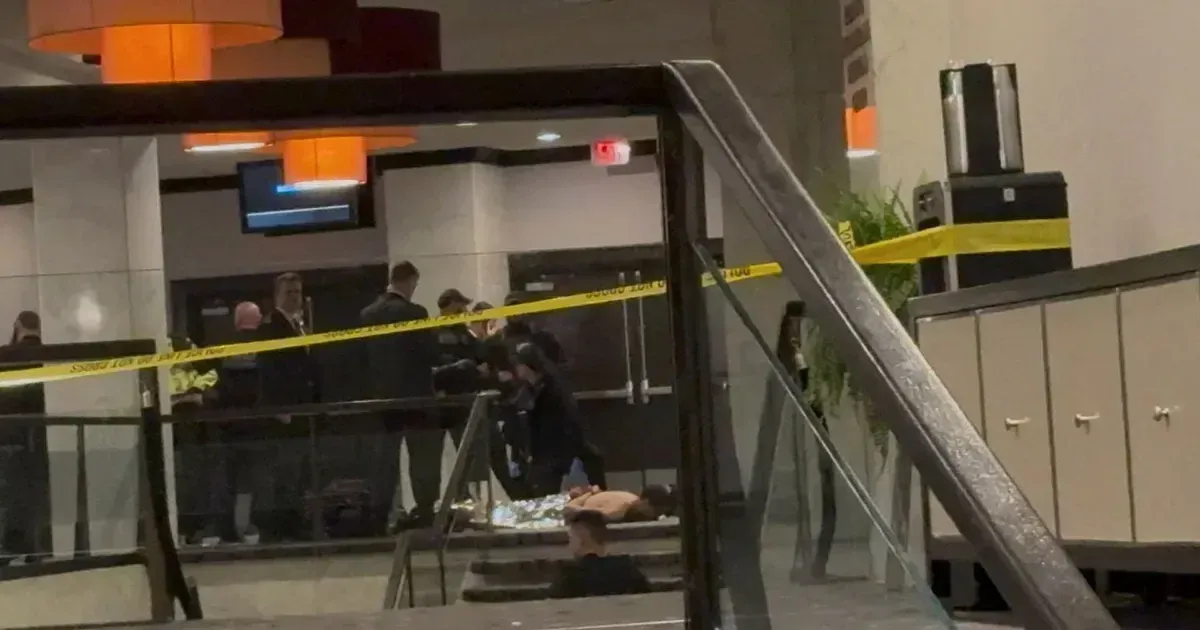
The Cole Allen manifesto dispute has widened the argument over motive in the dinner shooting investigation. Fragments attributed to the suspect are being read through competing political narratives before the case reaches trial. That uncertainty makes the document as contentious as the security breach itself. Cole Allen sent a cryptic final message to his family before opening fire at the White House Correspondents' Dinner, according to law enforcement records released on April 27, 2026. Evidence gathered from digital forensic teams indicates the suspect informed his relatives he intended to give a lot of people a surprise in the hours preceding the violence. NBC News confirmed the existence of these writings through its US partner network, suggesting a level of premeditation that contradicts early descriptions of the event as a spontaneous act of chaos.
Federal Investigators Examine Cole Allen Family Communications
Messages recovered from encrypted platforms show Cole Allen reached out to multiple family members to hint at a looming public spectacle. Investigators focused on these communications to determine if any relatives possessed prior knowledge of his plans to target the high-profile media event. Relatives have reportedly cooperated with federal agents, describing the suspect as increasingly isolated in the months before the shooting. This digital trail provides the most direct link yet to his state of mind on the day of the attack.
National security analysts are currently parsing the metadata of these messages to identify any third-party influences. Local police departments in the suspect's hometown provided additional documents showing a history of minor political activism. Files obtained by investigators suggest Allen began distancing himself from his immediate social circle as his ideological leanings became more pronounced. Search warrants executed at his residence yielded several hard drives containing hundreds of pages of unsent drafts and political treatises. One specific document, labeled as a manifesto by law enforcement, contains specific grievances against the current political establishment.
Historical Roots of the Wide Awakes Political Movement
Links between the suspect and a group known as The Wide Awakes have forced a closer look at the organization's history and modern resurgence. Tracing its origins back to 1860, the group was originally a paramilitary wing for the young Republican Party during Abraham Lincoln's campaign. History books describe the original members as young men who marched through streets wearing oilcloth capes and carrying flickering lanterns to signal their vigilance. They were instrumental in mobilizing voters but eventually faded from the national stage after the Civil War began.
Modern iterations of the group claim to be nonviolent and focused primarily on social justice and voter turnout. Records show a revival of the name during the 2020 civil unrest, where participants adopted the vintage iconography to protest systemic inequality. While the group officially distances itself from militant action, the association with White House shooting suspect Cole Allen has placed their recruitment methods under intense scrutiny. Public statements from current members emphasize their commitment to peaceful abolitionist traditions. This claim, however, faces challenges from critics who point to the radicalizing nature of the group's digital forums.
Barack Obama's Statements Spark Political Dispute Over Motive
Former President Barack Obama entered the fray of the investigation by suggesting that the public lacks a full understanding of what drove the gunman. Speaking at a private event, the former president noted that motives are often complex and rarely boiled down to a single cause. Many conservatives immediately criticized these remarks, arguing that the existence of an anti-Trump manifesto makes the motive undeniable. Critics accused the former president of downplaying political radicalism when it originates from the left.
"We do not have yet a clear sense of what the motivations were," Barack Obama stated during his public commentary on the investigation.
Political commentators on cable news networks have spent days debating the accuracy of the former president's assessment. Law enforcement officials clarified that while the manifesto contains clear political leanings, the specific trigger for the WHCD attack is still under review. Evidence of mental health struggles and personal grievances complicates the narrative of a purely political strike. Republican lawmakers have called for a full release of the suspect's writings to provide transparency to the American public. They argue that withholding the documents allows for political shielding of the suspect's alleged ideological allies.
Digital Evidence and the Anti-Trump Manifesto Analysis
Content within the manifesto reveals a deep animosity toward former President Donald Trump and his supporters. Analysts who have seen portions of the document describe it as a rambling critique of modern conservatism and the media's role in political polarization. Cole Allen allegedly wrote that he viewed himself as a modern-day abolitionist fighting against what he perceived as a new form of tyranny. These writings align with some of the more extreme rhetoric found in fringe political circles online. Federal agents are cross-referencing his digital footprint with known radicalization hubs to see if he acted alone.
Surveillance footage from the hotel where the dinner took place shows the suspect arrived several hours early. He managed to bypass several layers of security before reaching a vantage point near the entrance of the ballroom. Ballistics reports indicate he used a modified semi-automatic rifle that had been purchased legally through a private seller. Investigation into the sale is ongoing, as authorities look for potential lapses in the background check process. Secure perimeters at large Washington D.C. events have been sharply expanded since the gunfire. Local residents have expressed mounting concern over the ease with which a single individual could disrupt a high-security gathering of world leaders and journalists.
The Allen Manifesto Exposes a Selective Terrorism Debate
Did the intelligence community ignore the warnings of a radicalized leftist movement because it failed to fit the prevailing domestic terrorism narrative? The case of Cole Allen exposes a glaring blind spot in how federal agencies categorize and track political threats. For years, the focus has remained almost exclusively on right-wing militias, while groups like The Wide Awakes operated in the shadows of historical nostalgia and social justice branding. This oversight goes beyond a failure of data collection; it is a failure of imagination. Politicians who currently plead for patience regarding the gunman's motive are performing a cynical dance of plausible deniability.
The manifesto exists. The family was warned. The ideological link to a historical paramilitary organization is documented. To suggest that we still lack a sense of the motive is a calculated attempt to sanitize the political reality of the attack. The evidence points to a dangerous trend where the identity of the shooter dictates the level of investigative urgency and public transparency. If the roles were reversed, the motive would have been declared within minutes. This case demands the immediate and unredacted release of the Allen manifesto. Anything less is an insult to the public and a threat to the integrity of our national security discussion. The era of selective outrage must end.