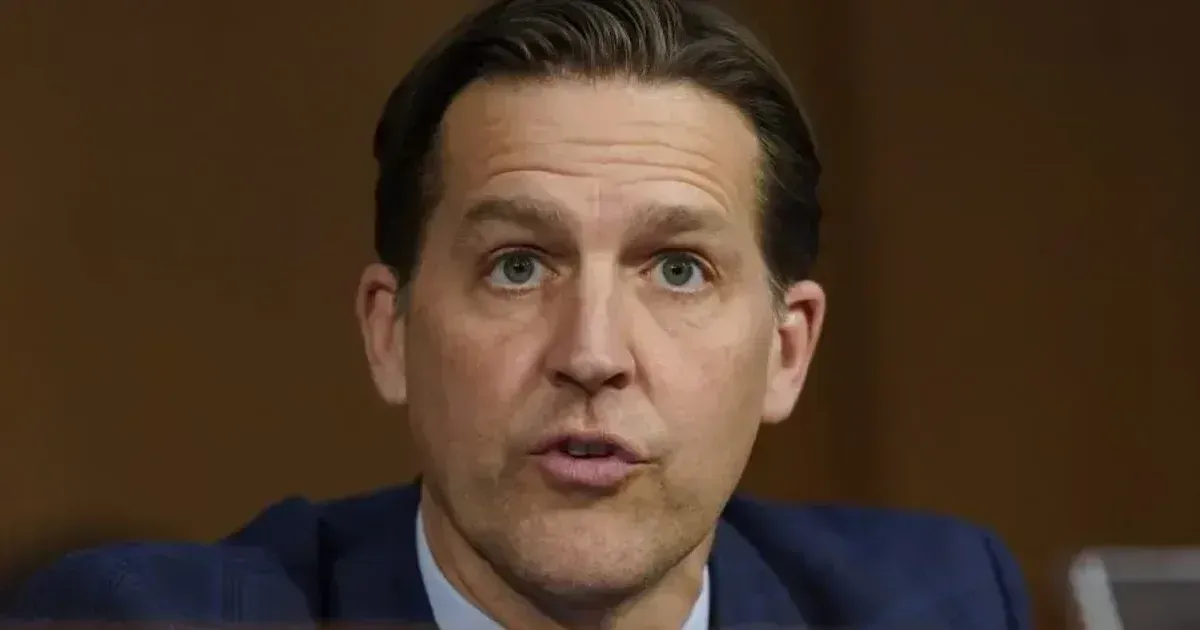
Ben Sasse’s television interview turned a private cancer battle into a public account of illness, faith and family pressure. The former senator used the appearance to explain the severity of a diagnosis that had largely stayed outside the political spotlight. His story also reopened attention to his abrupt exit from academic leadership. Ben Sasse discussed his terminal diagnosis of metastatic pancreatic cancer during a 60 Minutes interview on April 27, 2026. Physicians recently identified the malignancy, which has since spread beyond its primary site, prompting Ben Sasse to step back from the public eye. Scott Pelley conducted the sit-down conversation, which aired on CBS News on Sunday evening. The discussion ranged from his personal health struggles to his deep concerns regarding the erosion of American civic culture.
Medical professionals classify pancreatic adenocarcinoma as a particularly lethal form of the disease. Most patients do not present symptoms until the cancer reaches an advanced stage. Sasse confirmed to Pelley that he is currently undergoing treatment involving an experimental drug protocol. This new medication intends to prolong life by slowing the rate of cellular replication, though doctors maintain a grim prognosis. Extra time provided by this therapy allows Sasse to focus on personal and philosophical priorities.
The pharmaceutical intervention offers a temporary reprieve while leaving his prognosis uncertain. Sasse was a United States Senator from Nebraska for nearly a decade before transitioning to academia. He held the presidency of the University of Florida, where he oversaw a budget exceeding $1.5 billion and managed complex administrative restructuring. Health complications eventually forced his resignation from that post. Nebraska voters first elected him in 2014, and he frequently drew national attention for his critiques of modern political discussion and digital echo chambers.
Pancreatic Cancer Diagnosis and Experimental Treatment
Clinical statistics show that pancreatic cancer accounts for about 3% of all cancers in the United States. It remains one of the leading causes of cancer-related mortality globally. Sasse described the physical toll of the disease, noting a severe loss of weight and energy over the preceding months. He mentioned that the decision to go public with his diagnosis stemmed from a desire to speak plainly about the brevity of life. The former senator is currently focusing on his family and his faith after the news.
Researchers at several oncology centers continue to test the specific drug Sasse is taking. Pelley noted that the treatment appears to have preserved the former senator's cognitive sharpness despite his physical frailty. Sasse emphasized that living on a deadline creates a sense of clarity. He intends to use the months ahead to publish reflections on American history and the necessity of local community engagement. His medical team monitors his progress weekly at a specialized clinic.
Ben Sasse on American Civic Fragmentation
Civic life in the United States is suffering from a crisis of loneliness, according to Sasse. He argued during the interview that political polarization is merely a symptom of deeper social isolation. Neighborhoods and churches used to provide the social friction necessary to build character and compromise. Sasse believes the shift toward digital connectivity has stripped Americans of these essential local bonds. He urged viewers to spend less time on national political fights and more time with their immediate neighbors. Former Sen. Ben Sasse, already public about his Stage 4 cancer, used the interview to connect his diagnosis with a broader argument about civic decline.
Pelley asked if the former senator felt any regret regarding his time in Washington. Sasse responded by highlighting the disconnect between the performative nature of cable news and the actual work of governance. He described the Senate as a body that has increasingly prioritized viral moments over substantive policy deliberation. His critiques align with his previously published work regarding the decline of American adulthood and the rise of tribalism. These reflections take on a different weight given his current health status.
Scott Pelley Conducts Extended 60 Minutes Interview
CBS News released an extended version of the Pelley interview on April 26, 2026, featuring nearly thirty minutes of previously unseen footage. The network condensed the broadcast version for time, but the digital release provides a more exhaustive look at Sasse’s philosophy. He spoke about the legacy of Nebraska pioneers and the grit required to sustain a democratic republic. Pelley’s questioning probed the intersection of Sasse’s private faith and his public service. The journalist noted the calm demeanor Sasse maintained while discussing his own mortality.
National audiences responded to the broadcast with a mix of sympathy and debate. While some focused on his medical condition, others engaged with his assertions that the American experiment is currently at risk. Sasse avoids the combative rhetoric that defines current election cycles. He chooses instead to focus on the long-term health of institutions like the family and the local school board. His message centers on the idea that political solutions cannot fix spiritual or social problems.
Political Legacy and Personal Reflections from Nebraska
Nebraska political circles have closely watched the development of Sasse’s health. He is a fifth-generation Nebraskan who often credited his home state for his worldview. Colleagues from both sides of the aisle issued statements regarding his diagnosis, praising his intellect and commitment to his principles. Sasse’s voting record in the Senate showed a consistent focus on judicial appointments and national security. He famously broke with his party on several key votes, including the second impeachment of a former president.
Time is now the most valuable commodity for the Sasse family. He mentioned his children several times during the 60 Minutes segment, expressing a desire to leave them with a clear understanding of his values. The experimental drug continues to perform as expected, though doctors refrain from using the word cure. Sasse persists in his writing, working from his home in Nebraska. His public career appears to have reached its conclusion, but his influence persists through his books and this final televised message.
Sasse Uses Mortality to Indict America’s Trivial Political Culture
Mortality possesses a unique ability to strip away the artifice of political posturing. Ben Sasse’s decision to use a 60 Minutes platform to discuss his terminal cancer is more than a personal disclosure; it is a calculated indictment of the triviality of modern American politics. By framing his exit through the lens of a terminal deadline, Sasse forces the audience to confront the absurdity of the partisan bickering he spent years trying to go beyond. His critique of loneliness and civic decay carries a weight that his previous Senate floor speeches lacked because it is now anchored in the absolute finality of a metastatic diagnosis.
Sasse is effectively using his own death as a rhetorical device to shame a culture obsessed with the ephemeral. His focus on faith and local community is a direct rejection of the nationalized, digital warfare that defines current discussion. Critics might point to his own role in that system during his Senate tenure, yet his current posture suggests a man who has fully detached from the need for approval or reelection. He is not seeking a legacy defined by legislation, but rather one defined by a warning. The reality of his physical decline gives his message a gravity that cannot be ignored by his supporters or his detractors.
American society ignores these warnings at its own peril. Sasse’s final act is an exercise in exit strategy. He is exiting the world by pointing back at the ruins of the institutions he once served. His message is clear: the politics of the moment are meaningless when compared to the endurance of the community. It is a grim, necessary verdict.