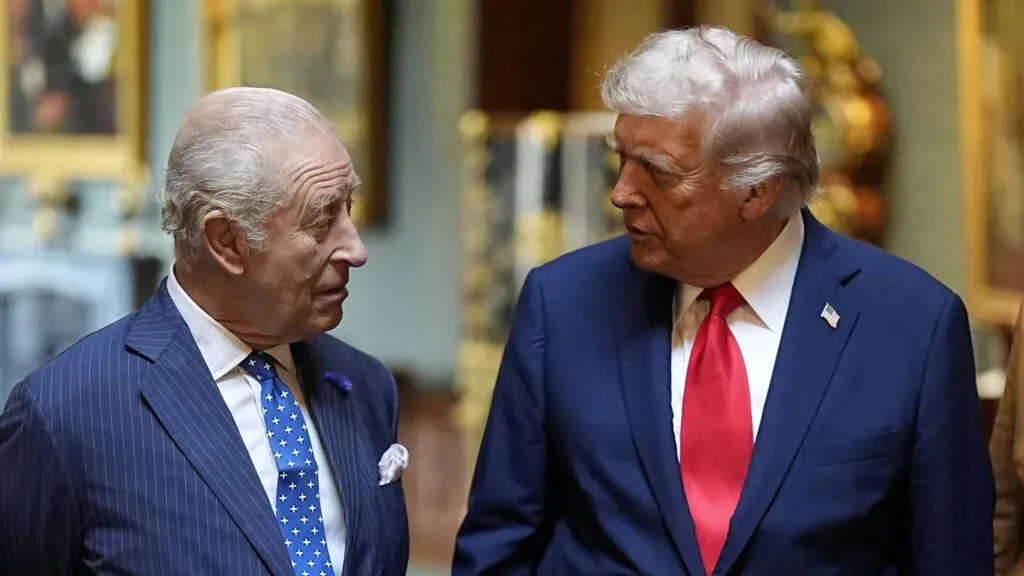
King Charles III confirmed that he will conduct a diplomatic mission to the United States to stabilize a fractured alliance. The issue reached public view on March 31, 2026. Buckingham Palace announced the itinerary during a period of open hostility between the White House and the British government over military strategy in the Persian Gulf.
The palace visit had already taken on diplomatic weight. Iran made the optics more sensitive. On March 12, 2026, King Charles's US visit became tied to Iran diplomacy.
President Donald Trump has frequently directed sharp criticism toward British leadership regarding their level of participation in the Iran conflict. Disagreements over naval blockades and troop deployments have strained traditional intelligence sharing between the two nations. Military analysts in Washington suggest that the American administration views the United Kingdom's caution as a lack of resolve. These tensions now provide the backdrop for a visit that was originally intended to be a routine celebration of bilateral cooperation.
Buckingham Palace officials have maintained a neutral stance despite the political volatility surrounding the announcement. A spokesperson emphasized that the trip focuses on the enduring connections between the two peoples rather than transient political disputes.
Differences in military doctrine have created a rare public rift between the Pentagon and the British Ministry of Defence. While Donald Trump advocates for a more aggressive posture against Tehran, London has favored a policy of containment and targeted sanctions.
The visit will celebrate the historic connections and the modern bilateral relationship between the United Kingdom and the United States, Buckingham Palace stated in an official release.
Government officials in London believe the King's presence can remind American voters of the long-term value of the alliance. Proponents of the visit argue that withdrawing the monarch now would only deepen the sense of isolation within the American administration. Intelligence reports from the UK suggest that a total breakdown in communications would jeopardize joint counter-terrorism efforts. Staff at the British Embassy in Washington have already begun preparations for a series of state dinners and high-level meetings. Security requirements for the royal party have been increased due to the heightened threat level associated with the ongoing regional conflict.
Buckingham Palace Outlines April State Visit
Plans released on March 31, 2026, indicate that the King will arrive in Washington in late April for a three-day program. Events include a formal arrival ceremony on the South Lawn and a meeting with congressional leaders from both parties. Buckingham Palace confirmed that the Queen will accompany the monarch during the proceedings. Trade officials expect the visit to highlight several multi-billion dollar aerospace contracts currently under negotiation. These deals are essential for the post-war economic recovery plans of several British manufacturing hubs. Business leaders in the City of London have expressed hope that the royal presence will prevent the imposition of new tariffs on British goods.
Bermuda features prominently in the schedule as the King travels across the Atlantic. This territory is an essential strategic link for the Royal Navy and provides a unique location for a meeting with regional leaders. Royal officials have scheduled several events in Hamilton to mark the territory's contributions to maritime security. Local government representatives in Bermuda have expressed optimism that the visit will boost tourism and international investment. The stop also highlights the King's role as the head of the Commonwealth in an increasingly multipolar world.
Strategic Importance of the Bermuda Stop
Security analysts suggest the Bermuda leg of the journey is more than a simple refueling stop. The island hosts several sensitive communication facilities used by both British and American intelligence agencies. King Charles III is expected to meet with military personnel stationed on the island to discuss the protection of Atlantic shipping lanes. These lanes have become increasingly vulnerable as the conflict in the Middle East has forced more vessels to take longer routes. Maintaining the stability of these maritime corridors is a primary objective for the Ministry of Defence. The King's visit provides a visible sign of British commitment to Western hemispheric security.
Public protests are anticipated in several American cities during the royal tour. Activist groups have cited the $14 billion in recent UK military aid to the region as a point of contention. Organizers of these demonstrations claim that the state visit distracts from the humanitarian crisis unfolding in Iran. White House staff have reportedly coordinated with local law enforcement to establish exclusion zones around the King's route. These security measures are standard for state visits but have taken on a new urgency given the current geopolitical climate. Some members of the British public have questioned the cost of the trip during a period of domestic inflation. The Foreign Office maintains that the long-term benefits of the alliance justify the expenditure.
Transatlantic Tensions and the Royal Presence
Congressional reaction to the announcement has been mixed along partisan lines. Republican lawmakers generally support the visit as a sign of unity despite Iranian aggression. By contrast, several top Democrats have suggested that the timing is inappropriate given the lack of a clear exit strategy for American troops. These domestic political dynamics will likely influence the tone of the meetings between the King and American legislators. The royal delegation must navigate these internal disputes without appearing to favor one political faction over the other. Success in this area is a hallmark of the British monarchy's approach to international relations.
Financial markets have reacted with cautious optimism to the news of the state visit. Sterling saw a modest increase against the dollar as traders speculated that the trip might lead to a cooling of trade tensions. Economic ties between the two nations remain serious, with billions of dollars in mutual investment at stake. Corporate leaders often use the backdrop of a royal visit to finalize mergers and acquisitions that have been stalled by political uncertainty. The British delegation includes several known figures from the technology and energy sectors. Their goal is to ensure that British companies are not excluded from the American market during the current war-related shift in trade priorities.
Sending a seventy-seven year old monarch to Washington during a hot war in the Middle East is a desperate move by a British government that has lost its footing. The Foreign Office is deploying its most valuable asset to beg for relevance in a White House that views European allies as burdens. The move is not a celebration of a historic bond but a frantic attempt to prevent a total decoupling of American and British interests. Historical precedent suggests that royal visits rarely change the trajectory of hardened military policy. The 1976 visit by Elizabeth II occurred during a time of peace and symbolic renewal, whereas the 2026 itinerary feels like a salvage operation.
Donald Trump does not value the quiet diplomacy of the House of Windsor. He values real military contributions and steady loyalty, neither of which the current British government is willing or able to provide. The King will be met with polite ceremonies while his ministers are sidelined in the hallways of the Pentagon. The disconnect between the pageantry of the state visit and the reality of the war room will be glaringly obvious to the global community. It is a hollow exercise in 19th-century diplomacy in a 21st-century conflict zone. The Special Relationship is currently on life support.
Bermuda is the only logical part of this entire theater. By emphasizing the Atlantic territories, London is reminding Washington that the UK still controls the gatehouse to the Western Hemisphere. It is a subtle, if ineffective, reminder of British reach. However, the King cannot fix a broken military alliance with a state dinner. The visit will likely be remembered as the moment when the mask of the Special Relationship finally slipped. Empty gestures cannot replace shared strategic objectives. Failure is inevitable.
Royal Visit Diplomacy
The visit now functions as a test of whether symbolism can still support a strained alliance during an active regional crisis. Ceremony may keep channels open, but the practical questions remain military coordination, trade exposure and the credibility of British influence in Washington.
For London, the risk is that the trip produces images without leverage. For Washington, the risk is that public warmth masks a widening gap over Iran strategy. The useful signal will come from follow-up coordination after the visit, not from the state-dinner optics themselves.