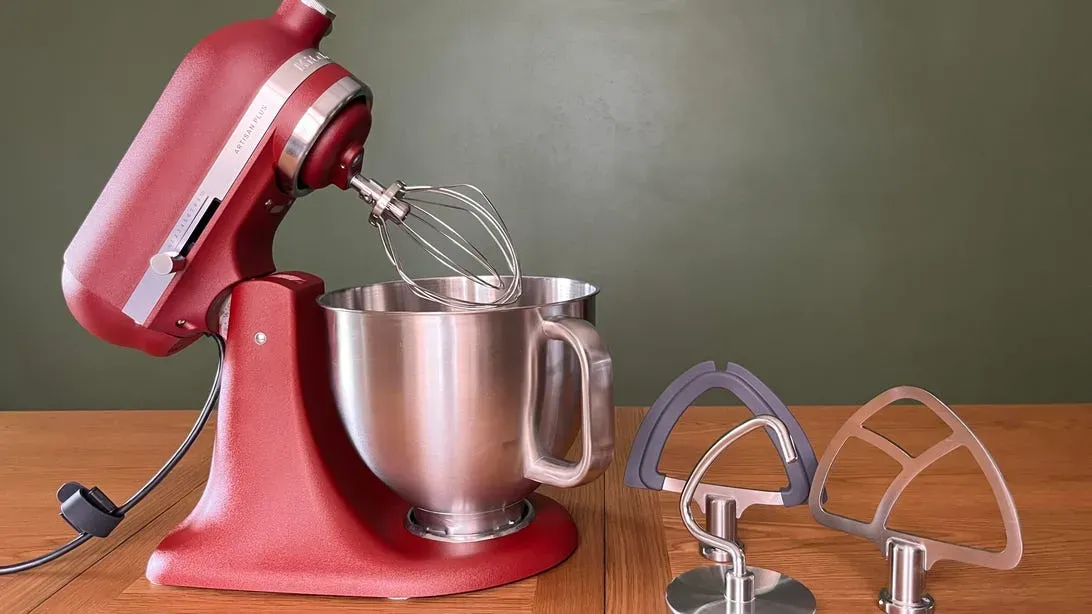
The mixer redesign matters because familiar kitchen hardware rarely changes this visibly. KitchenAid is testing how much modernization loyal buyers will accept. March 30, 2026, marked a meaningful departure for American appliance manufacturing as KitchenAid officially released the Artisan Plus Stand Mixer to global markets. Every major retailer from Williams Sonoma to specialized culinary boutiques began stocking the unit, which features the first total mechanical redesign of the speed control system in seventy-one years. Engineers at the Whirlpool-owned brand focused on eliminating the rigid tactile clicks of previous generations, replacing the traditional stepped notched system with a fluid, infinitely variable control lever. On March 12, 2026, KitchenAid's mixer overhaul updated a long-running appliance icon. Precision baking requires exact torque management, and previous models often forced users to choose between a setting that was slightly too slow or one that risked over-aerating delicate batters. This specific engineering hurdle persisted for decades until the launch of the current hardware suite. The redesign also has to respect the mixer’s familiar silhouette while solving modern kitchen expectations.
Precision was the primary objective for the design team based in Benton Harbor, Michigan. While previous iterations relied on ten distinct speed presets, the Artisan Plus allows users to slide the control lever to any point on the spectrum to find a customized rotational velocity. Professional pastry chefs often complained that the jump from speed two to speed four were too aggressive for high-hydration doughs or sensitive meringues. Designers addressed this by incorporating a high-resolution sensor that monitors motor resistance in real-time.
This ensures that the speed remains consistent even as the batter thickens or when heavy inclusions like cold butter are introduced.
KitchenAid calls its new Artisan Plus Stand Mixer the biggest upgrade to the appliance since 1955.
Retailers including Williams Sonoma confirmed that the unit retails for $599.99, a price point that positions it at the top of the consumer-grade market. High-end competitors like Breville and Kenwood have encroached on the premium segment recently with digital displays and integrated scales. Instead of following the trend toward touchscreens and software-heavy interfaces, KitchenAid chose to retain its analog aesthetic while modernizing the internals. The planetary mixing action remains the core of the machine, ensuring that the beater touches 59 points around the bowl per rotation. Mechanical reliability was prioritized over digital gimmicks that frequently fail in high-moisture kitchen environments.
Folding Mechanics and New Ingredient Sensitivity
Sensitive ingredients like macarons and soufflés require a level of delicacy that mechanical mixers previously could not achieve. The half-speed folding setting operates at roughly 25 revolutions per minute, which is far slower than the standard speed one on the older Artisan models. This prevents the over-development of gluten in tender cakes and prevents the deflation of air bubbles in sponge recipes. Sources at CNET noted that this feature alone could redefine how home bakers approach complex French pastry. Mixing performance is further enhanced by the redesigned bowl geometry, which minimizes the amount of unmixed flour at the very bottom of the vessel. Scrapers and spatulas are less necessary during the process because the movement is more full.
Color options remain an essential part of the brand's cultural impact and kitchen-counter presence. Four new shades launched on March 30, 2026, were curated to match modern interior design trends toward earthy, muted tones. Collectors of the brand often purchase new units primarily for the aesthetic update, but the mechanical improvements provide a more pragmatic reason for an upgrade. While The Verge highlighted the speed controls as the headline feature, the improved thermal management system is equally essential. New ventilation ports at the rear of the head allow the motor to run cooler during long mixing sessions. Heat transfer from the motor to the dough is a common issue that can ruin temperature-sensitive yeast bread.
Reliability is often at odds with innovation in the appliance world. Maintaining the silhouette of the 1955 original while adding 2026 technology required a total internal repackaging. The heavy zinc die-cast housing provides the weight necessary to keep the mixer from walking across the counter during high-speed tasks. Weighing in at over 25 pounds, the machine stays planted even when tackling double batches of bagel dough. Critics often point out that other brands offer higher wattage ratings, but KitchenAid argues that its direct-drive transmission is more efficient at transferring power to the attachment hub. Power consumption is improved to provide maximum torque without drawing excessive current from standard household outlets.
Attachments from previous generations remain compatible with the new Artisan Plus model. The backwards compatibility ensures that owners of pasta rollers, meat grinders, and spiralizers can transition to the new power base without reinvesting in a whole new ecosystem. Longevity is a core foundation of the brand's sustainability pitch to younger, more environmentally conscious consumers. Instead of creating a proprietary new hub, the engineering team kept the same square drive that has been the industry standard for half a century. The machine functions as a multi-tool for the kitchen, not just a mixer for cakes and cookies.
Mixer Redesign Signal
Appliance Design Reset
The risk for KitchenAid is tampering with a product whose appeal depends on familiarity. The opportunity is making the mixer easier to use without weakening the brand’s durable identity.
That balance is why the speed-control redesign matters more than a cosmetic refresh or limited color release.