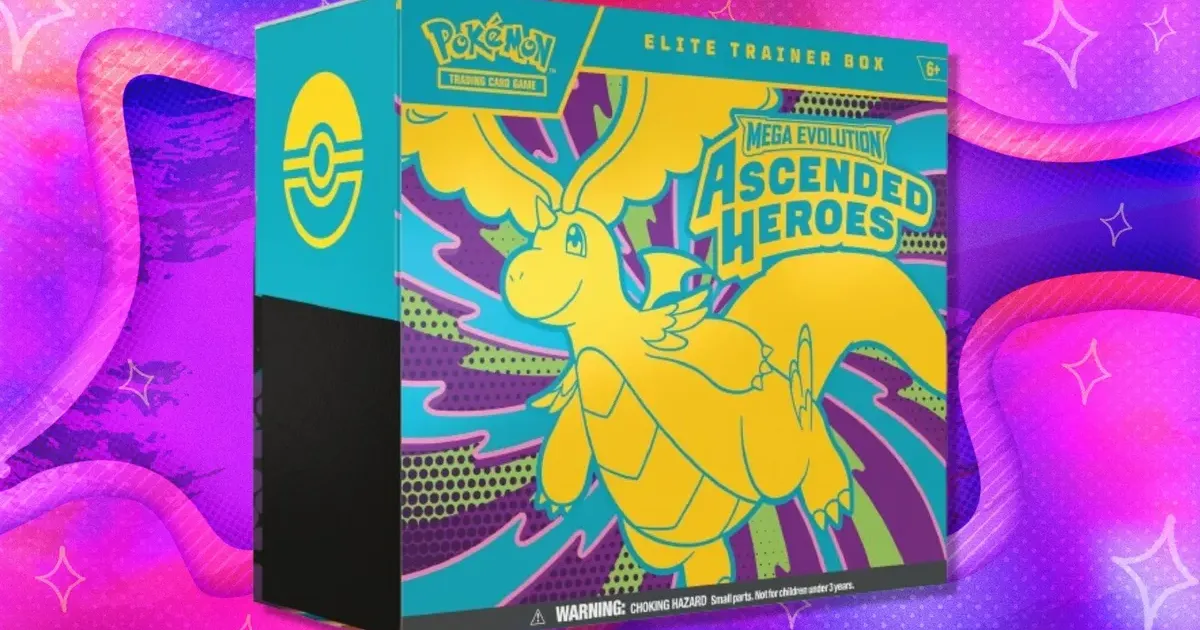
The price cut is a retail signal, not just a hobby discount. Big-box stores are testing how much pricing power trading-card buyers still have. Collectors are watching the spread. Walmart disrupted the collectibles market on March 30, 2026, by slashing prices for the Pokémon TCG Mega Evolution Ascended Heroes Elite Trainer Box to $119.99, directly challenging Amazon and its network of third-party sellers. This aggressive pricing moves places the big-box retailer six dollars below the verified market average tracked by enthusiast platforms. Price wars between these retail titans have intensified as the hobby transitions from a niche interest into a multi-billion-dollar alternative asset class. Historical data shows that Walmart frequently uses loss-leader strategies on high-demand trading card products to drive foot traffic and digital engagement. The card-price fight also shows how collectibles have become a mainstream retail traffic tool rather than a niche hobby shelf. Big-box chains can use scarce inventory to pull shoppers into broader sales funnels. The pricing battle also reflects how Pokemon cards now sit between toy retail, collectibles speculation and online marketplace arbitrage. A small discount can move inventory quickly when buyers expect sealed products to disappear.
The current inventory surge suggests a broader attempt to clear warehouse space before the next quarterly set release. Sellers on the Amazon marketplace currently list the same product starting at $133.99.
The useful signal is the gap between retailer price, marketplace price and collector expectation. When Walmart moves below tracked market levels, Amazon sellers have to decide whether scarcity still justifies a premium.
That makes the discount a test of demand discipline in a category that can swing quickly between shortage and oversupply.
Prismatic Evolutions Scarcity and Booster Bundle Economics
Scarlet & Violet Prismatic Evolutions Booster Bundles present a narrower margin for retail maneuvers compared to the larger Elite Trainer Boxes. Walmart currently lists these six-pack bundles at $82.99, slightly undercutting the Amazon price of $86.95. Both figures sit uncomfortably above the $77.76 market price currently established by specialized trading card exchanges. Retailers face higher logistical hurdles with booster bundles because the cost-per-pack ratio is much higher for the consumer. Enthusiasts often prefer these smaller form factors because they provide a higher probability of rare pulls without the added cost of dice, sleeves, and storage boxes. Demand for Prismatic Evolutions has surged due to the inclusion of high-rarity variant cards featuring popular mascot characters.
"Walmart has it lower at $119.99, $6 below the current $125.99 TCGplayer market price," noted a market analysis report on the current state of retail availability.
Booster bundle availability remains notoriously sporadic across both platforms. Unlike Elite Trainer Boxes, which are often produced in larger quantities to satisfy holiday demand, booster bundles are frequently printed in smaller batches. Walmart’s decision to keep prices near the $83 mark indicates a tight supply-chain where they cannot afford to offer the same deep discounts seen on the Ascended Heroes sets. Amazon sellers have capitalized on this scarcity by listing bundles under varying names, including Destined Rivals, which complicates consumer search efforts. This naming inconsistency often leads to accidental purchases or missed deals for less-experienced buyers. Accurate inventory tracking is the only way for collectors to secure these bundles before they hit the secondary market at inflated prices.
Secondary Market Valuation via TCGplayer Benchmarks
TCGplayer functions as the de facto stock exchange for the Pokémon TCG, providing the necessary data for both consumers and retailers to anchor their expectations. When Walmart drops its price below the TCGplayer market average, it indicates a potential downward trend for the entire set. Investors closely watch these movements to determine when to liquidate their positions or double down on specific expansions. The $125.99 benchmark for Ascended Heroes has held steady for three weeks, suggesting that the Walmart discount is a localized anomaly instead of a total market collapse.
Reliable data points are essential in a market where counterfeit products and resealed boxes are becoming increasingly sophisticated. Professional grading services have seen a 12% increase in submissions for cards pulled from these specific retail sets.
Market participants often ignore the hidden costs of retail shopping when comparing prices. Shipping fees, sales tax, and the risk of damaged corners during transit can quickly turn a $119.99 deal into a $140 headache. Walmart’s shipping protocols for trading cards have faced criticism from the collector community for being less protective than specialized hobby shops. Amazon has improved its packaging standards, but the use of third-party sellers introduces a variable layer of risk. Collectors who prioritize the physical condition of the box often pay the Amazon premium to ensure the product arrives in display-worthy condition.
Price remains the primary driver for the majority of the market, but quality control holds a serious secondary position. The TCGplayer market price accounts for these variables by aggregating thousands of sales across various conditions and sellers.
Collectibles Pricing Signal
The pricing fight is especially visible because card collectors track market benchmarks in real time. A small Walmart discount can force Amazon sellers and specialty marketplaces to defend their premiums, particularly when sealed product moves quickly during sales events. For buyers, the key is still availability, shipping condition and whether the listed discount beats trusted market averages.