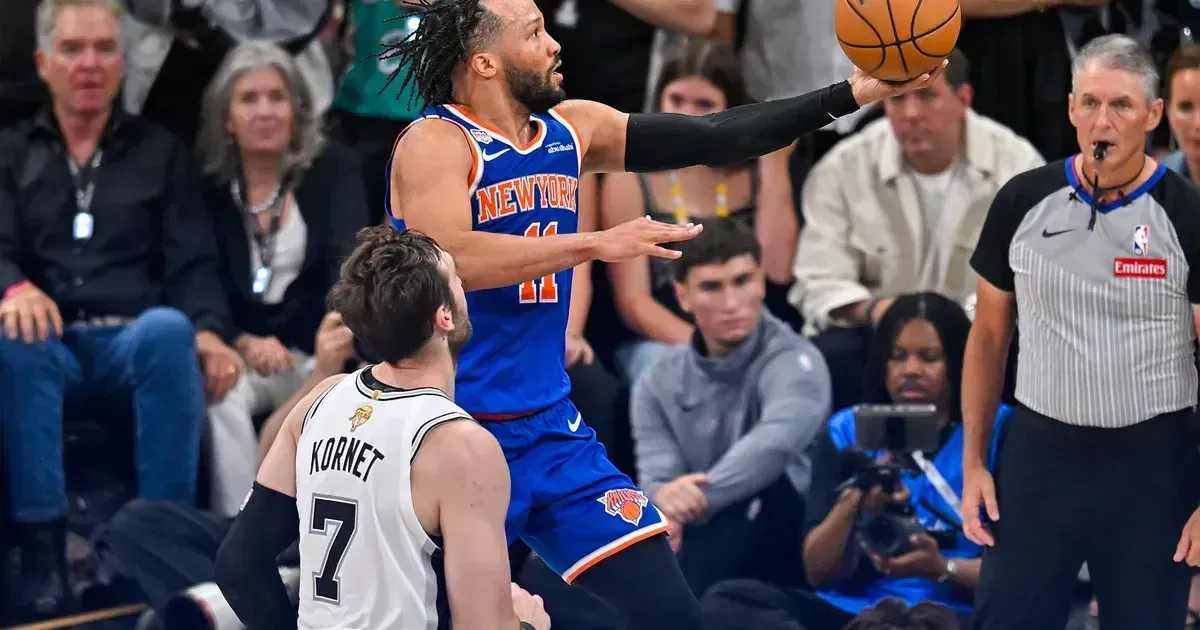
The Knicks ended a title wait that had lasted since 1973, beating the Spurs with a performance that felt both controlled and cathartic. Madison Square Garden became the center of a citywide celebration before the final buzzer had fully settled. The championship game was played on June 13, 2026. Madison Square Garden erupted as the New York Knicks secured their first NBA championship in more than half a century, closing the Finals with a tense win that immediately spilled from the arena floor into the streets of Manhattan.
The first NBA championship since 1973 ends a professional basketball drought that had defined New York sports culture for decades and shaped how multiple generations understood the franchise.
Players and coaches embraced on the hardwood while blue and orange confetti fell from the rafters. The result reset the franchise timeline, moving the conversation past the legends of the early 1970s and into a new period of competitive expectation, national attention and unavoidable pressure.
The 94-90 Game 5 win over the Spurs prioritized physical defense over offensive rhythm. Neither team built a double-digit lead during the second half, leaving every possession loaded with championship pressure and forcing both benches to trust execution rather than momentum.
New York controlled the glass late and limited San Antonio's second-chance chances. The victory was confirmed only after the Spurs missed a potential game-tying three-pointer in the closing seconds, a final defensive stand that matched the identity the Knicks carried through the series.
Historic Drought Ends in Manhattan
Fans had waited 53 years for this moment, a gap stretching back to the 1973 championship season. That era belonged to Willis Reed and Walt Frazier; the 2026 team now has its own reference point, and the comparison is no longer only a burden placed on every failed contender that came before it.
The weight of that history shaped the entire night. Every defensive rebound and late free throw carried the memory of decades of stalled rebuilds, star turns that never became titles and playoff runs that ended before the city could fully believe. That is why the final buzzer produced something closer to release than ordinary celebration.
Orange and blue jerseys filled the area outside Madison Square Garden as the result spread through Midtown. Thousands of supporters who could not secure tickets gathered in bars and public spaces around the arena, turning the surrounding blocks into a watch party that moved outside once the championship was secure.
A roaring sea of orange and blue crashed across Seventh Avenue overwhelming several city blocks as thousands of fans from watch parties and bars embraced in the streets.
Police moved to close several intersections as the crowd swelled. The Seventh Avenue celebrations remained largely peaceful but loud, with car horns echoing through Midtown for hours and a steady stream of fans moving toward the Garden long after the trophy presentation ended.
Defense Decides Game 5
The deciding game rewarded a rotation that stayed healthy and disciplined through a long postseason. San Antonio's perimeter shooting created problems, but New York's pressure forced turnovers, slowed the Spurs' rhythm and kept the game in a half-court shape that favored the home team.
A third-quarter adjustment changed the shape of the game. Trailing by six, the Knicks used a quicker lineup to speed up transition chances and regain control without abandoning their defensive structure. They did not win with a single overwhelming scoring burst; they won by forcing difficult possessions, protecting the paint and turning a tense fourth quarter into the type of physical contest that suited their roster.
That matters because Finals games often punish teams that rely only on pace or hot shooting. New York's closing stretch showed a group comfortable winning slowly, even when the offense had to grind through late-clock possessions and the crowd was reacting to every missed shot as if the drought might return for one more possession.
The championship validates a front-office strategy built through veteran stability, aggressive trades and a core trusted to handle playoff stress. Winning the title in five games gives the result a force that regular-season optimism never could, because it shows the roster could solve different versions of the same series rather than win only when conditions were perfect.
Why It Matters
Civic identity in New York often anchors itself to the success of its flagship teams, and the Knicks hold a unique position in that hierarchy. They are Manhattan's NBA team, so a championship lands as a city event rather than only a sports result, especially when it arrives after more than five decades of waiting.
The 53-year wait created a generational divide between fans who remembered 1973 and those who knew only near-misses, dysfunction and unfulfilled promise. This title bridges that divide and gives the franchise a modern standard, but it also changes the burden around the team. The Knicks are no longer selling hope, patience or a future breakthrough. They are defending a title, and that is a very different kind of pressure in New York.