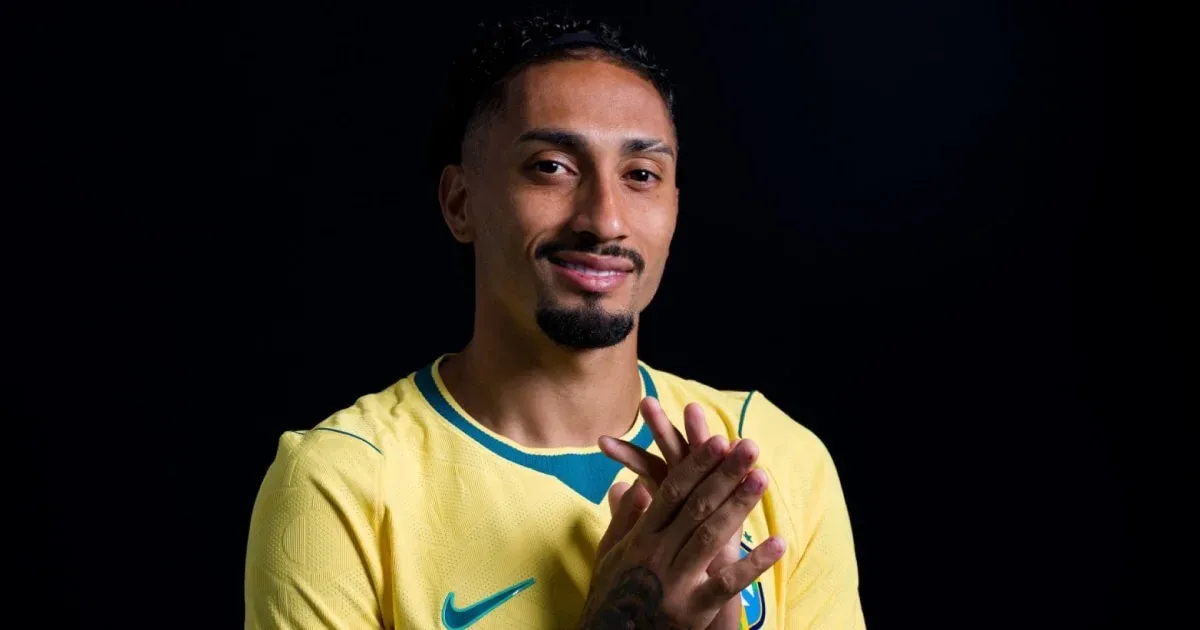
Raphinha framed Brazil's World Cup campaign as the fulfillment of a childhood dream rather than only another tournament assignment. The winger recalled watching the 2002 title run with his grandmother and described the national shirt as the kind of symbol that turns a career into something more personal. The comparison with Switzerland sharpened the point. Brazil has more talent, but tournament control still depends on structure.
His comments landed on June 13, 2026, as Brazil's status as a tournament favorite was being weighed against tactical questions around the squad. Former captain Dunga argued that Brazil always begins a World Cup among the leading contenders, but he also acknowledged that the current group still carries doubts over shape, roles and the starting eleven.
"Representar a Brasil en un Mundial significa todo," Raphinha said while describing the emotional weight of playing for the national team.
Brazil Still Carries Favorite Pressure
Dunga's point was less a prediction than a reminder of Brazil's burden. The country rarely enters a World Cup as an ordinary participant. Its history, attacking identity and public expectation turn every lineup question into a national argument. That pressure can lift players, but it can also make ordinary tactical uncertainty feel like a crisis before the tournament has properly settled.
That does not mean the team is settled. Brazil has enough individual quality to scare any opponent, but tournament football often punishes teams that rely on talent without clear spacing, defensive balance and repeatable patterns. The unresolved tactical debate is therefore real.
Dunga's warning matters because it comes from someone who understands both the glamour and the cost of the shirt. Brazil's best teams have usually combined freedom with structure. If this squad finds only one of those qualities, favorite status may become more pressure than advantage.
Switzerland Takes the Practical Route
Switzerland offered a different lesson against Qatar. Breel Embolo converted from the penalty spot after a collision involving Qatari goalkeeper Abunada, giving the Swiss the early control they needed. The decision went through video review before the penalty was allowed to proceed.
The goal changed the rhythm of the match. Qatar manager Julen Lopetegui used a hydration break to push tactical instructions, urging his players to become more compact and quicker in transition. The sideline urgency reflected a team trying to stop a match from slipping away before halftime.
The episode also showed why opening matches can become tactical traps. Qatar needed to chase an equalizer without leaving too much space behind its midfield, while Switzerland could slow the tempo and make every restart count. That kind of game state rewards calm teams more than emotional ones.
For viewers following the wider tournament, the Swiss performance was a reminder that group-stage control often matters as much as star power. A penalty can decide the scoreboard, but the response after the goal decides whether the advantage survives.
Breel Embolo's penalty gave Switzerland the kind of tournament advantage that is easy to overlook and hard to recover from. Once ahead, the Swiss could protect space, slow Qatar's momentum and force the host side to chase the game through crowded midfield areas.
Brazilian Talent Still Needs Swiss-Style Control
The contrast between Brazil and Switzerland is useful. Brazil is managing expectation before its biggest questions have been answered. Switzerland showed how a narrower plan can still produce an immediate result when discipline and execution arrive early. One team is trying to convert mythology into structure; the other is trying to turn structure into points before tournament pressure builds quickly.
For Brazil, the central question is whether emotion and talent can be organized into a team that survives pressure. Raphinha gives the story an emotional center, but the coaching staff still has to decide how much freedom the attack can carry without exposing the back line. The country has enough quality to win matches in bursts; the harder task is building a rhythm that does not depend on one brilliant moment or one emotional surge from a star winger.
For Switzerland, the message is simpler: an early penalty, a controlled shape and a calm response to Qatar's adjustments can be enough to define the opening stage of a group campaign. The Swiss do not need to look spectacular if they keep turning small advantages into points.