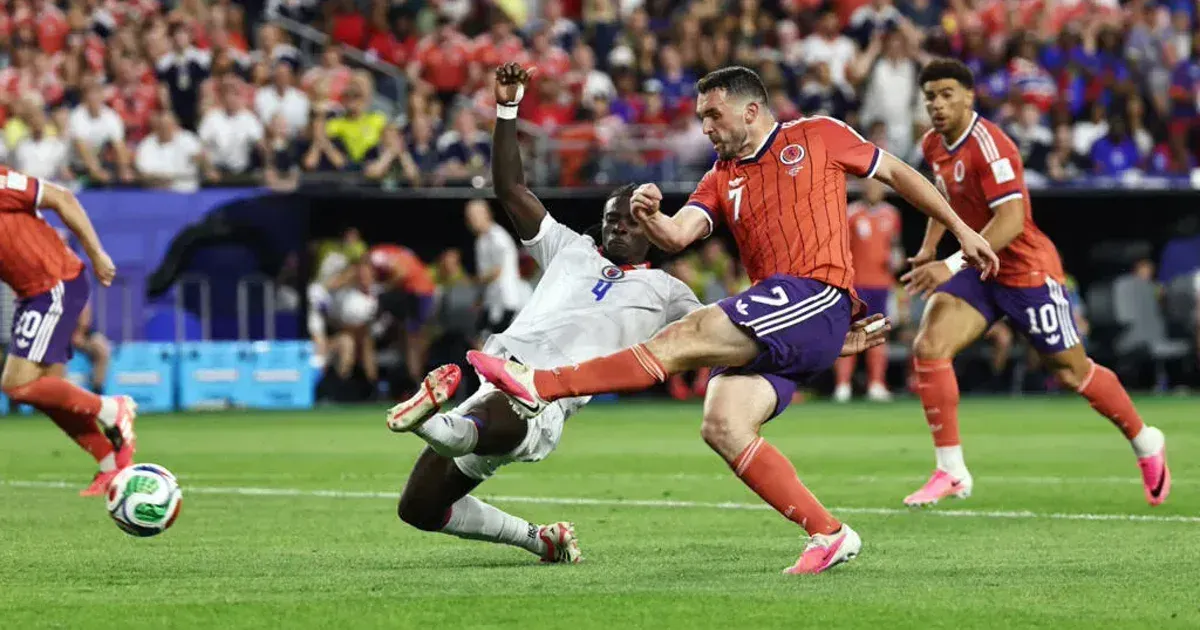
Scotland turned a long World Cup drought into a clean, practical win over Haiti in Boston. The result mattered because it gave the squad belief without asking it to survive a chaotic finish. A disciplined defensive shape carried as much weight as the goal itself. The match was played in Boston on June 13, 2026. Scotland secured its first World Cup victory in thirty-six years by defeating Haiti in a tense Group C opener, taking a narrow result that carried far more emotional weight than the final score suggested.
The first World Cup win since 1990 gave Scotland three points and a clean sheet in its return to the global stage, while forcing Haiti to accept frustration after a competitive second-half response.
The decisive sequence arrived in the 28th minute after a loose ball in the Haitian penalty area created a scramble. McGinn connected with the chance and sent Scotland into a lead it never surrendered, even as the game became increasingly uncomfortable after halftime.
McGinn Goal Ends the Drought
Scotland had not won a World Cup match since the 1990 tournament in Italy. That history made the John McGinn 28th-minute goal more than a routine opener, because it immediately changed the emotional burden around a team trying to avoid another tournament defined by missed chances.
The goal also changed the tactical balance of the match. Scotland could defend a lead rather than chase the game, while Haiti had to take more risks earlier than planned. That mattered in a group opener, where a draw can be useful but a defeat can narrow the route to the knockout stage before the tournament has really settled.
For Scotland, the early advantage also gave the midfield a clearer job. Instead of forcing risky passes through Haiti's compact shape, the team could slow the tempo, protect central spaces and make Haiti prove it could turn pressure into a clean chance. That approach was not always comfortable, but it was practical.
Haiti entered with its own heavy weight of expectation. This was only the country's second World Cup appearance, with the first coming in 1974, and its supporters turned the Boston area into a visible display of national identity. The narrow result did not erase Haiti's performance, because the side found space in wide areas during the second half and forced Scotland to defend deeper than it wanted.
Haiti Pushes Late in Boston
Defensive organization became Scotland's central task as the clock moved toward full time. Haiti pushed higher, stretched the midfield and kept the match alive with sustained pressure, testing whether Scotland could protect a lead without giving away the kind of late chance that changes an entire group table.
The Scottish back line held its shape when the game became uncomfortable. Haiti led meaningful spells of pressure, but the final touch never arrived and the scoreboard stayed at Scotland 1-0 Haiti in Boston.
The Torino man's close-range shot cannoned off the Haitian goalkeeper - but the ball fell out to John McGinn on the penalty spot, who powered it into the top-right of the goal.
Supporters from both nations gave the match a broader civic feel. Boston has a large Haitian community, while Scotland's traveling support brought the Tartan Army presence that follows the national team across major tournaments. That backdrop made the match feel larger than a narrow group-stage score, especially for Haitian supporters in the United States who saw the team's return to the World Cup as a moment of visibility and pride.
The match also underlined how different the two pressures were. Scotland carried the pressure of history and expectation from a football nation tired of waiting. Haiti carried the pressure of representation, trying to show that a rare World Cup appearance could be more than symbolic. The final score favored Scotland, but the run of play gave Haiti enough evidence to believe it can still affect the group.
What Comes Next
The three points put Scotland in a stronger Group C position, but the performance also showed the limits of a one-goal margin. A clean sheet matters, yet future opponents will test whether Scotland can control matches for longer stretches and create enough chances to avoid defending under pressure for so long.
Group openers often reward pragmatism more than style. Scotland did enough to bank the result, and that changes the calculation for the next match because the team no longer has to chase the group from behind. A win in the first fixture gives coaches more room to manage risk, rotate selectively and treat goal difference as an asset rather than a rescue mission.
For Haiti, the defeat still carried evidence of competitiveness. The team troubled a European opponent, gave its diaspora in the host city a World Cup moment and left with proof that its return to the tournament can still carry weight. The next task is harsher: turn that credibility into points before the group begins to close, because strong performances without results rarely survive the pressure of a short tournament.