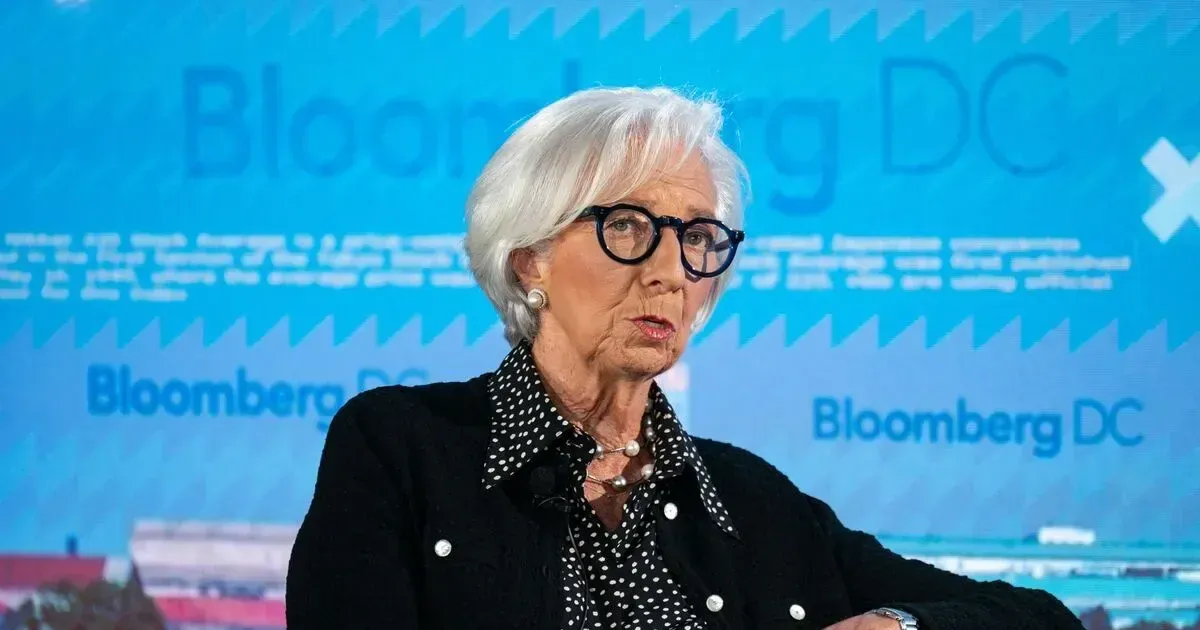
Christine Lagarde announced that she would not consider an early exit from the European Central Bank while geopolitical instability threatens the continental economy. Market speculation regarding her tenure had intensified following the outbreak of hostilities in the Middle East. President Lagarde dismissed these rumors directly, stating that maintaining institutional continuity is her primary obligation during the current fiscal emergency. Stability in Frankfurt provides a necessary anchor for the nineteen nations currently using the common currency. Lagarde addressed the speculation on April 14, 2026.
Energy markets have reacted violently to the conflict, driving the price of crude and natural gas to levels that challenge existing monetary frameworks. Rising fuel costs have forced the bank to adjust its expectations for inflation and growth across the eurozone. Data suggest that the economic performance of the region has already slipped below the baseline projections established at the beginning of the year. Iran and its regional neighbors control critical shipping lanes that, when disrupted, immediately impact European industrial output and consumer prices.
Energy Costs Force ECB Departure From Baseline
President Lagarde clarified that the spike in energy prices has officially moved the eurozone away from the base-case outlook of the European Central Bank. This divergence complicates the task of balancing price stability with the need to support a weakening manufacturing sector. Higher utility bills for households and increased overhead for factories have dampened internal demand across Germany and France. Despite this deviation from the expected path, the governing council has not yet signaled a shift toward raising interest rates. Lagarde indicated that the current pressure is primarily supply-driven rather than a result of overheating domestic demand.
Lagarde said higher energy costs had pushed the eurozone away from the European Central Bank's base-case outlook, though not far enough for the bank to lean toward raising interest rates.
Hungary Pivots Toward Euro Zone Integration
Incoming leadership in Hungary has signaled a desire to begin the formal process of joining the eurozone, a move that Christine Lagarde publicly welcomed. Budapest had previously maintained a skeptical stance toward the common currency, preferring to retain control over its national monetary policy. The shift in rhetoric follows a period of extreme currency volatility for the forint, which has struggled against the euro since the start of the conflict. Joining the currency union is described by the president as the natural path for any European Union member seeking long-term financial security. Hungary must now meet the Maastricht criteria, which include strict limits on government deficits and public debt.
Integrating a new member during a period of high regional tension presents both logistical and economic challenges for the European Central Bank. Hungary needs to demonstrate a high degree of sustainable economic convergence before adoption can occur. This strategy involves aligning interest rates and inflation levels with the rest of the bloc. Lagarde noted that the path to accession requires rigorous structural reforms to ensure the Hungarian economy can withstand the competitive pressures of the single market. The timeline for this transition depends on the speed of legislative changes in Budapest.
Leadership Stability During Geopolitical Conflict
Rumors of an early departure for Lagarde were tied to the intense pressure of managing the third major economic crisis of her term. She has already navigated the institution through a global pandemic and the subsequent energy shock following the invasion of Ukraine. Her decision to stay suggests a belief that a leadership vacuum would only worsen market volatility. Institutional knowledge is considered an essential asset when coordinating with the European Commission and national finance ministers. Frankfurt remains the center of gravity for the continent's financial response to the war.
Interest Rate Outlook and Inflation Constraints
Economic output has stalled in several key markets, yet the bank maintains a cautious stance on lowering rates. Lowering borrowing costs too quickly could fuel inflation, while keeping them high risks deepening a potential recession. The European Central Bank is operating in a narrow corridor where every decision carries meaningful political and economic weight. Lagarde emphasized that the institution will remain data-dependent, looking for signs that energy prices are normalizing before making major adjustments. Most analysts expect a period of policy inertia until the military situation in the Middle East clarifies.
The governing council is confronting an environment unlike earlier periods in the history of the euro. External shocks are now the primary drivers of domestic policy, leaving the bank with fewer tools to manage the economy. The resilience of the European financial system is being tested by these compounding crises. Future growth depends on the ability of the bloc to secure new energy partnerships and reduce its dependence on volatile regions. Christine Lagarde will lead the effort to modernize the bank's toolkit for this new era of permanent instability.
Central Banking Through an Energy Shock
Keeping the same leadership that oversaw the initial energy decoupling from Russia provides continuity, though it also raises questions about institutional renewal. Lagarde's refusal to step aside also reflects the limited pool of politically viable successors within the European system. The European Central Bank is currently trapped between a manufacturing sector weakened by high energy costs and a mandate to keep prices stable. By refusing to hike rates while the economy slips below the baseline, the bank is effectively subsidizing an energy crisis with the future purchasing power of the euro.
Hungary's sudden interest in the euro resembles a flight to safety as its government confronts the limits of monetary independence in a global war economy. Welcoming Hungary now would add a fragile, debt-heavy economy to a union that is already struggling with its own internal contradictions. Frankfurt is choosing expansion and continuity when it should be focused on radical contraction and the protection of core assets. The decision to stay the course is a gamble that the Iran conflict will be short-lived, an assumption that becomes harder to sustain as supply chains reorganize. The value of continuity will depend on how quickly those pressures ease.