White House legal teams moved on April 24, 2026, to scale back strict preservation rules for executive documents, sparking immediate concern among transparency advocates. Internal policy changes directed at federal staff allow for greater discretion in determining which electronic communications qualify as permanent records. Attorneys within the White House drafted the new guidelines following a non-public memorandum from the Justice Department challenging existing statutes. These adjustments focus specifically on how digital messages and encrypted communications are categorized during daily operations. Legal experts suggest the change effectively creates a higher threshold for what constitutes an official presidential record.
Justice Department officials authored a legal opinion stating that the current Presidential Records Act contains provisions that are unconstitutional. Constitutional lawyers argued that the 1978 law infringes upon the executive branch’s inherent authority to manage its internal communications. Article II of the Constitution provides the president with specific powers that, according to these lawyers, supersede legislative requirements for record retention. Critics observe that this interpretation moves away from the post-Watergate consensus on public ownership of executive files. Current administrative staff received briefings on the new protocols earlier this month.
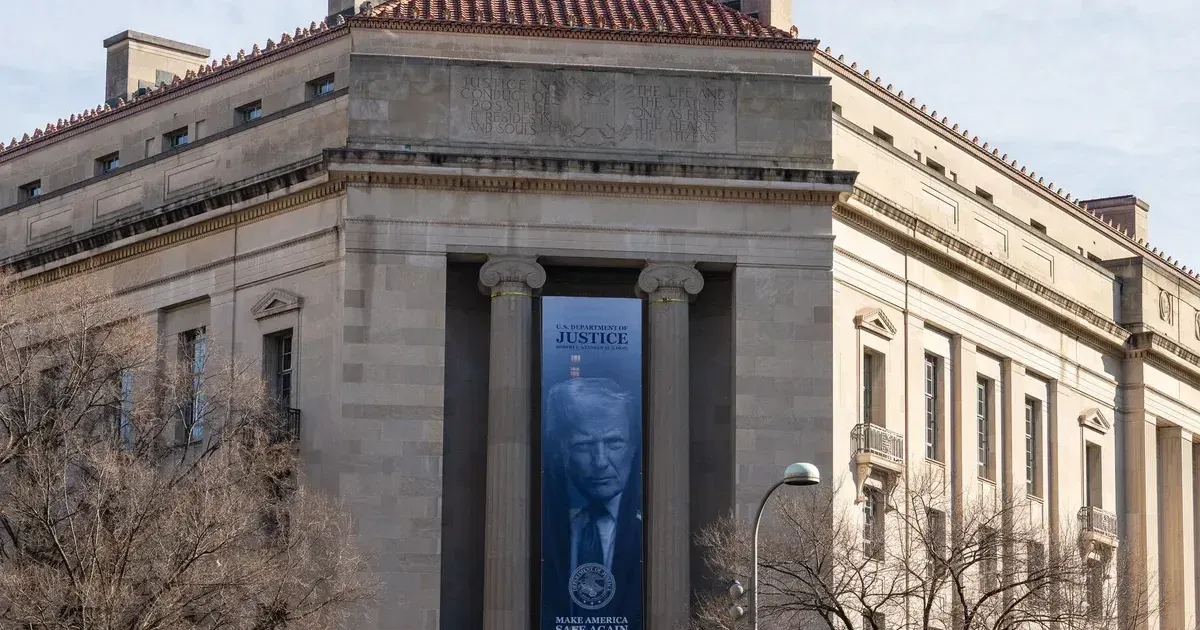
Justice Department Records Act Challenge
Department of Justice attorneys contend that the legislative branch cannot mandate how a president organizes or deletes internal work product. Supreme Court precedents regarding executive privilege are cited in the new policy as justification for the shift. Federal investigators previously relied on the 1978 act to ensure that every memo, email, and meeting note entered the public domain after a set period. Legal scholars at the National Archives and Records Administration maintain that the law was designed to prevent another situation similar to the Nixon era. Congressional oversight relies heavily on the stability of these preservation mandates.
The Justice Department concluded that certain mandatory requirements within the post-Watergate records law are unconstitutional and cannot be enforced against the executive office.
Legal challenges to the 1978 law typically center on the separation of powers doctrine. Proponents of the unitary executive theory believe the president must have absolute control over the documents produced by his closest advisors. Records belonging to the president were considered private property before the reforms enacted in the late 1970s. Modern interpretations of these rules now favor the executive’s right to privacy over the public’s right to know. National security considerations are frequently mentioned as a primary driver for limiting archival transparency.
White House Internal Preservation Policy
Administrative changes implemented this week allow staff to use auto-delete functions on specific encrypted messaging platforms. Previous guidance required all work-related digital correspondence to be captured and archived in real-time. New rules specify that only final versions of policy documents and formal correspondence require permanent storage. Drafts, informal chats, and transitory digital pings may now be deleted at the discretion of individual employees. Records officials within the executive office will no longer conduct the same level of automated sweep for metadata. This shift places the burden of history on the very political appointees the law was meant to monitor. Legal experts are currently debating whether the administration's new policy violates the Presidential Records Act.
Digital transparency groups claim the move enables the mass destruction of evidence before it can reach the archives. Encrypted apps like Signal and WhatsApp have become standard tools for government officials in Washington. Archiving such messages is technically difficult and politically sensitive for any administration. White House lawyers insist the new policy merely simplifies a cumbersome and outdated bureaucratic process. Staffers are now permitted to classify most electronic pings as non-records if they do not contribute to a final decision. Accountability suffers when the definition of a record becomes a subjective choice.
National Archives Regulatory Impact
National Archives and Records Administration officials expressed concern that the policy will lead to substantial gaps in the historical record. Archival professionals have spent decades refining the process for transferring digital data from the White House to the public trust. Recent audits show that missing metadata frequently occurs when staff are left to their own devices. Federal law requires the preservation of any document that reflects the activities, deliberative process, or decisions of the executive office. Restricting what enters the archive makes future historical analysis nearly impossible for researchers and journalists. Archives staff reported a 30 percent decrease in the volume of incoming digital snapshots from certain departments.
Transparency is a requirement for a functioning democracy according to several former government historians. Records provide a trail that explains why specific policies were adopted and who influenced those choices. Without a mandatory preservation requirement, the public must rely on the goodwill of political actors. History suggests that such reliance is rarely rewarded with full disclosure. Preservation mandates exist because voluntary transparency is an oxymoron in the world of high-stakes politics. Institutional memory depends on the physical or digital persistence of raw data.
Historical Transparency and Presidential Accountability
Nixon’s attempt to destroy his office recordings led directly to the creation of the current legal framework. Congress acted in 1978 to ensure that no future leader could treat the history of the country as personal property. Changes enacted on April 24, 2026, appear to roll back those specific protections in favor of executive secrecy. Legal analysts believe the new policy will face a swift challenge in federal court from oversight committees. The outcome of such litigation will determine whether the 1978 act remains enforceable. Records are the primary tool for holding the powerful accountable for their actions behind closed doors.
Secrecy within the executive branch continues to be a point of contention between the three branches of government. Judicial review often requires access to the very documents that the new policy seeks to keep out of the archives. Legislative committees cannot perform their constitutional duty if the paper trail has been erased. Public trust in government institutions reaches new lows when the process of governance is hidden from view. Lawyers argue that the president needs a zone of privacy to receive candid advice. Openness, however, is the only remedy for the corruption that thrives in the dark.
Executive orders and internal memos are not easily overturned by outside groups. Filing a lawsuit requires standing, which is often difficult to prove when the records in question have already been destroyed. Historians note that once a record is deleted, the loss to the national narrative is permanent. Technological advances have made it easier to create data and much easier to hide it. Policy shifts in Washington often have long-lasting effects on the transparency of future administrations. Records management is a technical field with far-reaching political consequences.
Discretionary Deletion Threatens Records Transparency
Legal theories involving executive supremacy often collide with public interest. The decision by the Justice Department to declare a decades-old transparency law unconstitutional is not an exercise in legal purity. It is a calculated move to insulate the executive branch from future scrutiny. By shifting the burden of record-keeping from a mandatory system to a discretionary one, the administration has effectively legalized the deletion of its own history. This is a classic maneuver used by those who view the public as an adversary rather than a stakeholder.
Accountability relies on the existence of a durable, unalterable paper trail. When lawyers argue that a president’s privacy outweighs the public’s right to a historical record, they are arguing for a return to pre-Watergate opacity. The timing of this policy change suggests a desire to hide the internal mechanics of current policy debates before they can be analyzed by voters or the courts. History is not a collection of final memos; it is the mess of drafts, arguments, and disagreements that lead to them. Erasing the process ensures that only the official narrative survives. Transparency is dead.