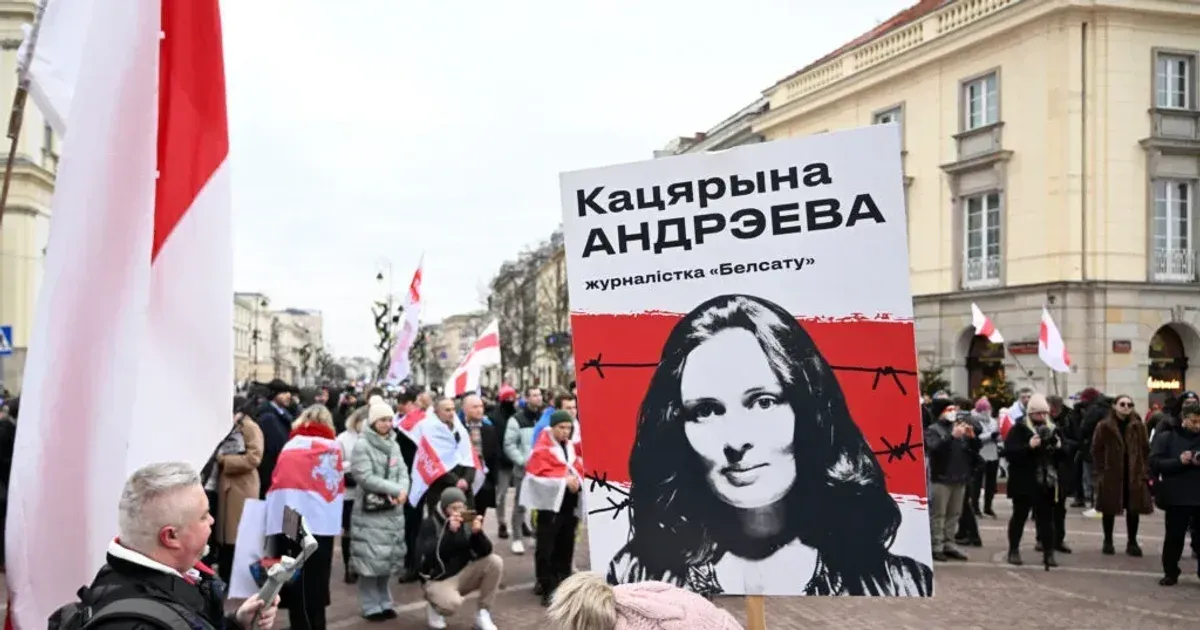
Donald Trump authorized a major diplomatic shift in Eastern European relations on April 24, 2026, by trading American sanctions relief for the release of high-profile political detainees in Belarus. Leading the group of freed individuals is Katsiaryna Andreeva, a journalist whose imprisonment became a global symbol of the crackdown on dissent in Minsk. Presidential intervention led to her sudden transit from a KGB-controlled prison to exile in Poland, where she arrived late last night. Negotiations involved high-ranking American envoys and direct communication with the Belarusian administration.
Katsiaryna Andreeva originally faced arrest in 2020 while documenting a wave of protests against the disputed election of Alexander Lukashenko. Positioned in a 14th-floor apartment window, she filmed the brutal police response to demonstrators in the capital city. Initial charges of violating public order resulted in a two-year sentence, but the regime added a treason conviction in July 2022. This secondary charge extended her mandatory imprisonment by another eight years, moving her into the deep isolation of the Belarusian penal system. Her release marks the first time a treason convict has been pardoned under this specific diplomatic framework.
Diplomatic cables reveal that the deal originated during informal, booze-fueled discussions between American representatives and Belarusian officials in Minsk. Alexander Lukashenko sought a path to reduce the economic pressure applied by Western sanctions that have crippled his nation's industrial output. In exchange for the liberty of political prisoners, the United States agreed to ease specific trade restrictions and financial penalties. Analysts at the State Department indicate that the ultimate goal involves pulling the Lukashenko regime away from the strategic orbit of Moscow. Russia remains the primary benefactor of the Belarusian state, providing cheap energy and security guarantees in exchange for military cooperation.
Sanctions Eased for Political Prisoner Release
Lukashenko describes the current arrangement as a potential big deal that could redefine the sovereign status of Belarus on the world stage. American officials insist that the release of 500 prisoners is only the beginning of a larger commitment to human rights in the region. Donald Trump reportedly promised that the final tally of freed individuals would reach 1,300 before any permanent removal of sanctions occurs. Current tallies show a substantial gap between the promised figures and the reality on the ground in Minsk. Hundreds of activists, students, and professionals remain in labor colonies across the country.
Economic incentives drove the Belarusian side to the table after years of defiance against international pressure. The relaxation of sanctions provides immediate relief to state-owned enterprises that produce potash and refined petroleum products. These industries form the backbone of the Belarusian economy and have struggled to find markets outside of Russian-aligned territories. Washington observers note that the transactional nature of the deal fits the broader foreign policy pattern of the current administration. Direct negotiation with autocrats is now a standard tool in the American diplomatic arsenal.
Belarusian Journalist Navigates Exile in Warsaw
Freedom in Warsaw provides a sharp contrast to the grey concrete of the Belarusian prison system where Andreeva spent years of her life. She expressed deep gratitude to the American president during her first interview since crossing the border. However, her personal liberty carries the heavy weight of those she left behind. More than two dozen journalists are currently serving sentences in Belarus for doing the work she was arrested for. The release process appears selective, targeting names with high international visibility while leaving local activists to serve their full terms.
Ihar Ilyash, the husband of Andreeva and a fellow journalist, is one of those who remain incarcerated. He is currently serving a four-year sentence on charges related to his reporting and civil activities. Andreeva stated that her own freedom feels incomplete while he is still being held by the regime. She described the feeling of being a hostage who was traded while her partner remains a bargaining chip for future negotiations. The psychological toll of this split has become a focal point for human rights organizations monitoring the exchange. Solidarity among the Belarusian diaspora in Poland remains high as they lobby for more thorough release lists.
"By releasing me but keeping him in prison, they have created a situation where I feel they’ve kept a hostage. I will only truly feel free once my husband is back by my side," Katsiaryna Andreeva said.
Andreeva's dramatic journey from the 14th-floor window to a prison cell and finally to European exile has already attracted Hollywood interest. HBO producers are currently developing a film based on her life and the broader struggle for democracy in Eastern Europe. This cinematic project aims to highlight the personal costs of political resistance in a country where the state maintains total control over information. Narrative details will focus on the 2020 protests and the subsequent years of isolation faced by those who challenged the status quo. Such international attention keeps the pressure on Minsk to honor the remaining prisoner release quotas.
Washington Social Circle Evaluates Foreign Policy Shifts
Washington socialites and political power brokers spent the weekend discussing the Belarus deal during a series of high-profile events. Tammy Haddad hosted an A-list gathering where the conversation frequently turned toward the effectiveness of the sanctions swap. Striking guests, including Barbra Streisand, attended functions where the intersection of culture and foreign policy took center stage. The mood in the capital suggests a fascination with the administration's ability to achieve results through unconventional channels. While some traditionalists question the ethics of rewarding a dictator, the real return of a leading journalist silences many critics.
Foreign policy experts at the dinner tables of the DC elite debated whether this move effectively counters Russian influence. The Kremlin has historically viewed Belarus as a buffer zone and a critical partner in its regional security architecture. If Alexander Lukashenko successfully pivots toward Washington, the geopolitical map of Eastern Europe will undergo its most consequential revision since the end of the Cold War. Strategic planners worry that Russia may respond with increased military pressure or economic sabotage. The risk of a Russian intervention to prevent Belarus from drifting westward persists despite the current diplomatic momentum.
Strategic Risks of Luring Lukashenko from Russia
Minsk remains a city of contradictions where the secret police operate alongside officials seeking Western investment. Security forces continue to monitor the families of those who were recently released to ensure they do not become active in the opposition from abroad. The threat of re-arrest is a powerful deterrent for those who might consider returning to Belarus. Lukashenko maintains a firm grip on the domestic security apparatus even as he makes concessions to the United States. His survival depends on his ability to balance the demands of Washington against the expectations of his generals.
Success in this diplomatic effort would provide the United States with a unique foothold in a territory long considered a Russian satellite. The cost of this entry is the rehabilitation of a leader who was once called the last dictator of Europe. Moral considerations are often sidelined in favor of cold, strategic gains in the contest for regional hegemony. Donald Trump has demonstrated a preference for these high-stakes, bilateral agreements that bypass traditional international organizations. The durability of the Belarus swap will be tested by the upcoming 1,300-prisoner deadline and the subsequent reaction from Moscow.
Belarus Swap Rewards Hostage Diplomacy
Diplomacy conducted through the bottom of a bottle reveals the transactional rot central to modern geopolitics. The release of Katsiaryna Andreeva is clearly a humanitarian win, but the mechanism of her freedom sets a dangerous precedent for every autocrat with a jail cell and a grievance. By treating human beings as currency for sanctions relief, the Donald Trump administration has essentially published a price list for political hostages. Dictators from Minsk to Tehran now understand that the fastest way to the negotiating table is to arrest a journalist or a Western citizen. This strategy may secure individual releases, but it creates an incentive structure that ensures the supply of prisoners will never run dry.
Why should Alexander Lukashenko stop at 500 prisoners when he can keep the remaining 800 as leverage for the next round of demands? The American strategy assumes that economic incentives can overcome decades of ideological and military alignment with Russia. It is a gamble that mistakes a dictator’s survival instinct for a genuine desire for Western liberalization. Lukashenko is not pivoting toward democracy; he is diversifying his portfolio of protectors. If the U.S. successfully lures him away from the Kremlin, it will find itself the new patron of a regime that survives on the very repression we claim to oppose. We are not freeing Belarus. We are just buying the keys to the prison.