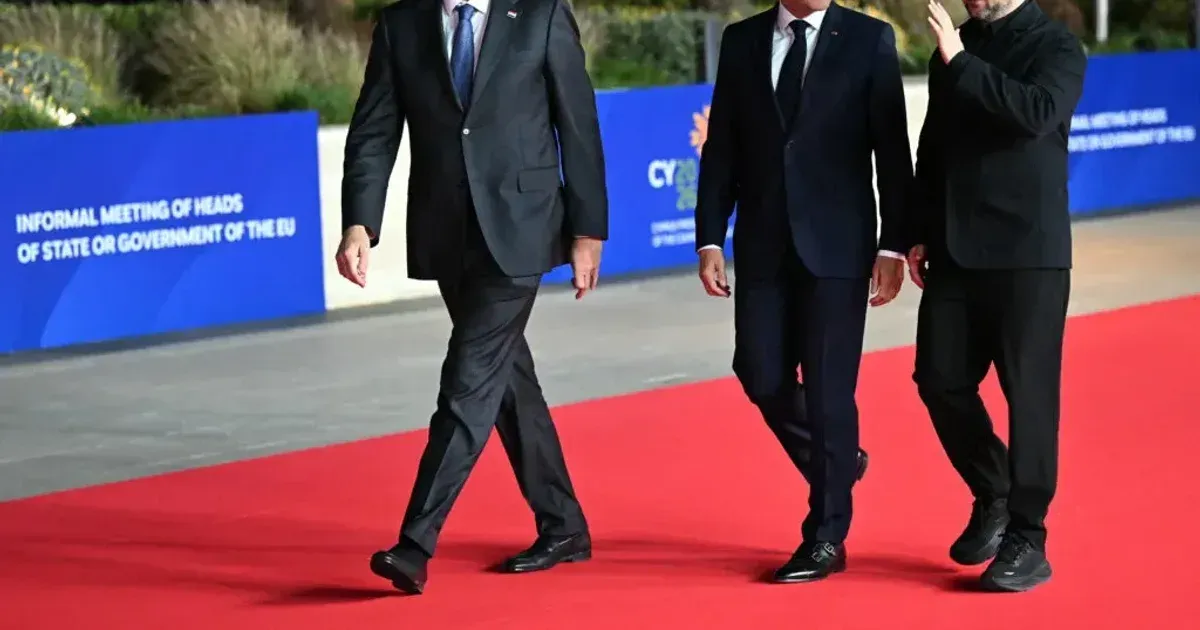
Ayia Napa, Cyprus, became the focal point for European diplomacy on April 24, 2026, when Ursula von der Leyen and 27 heads of state gathered to address a worsening global security crisis. Icy winds swept across the Mediterranean coast as officials entered a glass pavilion to discuss the unstable state of the continent's economy. The primary objective involved finalizing a large financial aid package while confronting the reality of a widening conflict in the Middle East. High energy prices and naval blockades dominated the initial hours of the summit.
These leaders found themselves shielded from the elements but exposed to the volatile shifts of international power. The war in Iran has already disrupted shipping routes, creating a sense of urgency that many diplomats described as overwhelming.
Success arrived early in the afternoon when the bloc formally approved a $90 billion loan to Ukraine. This funding serves to stabilize the administration in Kyiv and provide essential resources for frontline defense. For months, the package faced substantial delays due to political resistance from certain member states. The sudden removal of these obstacles allowed the European Commission to move forward with its 20th round of sanctions against Russia. These new measures target specific financial institutions and energy exports that previously escaped regulation.
Volodymyr Zelenskyy joined the proceedings as a special guest, appearing more optimistic than he had during previous winter sessions. His presence served to emphasize the direct link between European security and the ongoing battles in the east. The loan is a major commitment of collective resources during a period of extreme fiscal tightening.
Ukraine Accession and the Seven Year Budget
Membership for Ukraine is now the most disputed topic on the long-term agenda for Brussels. While the financial loan provided a temporary reprieve, the path toward full integration into the European Union involves complex regulatory and economic hurdles. Estonian Prime Minister Kristen Michal expressed support for accelerating the process to ensure regional stability. Other leaders expressed reservations about the impact a large, agrarian nation would have on existing subsidy programs. The inclusion of Kyiv would require a complete overhaul of the common agricultural policy. National budgets are already stretched thin by domestic demands and rising defense costs.
Integrating a war-torn economy requires a level of investment that some capitals are currently unwilling to provide. Wealthier member states worry about the long-term burden on their own taxpayers. The negotiation process will likely span several years and multiple summit cycles.
European heads of state must also manage the complexities of the €1.8 trillion budget designed to carry the bloc through the next seven years. This vast allocation of funds covers everything from infrastructure projects to scientific research and border security. Competing priorities have led to friction between the frugal nations of the north and the developing economies of the south. Inflationary pressures have reduced the purchasing power of the original budget projections. Officials are now searching for ways to increase revenue without triggering a political backlash from voters.
António Costa and other high-ranking representatives spent the evening debating various taxation models. Some proposed a new levy on corporate profits, while others suggested repurposing unused pandemic recovery funds. The debate over these resources highlights the deep structural divisions within the union. Agreements on large-scale spending typically require unanimous consent, which is increasingly difficult to achieve in a fragmented political environment.
Energy Markets React to Strait of Hormuz Standoff
Tensions in the Gulf loom over the European economy as the standoff in the Strait of Hormuz continues to restrict global oil supplies. A warship stationed off the coast of Ayia Napa was a constant visual prompt of the military dimensions of this crisis. German Chancellor Friedrich Merz and French President Emmanuel Macron spent several hours discussing the potential for a prolonged energy shortage. Market analysts warn that a total blockade of the strait could push prices to record highs. Current reserves provide a small buffer, but a long-term disruption would devastate industrial production in the heart of Europe.
Energy-intensive sectors like chemicals and steel manufacturing are particularly vulnerable to these price spikes. Governments are now looking for alternative suppliers in North America and West Africa to reduce the risk. The economic consequences of the Iran war extend far beyond the immediate region of the conflict. Oil tankers remain stranded in the waterway, unable to navigate the minefields and naval patrols. Shipping costs have tripled in some sectors, forcing retailers to pass the burden on to consumers.
“It was just an assessment on the topic,” Romanian President Nicușor Dan told reporters when asked about talks on the Strait of Hormuz.
Casual conversations between leaders often reveal more than the formal statements issued by their press offices. Giorgia Meloni and Nikos Christodoulides were seen discussing the migration implications of the Middle Eastern conflict. Stability in the Mediterranean depends heavily on the ability of the EU to project power and maintain trade routes. Failure to secure the Strait of Hormuz would lead to a substantial contraction of the European GDP. Strategic autonomy is no longer a theoretical concept but a survival necessity for the bloc. Merz emphasized the need for a unified defense strategy that includes maritime security.
The lack of a cohesive naval response has frustrated some of the more hawkish members of the council. Without a clear plan, the union remains at the mercy of external actors who control the flow of natural resources. The summit in Cyprus illustrates the difficulty of formulating foreign policy in the middle of multiple simultaneous wars.
Central European Shifts Alter Political Calculation
Political changes in Central Europe have fundamentally altered the voting dynamics within the European Council. The recent electoral defeat of Viktor Orbán in Hungary has removed one of the primary obstacles to consensus. New leadership in Budapest appears more willing to cooperate with the majority on issues of defense and rule of law. This shift allowed the $90 billion loan to proceed without the usual threats of a veto. Slovakia also moderated its stance, contributing to a sense of newfound alignment among the 27 members. However, the rise of populist movements in other regions continues to threaten this fragile unity.
Elections in several major economies are scheduled for the coming year, creating an atmosphere of uncertainty. Leaders are wary of making long-term commitments that could be overturned by a change in government. Domestic politics often dictate the limits of international cooperation. Maintaining a common front against Russia requires constant negotiation and compromise. The absence of a single disruptive voice has improved the efficiency of the meetings, but it has not resolved the underlying disagreements over spending. Kaja Kallas and Rob Jetten discussed the necessity of strengthening the mutual defense clause during their walk to the evening dinner. Security guarantees are a top priority for nations bordering the Russian Federation. The current geopolitical climate has forced a reassessment of the role of the military in European society. Spending on hardware and personnel is reaching levels not seen since the end of the Cold War. These investments are necessary but they come at the expense of social programs and green energy initiatives. Balancing these competing needs is the central challenge for the next generation of European leaders. Public support for the war effort remains high, yet economic fatigue is beginning to set in. Inflation and the high cost of living are the primary concerns for most citizens. Policymakers must demonstrate that their international commitments provide real benefits at home. The Ayia Napa summit ended without a definitive resolution on the budget, leaving these critical questions for a future meeting.
War Costs Deepen European Budget Strain
Brussels continues to mistake administrative movement for strategic victory. While the €90 billion loan to Ukraine is a necessary expenditure, it highlights the reactive nature of a union that is perpetually behind the curve of history. European leaders spent five hours in a glass pavilion debating the energy impact of the Iran war while a naval blockade effectively strangled their supply chains. It is the behavior of a committee, not a global power. The obsession with a €1.8 trillion seven-year budget cycle reveals a mindset trapped in the bureaucratic comforts of the 1990s. The world has moved on, yet the EU remains anchored to the belief that every crisis can be solved with a regulation or a subsidy. Without a credible military deterrent and a radical decoupling from volatile energy markets, the bloc will find its influence continuing to erode. The defeat of Orbán provides a temporary window for unity, but it does not fix the structural paralysis inherent in the requirement for unanimity. Europe is currently a wealthy observer in a world governed by those who are willing to fight. Does the EU possess the will to become a combatant in the defense of its own interests? The answer from Cyprus suggests that they would rather order more halloumi-stuffed ravioli and wait for the wind to change. Power is never granted; it is seized. Brussels is still waiting for an invitation.