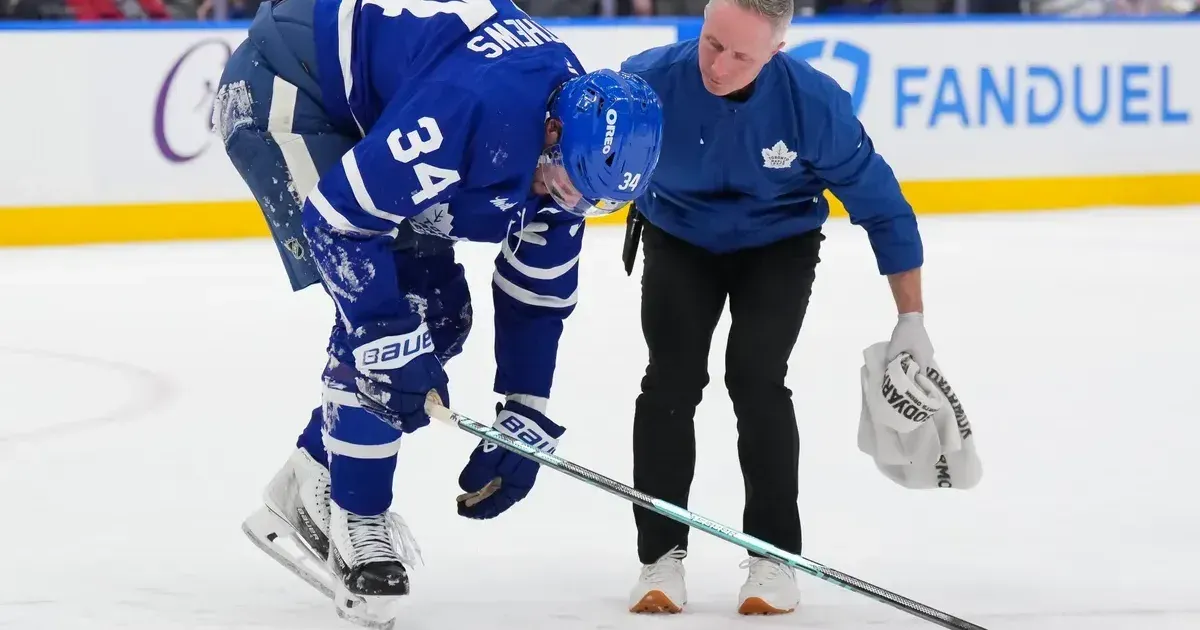
Scotiabank Arena fell into a somber silence on March 12 as Toronto captain Auston Matthews fell to the ice. The collision occurred during a high-speed sequence in front of the crease when Anaheim Ducks captain Radko Gudas led with his knee into the star center. Medical personnel rushed to the scene while Matthews clutched his right leg in visible agony. Video replays showed a direct knee-to-knee impact that sent the reigning MVP to the locker room for the final time this season. Toronto Maple Leafs management confirmed the extent of the damage on Friday morning. Matthews suffered a Grade 3 MCL tear and a severe quad contusion during the second period of the game. A Grade 3 injury involves a complete rupture of the medial collateral ligament, an injury that typically requires a grueling rehabilitation process. Team doctors announced he will be re-evaluated in 14 days, but his 2025-26 campaign has officially concluded.
Officials on the ice initially assessed a five-minute major and a game misconduct for kneeing. The Department of Player Safety reviewed the footage and summoned Gudas for a phone hearing. League disciplinarians eventually handed down a five-game suspension, the maximum penalty allowed for a hearing conducted via telephone. Still, the decision ignited a firestorm of criticism from the Matthews camp and Toronto fans alike.
Radko Gudas Facing Maximum Disciplinary Action
Radko Gudas is no stranger to the league disciplinary offices. This latest five-game ban adds to a lengthy history of physical infractions that define his tenure in the NHL. Between 2015 and 2019, Gudas accumulated 21 games worth of suspensions for four separate incidents. His reputation as a bruising defender often teeters on the edge of reckless play, leading to frequent confrontations with league officials. Public records highlight his involvement in previous high-profile injuries, including the hits that removed Sidney Crosby from Olympic competition. Critics argue that Gudas targets the league's elite players with a specific brand of physicality that transcends standard defensive play. In fact, the kneeing incident on March 12 appears to fit a pattern of behavior that the Department of Player Safety has struggled to curb despite repeated fines and short-term bans. Agent Judd Moldaver released a scathing statement regarding the light sentence. He suggested that the current system fails to protect the game's top talents from career-threatening contact.
Given the obvious severity of the play, I am disappointed and shocked the league would allow such a ruling. A phone hearing and 5 games is laughable and preposterous.
Moldaver noted that the ruling results in a further loss of confidence in the collective bargaining agreement's ability to police dangerous hits. He called for a fundamental review of how the league evaluates intent and injury outcome when determining punishment. But the NHL stands by its process, citing the specific language regarding phone hearings and non-repeat offender status under certain window constraints.
Auston Matthews Medical Prognosis and MCL Tear Recovery
Medical professionals characterize a Grade 3 MCL tear as a catastrophic failure of the ligament structure on the inner side of the knee. Unlike Grade 1 or 2 sprains, a Grade 3 injury involves a total loss of stability in the joint. Auston Matthews will likely spend the next six to eight weeks in a protective brace to allow the fibers to knit back together. Surgery remains an option if the initial re-evaluation shows the ligament is not healing in a stable position.
Physical therapy for such an injury is intensive. It begins with range-of-motion exercises before progressing to weight-bearing activities and eventually skating. The quad contusion adds a layer of complexity to the recovery, as deep muscle bruising can lead to calcification if not managed correctly. Toronto's medical team must balance the urgency of his return with the long-term health of their $13.25 million per year asset.
The season is effectively over for the reigning MVP. Matthews was leading the league in several offensive categories before the injury occurred. His absence leaves a void on the first power-play unit and creates a leadership gap in the locker room. Toronto must now handle the final stretch of the season and the upcoming playoffs without their most potent scoring threat. For one, the team lacks a direct replacement with the same combination of size and shooting accuracy.
NHL Collective Bargaining Agreement and Player Safety Gaps
Legal experts frequently point to the Collective Bargaining Agreement as the primary hurdle in levying harsher punishments. The CBA dictates that a phone hearing limits the Department of Player Safety to a maximum of five games. Only an in-person hearing allows the league to suspend a player for six games or more. So, the decision to offer Gudas a phone hearing effectively capped the potential penalty before the evidence was even presented.
Analysts at Sportsnet observed that this procedural choice often shields players with histories of borderline hits. While Gudas has a track record, the league's "repeat offender" status only looks back at the last 18 months for salary forfeiture purposes. This quirk in the rules allows veterans to maintain a clean record for disciplinary severity despite a career full of questionable plays. By contrast, the NFL and MLB often take a broader view of a player's historical conduct.
Meanwhile, the Maple Leafs must address their roster construction before the trade deadline. Management faces a difficult choice between overpaying for a rental center or trusting their current depth to weather the storm. Scouts are reportedly looking at several Western Conference teams for potential trade targets to strengthen the middle of the ice. But any acquisition will struggle to replace the 40-plus goals Matthews provides annually. Physicality in the modern NHL remains a contentious subject. Some old-school proponents argue that Gudas was merely playing a hard-nosed game and that injuries are an unfortunate byproduct of a contact sport. They claim that restricting hits like the one on Matthews would fundamentally change the nature of hockey. Yet, the data on kneeing-related injuries suggests that these specific types of contact are rarely accidental and carry a high risk of permanent joint damage.
Leafs Lose Their Playoff Structure
The severe reading for Toronto is that one collision can expose the entire roster plan. Matthews is not a replaceable scorer inside this system; he is the structure that lets every other line make sense. If the Leafs try to sell resilience while their captain is gone, the standings will test that language immediately.