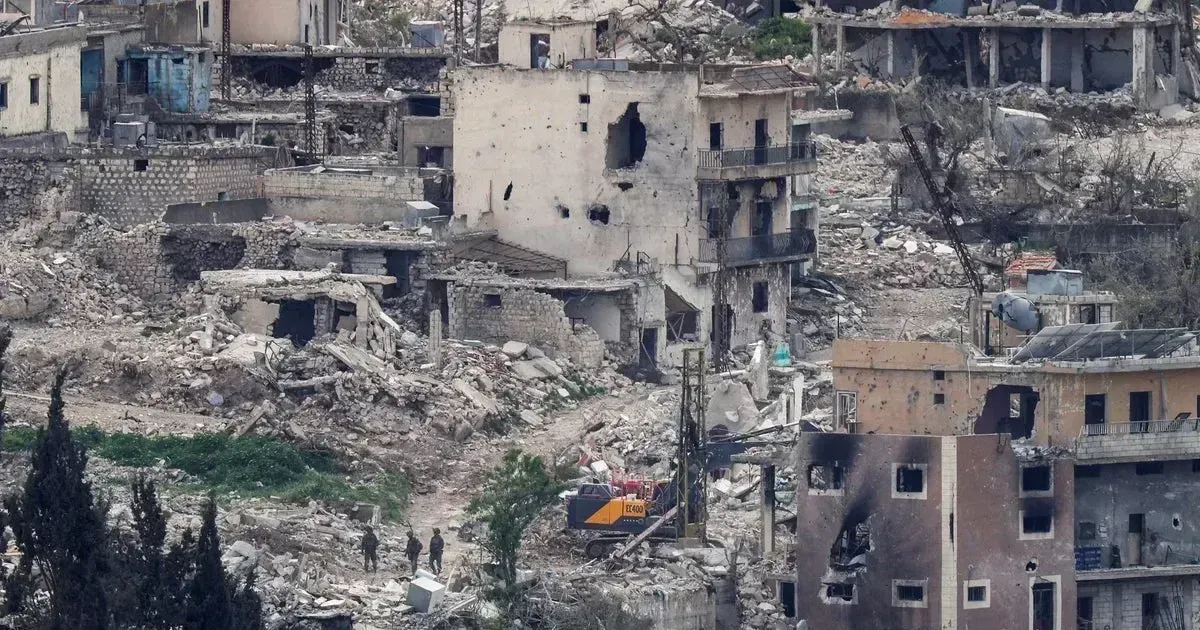
The first direct Lebanon-Israel talks in decades created a diplomatic opening with fragile foundations. The talks matter because sovereignty, reconstruction and security guarantees are now linked. Joseph Aoun announced on April 17, 2026, that Lebanon has entered a phase of absolute state authority. Standing before a nation recovering from months of intense cross-border conflict, Aoun emphasized a departure from decades of proxy-driven politics. Lebanon now seeks to preserve its own sovereignty and freedom through a rigorous reorganization of its national defense strategy. State actors now manage the border.
Negotiations between Lebanon and Israel began at a secure border facility in Naqoura. These sessions represent the first direct diplomatic contact between the two neighbors in decades. Both sides are discussing technical aspects of the ceasefire and the long-delayed demarcation of contested territories. Security officials from both nations have exchanged specific coordinates to prevent accidental skirmishes. Military leaders lead the discussions.
President Aoun told the international community that his country is no longer a pawn in regional power struggles. He insisted that the Lebanese government must be the sole decision-maker on matters of war and peace. This shift in rhetoric follows a series of internal political reforms aimed at strengthening central institutions. Previous administrations often deferred security decisions to non-state factions. Aoun rejects that legacy.
President Joseph Aoun Defines New Sovereignty Mandate
National defense requires a unified command structure that answers only to the state. Aoun has instructed the Lebanese Armed Forces to begin a full-scale deployment south of the Litani River. This movement fulfills requirements long demanded by international monitors but rarely executed with such speed. Soldiers moved into positions previously held by irregular forces. Border outposts are now staffed by regular army personnel.
Sovereignty remains a fragile concept in a region defined by overlapping interests. Lebanon faces the difficult task of rebuilding critical infrastructure while maintaining an unstable peace. Estimates for reconstruction costs have reached $12 billion according to preliminary World Bank reports. Funding depends largely on the success of these diplomatic overtures. International donors want stability before committing capital.
President Joseph Aoun promised to work to preserve Lebanon's sovereignty and freedom, declaring that the country is no longer a pawn.
Independence from foreign interference is the centerpiece of the new government policy. Aoun argued that Lebanon has paid a disproportionate price for conflicts it did not start. He seeks to leverage the current ceasefire into a lasting security arrangement that protects Lebanese borders. Recent history suggests that such arrangements require credible external guarantees. Security remains the primary concern for Beirut.
Direct Negotiations Break Decades of Diplomatic Silence
Direct talks mark a major departure from the standard use of intermediaries. For years, messages between Beirut and Jerusalem passed through United Nations officials or third-party diplomats. The current face-to-face format allows for real time clarification of technical disputes. Negotiators are currently focused on the exact placement of the Blue Line. Discrepancies of even a few meters can trigger localized violence.
Stability in the south is contingent on the enforcement of Resolution 1701. This international framework mandates the removal of all armed personnel except for the Lebanese army and UN peacekeepers from the border zone. While the resolution existed for twenty years, its implementation remained partial at best. New enforcement mechanisms are being debated in the Naqoura sessions. Verification teams now have expanded access.
Diplomatic progress moves slowly despite the change in venue. Israeli representatives have demanded strict inspection protocols to ensure no weapon shipments reach the border. Lebanese officials counter with demands for the cessation of all airspace violations. Air incursions have dropped by 80% since the ceasefire began. Both parties remain cautious about the longevity of the quiet.
Lebanese Armed Forces Deployment and Security Protocols
Lebanon is deploying thousands of additional troops to the border regions to provide a visible state presence. The military surge aims to reassure both the domestic population and the international community. The army is also coordinating with the United Nations Interim Force in Lebanon to patrol sensitive sectors. Joint operations have already uncovered several abandoned bunkers. Demining teams are clearing access roads.
Internal security forces have also increased their presence in the Bekaa Valley and other former conflict zones. These units are tasked with preventing any unauthorized armed groups from re-establishing positions. Local mayors have welcomed the return of state authority. Economic activity has started to return to villages that were deserted during the height of the fighting. Farmers are returning to their fields.
Technological surveillance has become a key component of the new border regime. New radar systems and seismic sensors are being installed along the frontier to detect clandestine movements. These tools provide a layer of transparency that was previously missing. Intelligence sharing between the Lebanese army and international partners has reached an all-time high. Data flows directly to the central command in Beirut.
Reconstruction Funding and Regional Economic Realignment
Rebuilding the port and energy infrastructure is the immediate priority for the Aoun administration. Lebanon currently generates less than six hours of electricity per day in many districts. Foreign investment is required to modernize the grid and integrate it with regional networks. Investors from the Gulf have expressed interest in telecommunications and banking. Financial stability depends on political transparency.
Trade routes through the south have reopened for the first time in years. Commercial vehicles are now crossing previously blocked arteries. The opening has reduced the cost of goods in southern Lebanon by nearly 15%. Smaller businesses are applying for government grants to repair storefronts damaged in the shelling. The central bank is monitoring the currency for signs of volatility. Capital controls remain in place for now. Lebanon is no longer a passive observer in its own fate. Direct engagement with its neighbors suggests a pragmatic shift toward realpolitik. Aoun continues to meet with regional leaders to secure political backing for his sovereignty initiative. Support from the United Nations remains essential for the legitimacy of the transition. The current peace is the result of exhausted resources. Both nations need a period of calm.
Direct Talks Test Lebanon-Israel Trust
Political optimism in Beirut usually precedes a return to paralysis. While Joseph Aoun is making the right sounds about sovereignty, the underlying power structures in Lebanon have not dissolved. Non-state actors have spent decades embedding themselves into the social and military fabric of the country. A few months of direct talks and an army deployment will not magically erase those deep influence networks. History shows that when the state attempts to monopolize force in Lebanon, the blowback is often internal rather than external. Aoun is playing a dangerous game of signaling to the West while trying not to provoke the domestic factions that still hold substantial arsenals. His declaration that Lebanon is no longer a pawn is a rhetorical flourish designed for Washington and Paris. On the ground, the reality is far more compromised. Israel will not settle for anything less than a demilitarized zone that the Lebanese Armed Forces may not have the will or the capacity to maintain. If the state fails to deliver on these security promises, the ceasefire will evaporate within weeks. The $12 billion reconstruction price tag is the real lever in this equation. Foreign powers are finally using the wallet as a weapon of state-building. By tying reconstruction funds to the removal of proxy influence, they are forcing Lebanon into a binary choice. Either the state takes control, or the country collapses into permanent insolvency. It is not a peace deal; it is a leveraged buyout of Lebanese sovereignty.