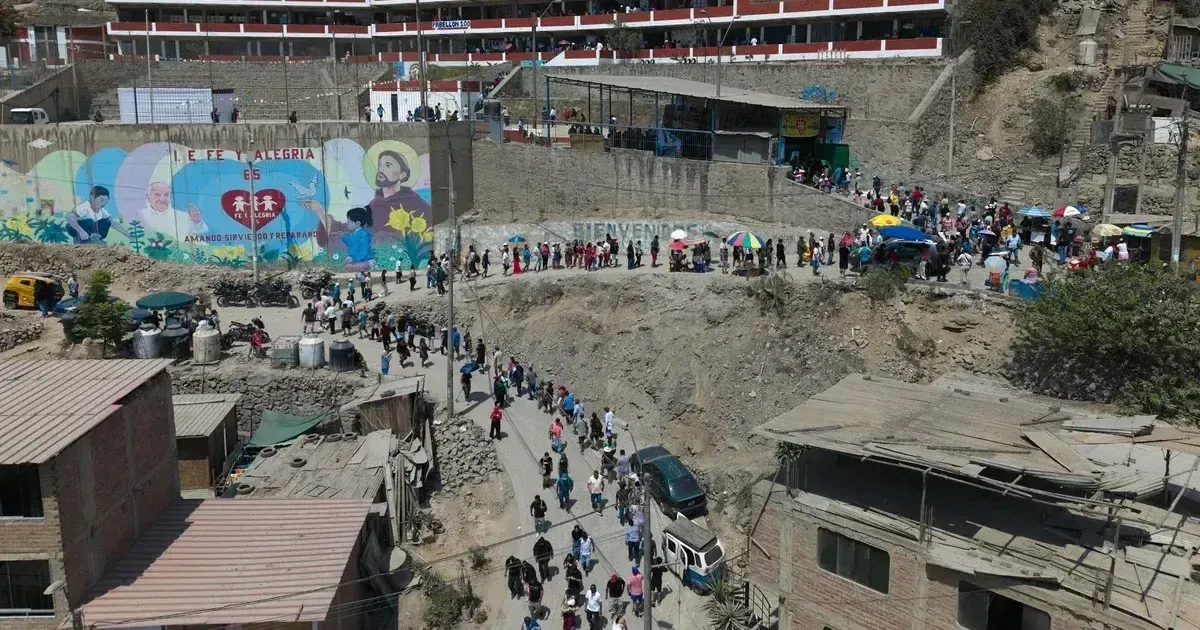
ONPE officials in Lima confirmed that logistical disruptions continue to prevent a final tally of the first-round presidential ballots. Discrepancies in the tally sheets from remote Andean regions slowed the official count sharply. Officials reported the delays on April 18, 2026. Keiko Fujimori, the leader of the Popular Force party, has already secured her place in the runoff scheduled for June. Her opponent remains undetermined while electoral workers process thousands of challenged ballots. Supporters of the third-place and second-place candidates have gathered outside the mobilization centers to demand transparency.
Voters in rural provinces face significant barriers to representation when physical tally sheets must travel over rugged terrain to reach processing hubs. These geographical hurdles often result in a late surge of votes that can flip early projections. ONPE representatives stated that the integrity of the process outweighs the speed of the announcement. This commitment to accuracy provides little comfort to a public accustomed to political instability. Five presidents have occupied the Government Palace in as many years, creating a culture of deep skepticism toward institutional announcements.
ONPE Logistic Failures in Remote Andean Provinces
Helicopters carrying ballot boxes from the VRAEM region encountered severe weather conditions earlier this week. Pilots reported heavy fog and torrential rains that grounded flights for forty-eight hours. Ground transport remains the only alternative in these areas, yet mudslides have blocked primary arteries leading to the regional counting centers. These delays allow rumors of tampering to spread across social media platforms. Local observers note that the lack of digital infrastructure in the highlands forces a reliance on physical paper trails that are vulnerable to environmental interference.
Protesters in Arequipa and Cusco have blocked highways to express their frustration with the slow pace of the National Office of Electoral Processes. They argue that the delay disproportionately affects the marginalized populations whose votes are often the last to be counted. International observers from the Organization of American States have called for calm. They emphasized that the technical verification of every acta observada, or challenged tally sheet, is a standard part of Peruvian law. Rushing this stage could provide grounds for legal challenges that would further destabilize the nation.
Keiko Fujimori and the Legacy of Populist Polarization
Fujimori enters her fourth attempt at the presidency with a solidified base of support in the coastal urban centers. Her campaign focused on law and order and economic liberalization. Critics point to her previous legal battles and the legacy of her father, Alberto Fujimori, as reasons for their opposition. The delay in naming her opponent creates a vacuum that her campaign has filled with calls for national unity. Whether this rhetoric connects with a fractured electorate is a question that defines the current political climate.
According to an official statement from the ONPE board, "Every tally sheet must undergo rigorous verification to ensure the will of the Peruvian people is respected and the legal framework is upheld."
Legal teams from the competing parties have filed hundreds of motions to challenge individual ballot boxes. These challenges often hinge on minor clerical errors or missing signatures from polling station volunteers. The Jurado Nacional de Elecciones must judge each of these disputes before a winner can be certified. Most of these legal maneuvers serve to delay the inevitable, yet they provide a pretext for candidates to claim foul play if the final result does not favor them. Political analysts in Lima suggest that the margin for the second runoff spot is less than half a percentage point.
Constitutional Safeguards and Electoral Integrity Protocols
Peruvian law mandates a strict hierarchy for the resolution of electoral disputes. The JNE is the final arbiter in all matters related to the vote count. Its members are currently reviewing cases involving 18 million registered voters across the country. This process is designed to be insulated from executive influence. Institutional independence is a fragile concept in a country where the legislature has frequently used its power to impeach sitting presidents. The current gridlock in the vote count is a stress test for these constitutional protections.
Military units have been deployed to protect the digital infrastructure and the physical archives of the electoral bodies. General Staff officials confirmed that the armed forces would remain neutral throughout the process. This deployment aims to deter any attempts at seizing ballot boxes or intimidating election workers. History shows that the transition of power in Peru is rarely a smooth affair. Security forces must balance the need for order with the protection of the right to peaceful assembly. Clashes between police and protesters have already resulted in dozens of arrests in the capital.
Public Trust Erodes During Vote Counting Process
Confidence in the democratic system has reached a ten-year low among the Peruvian youth. Economic stagnation and persistent corruption scandals have alienated a generation of voters. When the official results take more than a week to materialize, the public often assumes that backroom deals are being made. The ONPE has attempted to combat this narrative by livestreaming the counting process from its main centers. Digital transparency, however, does not always translate to public trust when the underlying political divisions are so deep.
Business leaders have expressed concern about the prolonged period of uncertainty. The Peruvian sol has experienced volatility against the dollar since the polls closed. Investors fear that a prolonged dispute over the runoff candidates will lead to a period of legislative paralysis. Markets typically favor the predictability of a clear winner. In June 2026, the country will return to the polls for the final round, but the legitimacy of that contest depends entirely on the resolution of the current crisis. The wait continues as the last batches of ballots arrive from the jungle provinces.
Election Credibility
Will the Peruvian establishment survive another round of self-inflicted institutional trauma? The current deadlock in Lima is not a failure of logistics, but a failure of legitimacy that has been decades in the making. Officials point to weather and terrain as the culprits for the delay, yet the true obstacle is a system designed to favor coastal elites while treating the Andean and Amazonian interior as a secondary concern. The bureaucratic foot-dragging serves the interests of those who fear a populist surge from the left, allowing the right-wing machinery of Keiko Fujimori to consolidate its narrative while her potential rivals are mired in procedural limbo.
Skepticism is the only rational response to a counting process that consistently stalls precisely when the rural vote begins to manifest. The evidence points to a deliberate attempt to sanitize the electorate through the weaponization of clerical errors. By challenging thousands of tally sheets over mere ink blots or minor handwriting discrepancies, the legal teams of the established parties are effectively disenfranchising the most vulnerable citizens. It is a tactical erosion of democracy disguised as a devotion to the rule of law. Peru is waiting for more than a vote count.
It is waiting to see if its institutions will finally collapse under the weight of their own systemic biases. The June runoff will be a hollow exercise if half the country believes the first round was managed by a calculator with a political agenda. Institutional failure is now the norm.