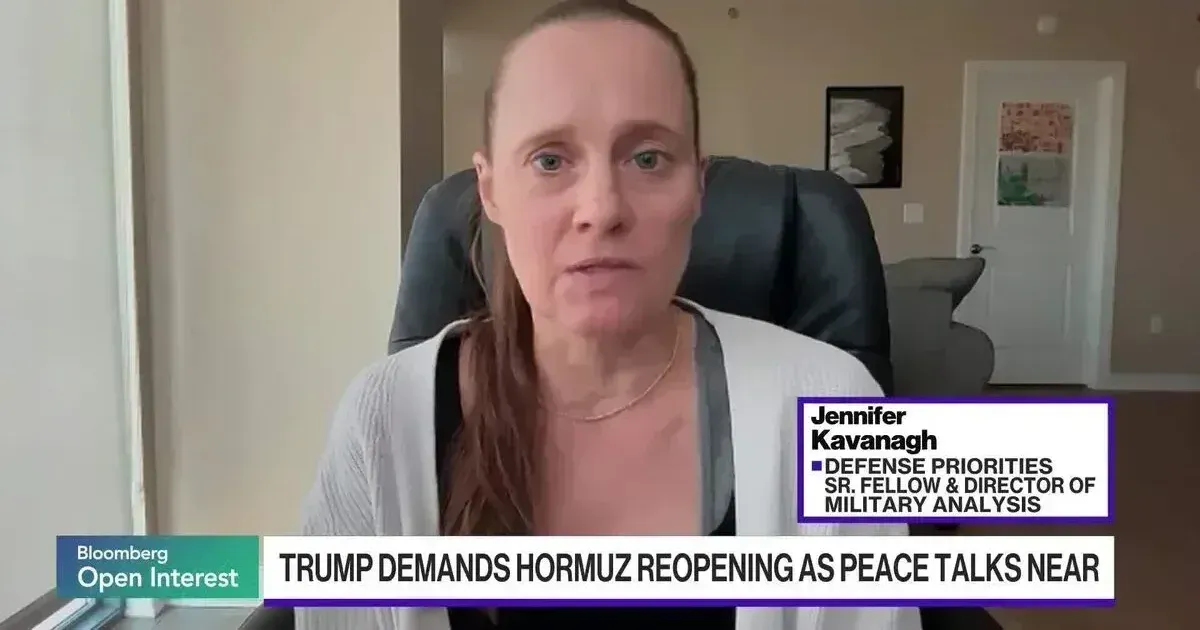
Iran has renewed its threat to close the Strait of Hormuz, turning a maritime blockade dispute into a direct warning to the global energy market. Mohammad Bagher Ghalibaf framed the waterway as pressure against American restrictions. On April 18, 2026, the speaker of Iran's parliament said the strait could be shuttered if the United States refused to lift restrictions on Iranian ports.
The threat is powerful because it links domestic economic pain to a route the entire world needs. Tehran does not have to defeat the U.S. Navy to create disruption. It only has to make the channel look unsafe enough for insurers, captains and energy buyers to hesitate, which can slow trade before any formal closure occurs and turn a threat into an economic event.
The warning came as U.S. naval activity continued near the Persian Gulf. Tehran says the blockade is an illegal act of aggression that is choking civilian trade as well as sanctioned cargo. Washington describes the operation as enforcement against illicit weapons and restricted material, a narrower claim that Iranian officials reject.
Iran will close the strategic Strait of Hormuz again if the United States continues its blockade of Iranian ports, Mohammad Bagher Ghalibaf said Saturday.
Ghalibaf Turns Blockade Into Ultimatum
Ghalibaf's message was aimed at both Washington and oil markets. The Strait of Hormuz carries roughly 21 million barrels of daily petroleum flows, making any closure threat larger than a bilateral dispute. Even a temporary disruption can move prices, raise insurance costs and force ships onto longer routes.
Iranian officials argue that if their vessels cannot operate freely, other regional exporters should not assume uninterrupted access either. Military observers point to mines, fast-attack craft and coastal missiles as the tools Tehran could use to make that threat credible. The risk is that one tactical move at sea could quickly become a wider naval conflict.
Port Pressure Hits Iran's Economy
The blockade has already hurt Iranian commerce. Reports cited in the article say port activity at Shahid Rajaee has fallen sharply, with merchants facing high insurance costs and delays for medicine, industrial parts and consumer goods. Those effects give Tehran a domestic reason to escalate its language.
U.S. officials insist the measures are targeted and tied to sanctions enforcement. The broad economic impact makes that argument harder to sustain politically. If basic cargo is delayed or priced out of reach, the blockade becomes not only a security tool but also a humanitarian and diplomatic liability.
That distinction will shape the next diplomatic phase and the legal argument around the blockade. A blockade that is seen as precise may keep support from partners worried about Iranian weapons flows. A blockade seen as collective punishment could fracture that support and give Tehran a stronger argument in international forums. The longer the standoff lasts, the more the legal and humanitarian arguments will compete with the military one.
Energy Markets Watch for Miscalculation
Oil traders are reacting less to rhetoric itself than to the chance that rhetoric becomes action. Tanker owners must decide whether the risk of entering the Gulf is worth the cost. Insurers must decide how much to charge for voyages that could be exposed to mines, drones or missile fire.
China has called for restraint because stable Gulf energy flows are a core economic interest. European governments are also exposed through fuel prices and supply chains. The pressure on Washington may therefore come not only from Tehran, but from import-dependent partners that cannot absorb a prolonged Hormuz shutdown.
Commercial crews sit at the center of that risk. Tankers are slow, visible and difficult to defend once they enter narrow waters. A single damaged vessel could close lanes even without a formal Iranian order. That is why naval posture, insurance pricing and diplomatic language are now moving together, with each new signal changing the cost of restraint.
Blockade Gamble
Engagement with Tehran has devolved into a zero-sum theater where diplomatic gestures are secondary to naval positioning. The United States is betting that a maritime blockade will induce economic pain before Iran can execute its threat to shutter the Strait of Hormuz. This is a gamble of enormous proportions. When a regime is cornered economically, it rarely responds with calm surrender. It looks for a way to equalize the pain.
Relying on a blockade to achieve political ends is a 19th-century tactic applied to a 21st-century integrated economy. If Ghalibaf follows through, the resulting shock will not stay inside the Persian Gulf. It will appear at fuel pumps, in shipping contracts and in investment portfolios far from the region. The White House must recognize that a tactical victory in port enforcement is worthless if it leads to a strategic disaster in the world's most important energy channel. Aggression is not a substitute for a coherent Middle East policy.