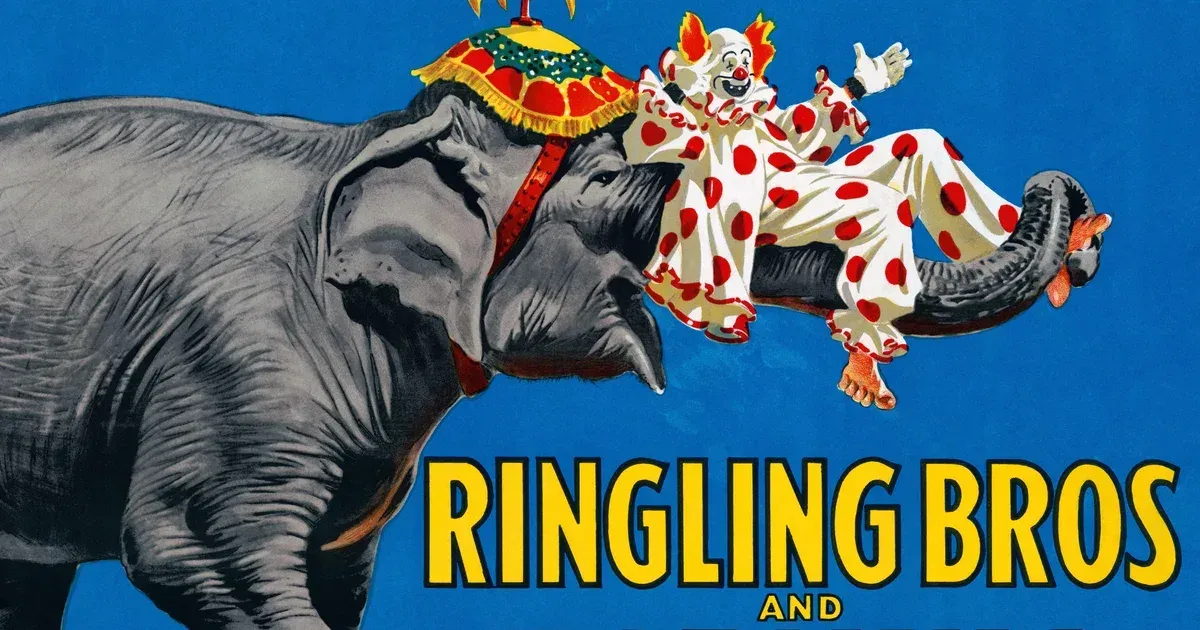
April 5, 2026, marks a point where cultural historians are revisiting the strange linguistic intersection of the circus and the Bible. History shifted sharply in 1882 when a huge African elephant arrived in America, forever changing the way English speakers describe scale. London Zoo sold the animal, named Jumbo, to the showman P. T. Barnum despite an enormous public outcry in Britain. Protesters, including thousands of children who wrote letters to Queen Victoria, failed to stop the transaction of the creature they considered a national treasure.
Barnum paid $10,000 for the elephant, an amount equivalent to roughly a quarter of a million dollars in modern currency. Records show the investment paid off within weeks as the animal became a global sensation.
This transaction birthed the word jumbo as a synonym for large. Before this specific elephant captivated the Victorian public, the term carried no such weight in the English lexicon. Linguists often trace the name itself to the Swahili word jumbe, which means chief, or jambo, a common greeting. Barnum, a master of marketing, ensured that the name became inseparable from the concept of physical dominance. Every advertisement he produced reinforced the idea that anything large must be jumbo. Modern aviation and fast-food industries still rely on this specific branding for their largest products.
Etymological Roots of the Word Jumbo
Linguistic evolution often requires a central catalyst, and Jumbo provided that spark for the nineteenth century. Once the elephant began his tour across the United States, manufacturers began applying his name to everything from cigars to kitchenware. Language scholars note that the word transitioned from a proper noun to a general adjective with extreme speed. By the time the animal died in a railroad accident in Ontario, his name had been permanently etched into the dictionary. English speakers discarded previous descriptors for large items in favor of the showman’s preferred terminology. The shift represents one of the most successful branding exercises in human history.
Scholars find a similar trajectory in the word giant. Biblical literature provides the first recorded instance of this term, specifically within the Job 40:15 passage. The text describes a creature of such immense power that only its creator can approach it with a sword. Many theologians have debated whether the description refers to a hippopotamus, an elephant, or a mythical beast. Unlike the word jumbo, which evokes a sense of friendly spectacle, giant carries a connotation of terrifying, uncontrollable power. It entered the English language as a way to describe things that are not just large, but potentially dangerous in their scale.
Biblical Origins of the Giant
Job 40:15 contains a vivid description of the beast, stating that its bones are like tubes of bronze and its limbs like bars of iron. This ancient imagery remains a foundation of Western literary tradition. Modern writers use the term to describe monolithic corporations or oppressive government bureaucracies. The theological weight of the original text ensures that the word never loses its sense of gravity. When a commentator calls a tech firm a giant, they are invoking a multi-thousand-year-old tradition of awe and fear. The linguistic link between a circus elephant and a biblical monster reveals how society categorizes the extraordinary.
Behold now giant, which I made with thee; he eateth grass as an ox.
Cultural connections extend beyond the ancient world into modern media. Tom Hanks starred in the 1988 film Big, which explored the literal and metaphorical growth of a child into an adult body. This cinematic exploration of size mirrors the theatrical work Giant, where John Lithgow portrayed the author Roald Dahl. Dahl himself was famous for creating the BFG, or Big Friendly Giant, further cementing the theme of oversized figures in the British and American imagination. These stories all rely on the tension between physical scale and internal character. They prove that our fascination with the enormous is not merely physical but deeply psychological.
Austrian Corporate Influence and Exports
Global commerce often relies on national reputation, a fact evident in the success of Austrian exports. Companies such as Glock, Red Bull, and Swarovski have turned small-scale origins into international dominance. Glock revolutionized the firearms industry by introducing polymer frames, a move that many traditional manufacturers initially dismissed. Meanwhile, Red Bull transformed from a Thai medicinal drink into a global energy empire. These brands represent the modern equivalent of the giant, occupying dominant positions in their respective markets. They demonstrate how precision engineering and aggressive marketing can create a lasting legacy.
National identity also appears in the heraldry of Portugal and its distinct flag. Seven gold castles adorn the red border of the shield, representing the fortresses reclaimed during the Reconquista. The historical symbol is a visual record of territorial expansion and military victory. While other nations use animals or stripes, the Portuguese choice emphasizes structural permanence. The castles are a reminder of the physical fortifications required to maintain a sovereign state. They link the past with the present through a consistent icon of strength and resilience.
Historical Pigments and Dye Production
Primary colors in the pre-industrial world came from specific botanical sources. Madder provided the deep reds seen in British military uniforms, while weld was the primary source for vibrant yellows. Woad, a plant native to Europe, produced the blue dyes used by ancient Celts and medieval weavers. The process of extracting these colors was labor-intensive and often expensive. These three plants formed the foundation of the textile industry for centuries. Before synthetic dyes appeared in the mid-nineteenth century, the wealth of a nation could be measured by its access to these natural pigments. The trade of these plants shaped colonial routes and economic policies.
Populous administrative regions like Uttar Pradesh in India or Guangdong in China represents the demographic version of the giant. These provinces contain more people than many entire countries. Managing such vast populations requires a level of infrastructure that challenges traditional governance. The scale of these regions often dictates the economic health of their respective nations. Just as Barnum’s elephant or the biblical beast commanded attention through size, these regions command the attention of the global market through sheer numbers. They are the giants of the modern geopolitical landscape.
The Elite Tribune Strategic Analysis
Why do we insist on flattening ancient terrors into mere adjectives for soda and circus acts? Modern consumers toss around words like giant to describe a new SUV or jumbo to market a bag of shrimp without a second thought for the terrifying theology or the tragic animal history behind them. We have effectively declawed the English language, stripping away the awe of the ancient world to serve the convenience of the supermarket aisle. The transition from a biblical horror that makes men tremble to a marketing adjective represents the ultimate victory of capitalism over the sublime. We no longer fear the beast; we simply buy the larger size for an extra dollar.
The linguistic flattening suggests a society that has lost its capacity for wonder, preferring instead the comfort of standardized measurements and brand-name familiarity. If everything is jumbo, then nothing is truly extraordinary. We have traded the sacred for the scaled, and the mythical for the manufactured. When we use the same vocabulary for a divine monster and a tub of popcorn, we signal our own intellectual exhaustion. We are no longer capable of discerning the difference between the magnificent and the merely big.